

In brief
- A University of Oxford trial involving 70 healthy volunteers finds that a dose of ketamine reduces the brain’s habenula response to unpleasant stimuli one day later.
- The habenula is a tiny brain structure linked to processing discomfort and learning avoidance; animal studies had already identified it as a target of ketamine.
- The finding, published in Current Biology, was tested in individuals without depression: the next step is determining whether the same occurs in people with treatment-resistant depression.
Ketamine relieves depression within hours, whereas conventional antidepressants take weeks, and why this occurs in the human brain remains largely a mystery. A team from the University of Oxford now offers a concrete piece of the puzzle: the substance appears to dampen the response of the habenula, a tiny structure involved in how we process distress and learn to avoid it.
An unpleasant stimulus, individually calibrated
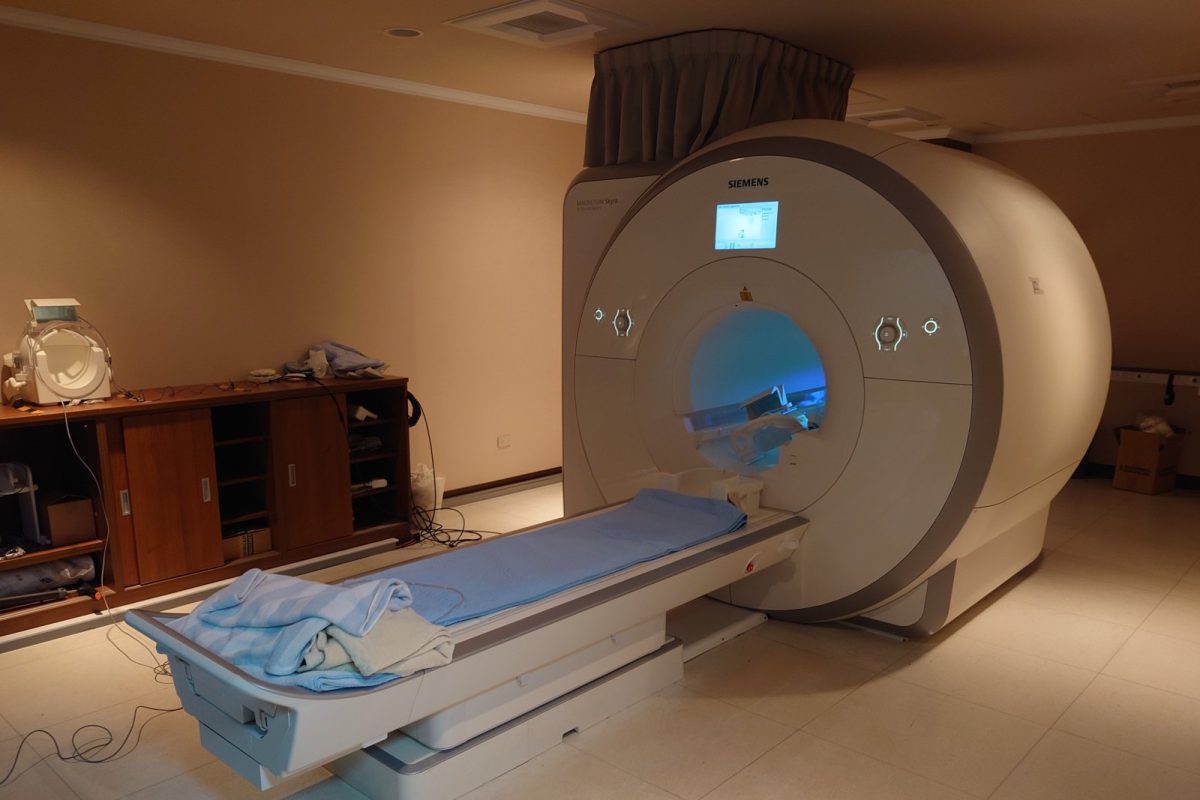
The study, published in Current Biology, recruited 70 healthy volunteers and randomly assigned them—half and half—to receive either ketamine or a saline placebo. One day after the infusion, participants entered a 7-Tesla MRI scanner at the Oxford Centre for Integrative Neuroimaging while completing a Pavlovian conditioning task with aversive stimuli: mild electric shocks delivered to the hand, calibrated individually to an intensity that was unpleasant yet tolerable. The researchers compared habenula activity between the two groups during both the anticipation and delivery of those shocks.
Reduced response to distress, one day later
Participants who had received ketamine showed lower habenula activity when receiving the unpleasant stimulus compared to those given placebo. The team also found preliminary evidence, still awaiting confirmation, that this shift might alter how negative experiences are later recalled, filing them away as less severe. The reduction aligns with previous animal research linking a hyperactive habenula to depressive states and identifying ketamine as capable of dialing it back.
Erdem Pulcu, an Oxford Department of Psychiatry researcher and the study’s lead author, explains that ketamine acts faster than conventional antidepressants, while its human-brain mechanisms remain poorly understood. He interprets the habenula findings and parallels with animal work as clues for developing treatments that retain benefits while reducing risks.
What it means
The team is careful to note the study’s boundaries: the trial was conducted in healthy volunteers rather than people with depression, meaning it does not prove this mechanism accounts for the antidepressant effect seen in clinical practice. Catherine Harmer, Professor of Cognitive Neuroscience at Oxford and senior co-author, frames the next step: verifying whether the same habenula response occurs in people with treatment-resistant depression. If confirmed, it could help explain why ketamine works for some patients and not others, potentially guiding the design of safer, more precise antidepressants. For now, it remains a mechanistic clue rather than a promise of a new treatment—its value lies in bridging what was previously observed in rodents with what actually happens inside the human brain.
Source
- Pulcu E, Costi S, Artiach-Hortelano P, et al. Ketamine attenuates habenula activity in response to aversive outcomes during Pavlovian learning. Current Biology, September 15, 2026.
Educational content written from a harm reduction perspective and with respect for individual freedom. It is not a substitute for advice from a healthcare professional and is not intended to encourage or condemn any drug use.