

In brief
- A Japanese research team has used human brain PET scans for the first time to study pre/post associations between ketamine, AMPA signal and symptoms, which are crucial for neuronal communication.
- There were 34 baseline patients and 31 paired scans; no significant mean pre/post difference was detected, but regional PET-change correlations with improvement were found.
- These changes correlated directly with improvements in depressive symptoms, positioning AMPA receptors as a central piece of ketamine’s antidepressant mechanism.
It has been known for over a decade that ketamine can alleviate treatment-resistant depression within hours—far faster than any conventional antidepressant. What has been missing until now is a look inside a living human brain to see exactly what changes to make this happen. A study published on March 5, 2026, in the journal Molecular Psychiatry, led by Takuya Takahashi’s team at Yokohama City University in collaboration with Keio University, provides that direct image for the first time.
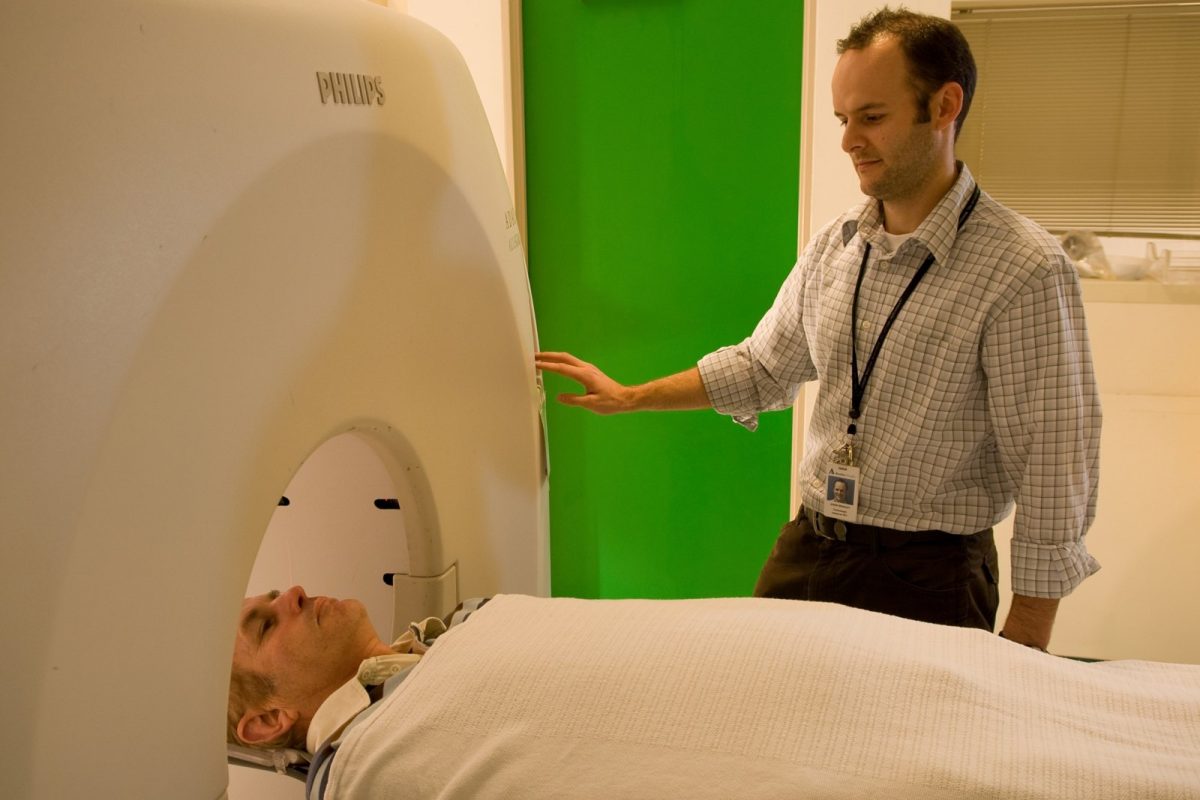
PET before and after the ketamine treatment course
The researchers combined data from three clinical trials conducted in Japan, gathering 34 people with treatment-resistant depression and 49 healthy volunteers as a control group. Participants with depression were administered intravenous ketamine or a placebo over two weeks and underwent brain PET scans before starting and after the final infusion. The technical breakthrough was the use of [¹¹C]K-2, a tracer developed by the team that allows for the visualization of AMPA receptors on the surface of neurons in a living person—without directly measuring structural repair or continuous activity during infusion. AMPA receptors are responsible for transmitting excitatory signals between neurons and maintaining synaptic plasticity, which is the brain’s ability to strengthen or weaken its connections.
What the researchers found
Before treatment, individuals with treatment-resistant depression already showed an altered and uneven pattern of AMPA receptor density compared to healthy controls, distributed differently depending on the brain region. After two weeks of ketamine, the change was not uniform: regional signal increases correlated with improvement in some cortical areas, with inverse correlations elsewhere, including the habenula, a deep structure linked to reward processing and, in previous animal studies, to states of despondency and anhedonia. The more these values shifted in each patient, the greater the reduction in their depressive symptoms, according to the article. The authors conclude that the antidepressant effect of ketamine in treatment-resistant depression “is mediated by dynamic changes in AMPA receptors in the living human brain.”
What this implies
This is a mechanistic study, not a large-scale efficacy trial, and the sample of 34 patients is small, so the findings require confirmation in larger cohorts with longer follow-ups. Even so, it holds unique value: for years, there has been debate over whether the rapid improvement produced by ketamine is explained by its action on NMDA receptors, the release of BDNF, or other mechanisms proposed in animal models. Seeing for the first time, through direct imaging in people, that changes in AMPA receptors correspond to clinical improvement adds a concrete piece to that puzzle and opens the door to using this type of PET scan to predict who will respond best to treatment—something especially useful for a drug whose access remains limited to supervised clinical settings.
Source
- Nakajima, W., Hatano, M., Ohtani, Y. et al. The dynamics of AMPA receptors underlies the efficacy of ketamine in treatment resistant patients with depression. Molecular Psychiatry, vol. 31, March 5, 2026.
Educational content written from a harm reduction perspective and with respect for individual freedom. It is not a substitute for advice from a healthcare professional and is not intended to encourage or condemn any drug use.

