

A brief, uncontrolled report that observed no hallucinations ended up fueling books, websites, and legal lists for over half a century.
Fourth installment of the series “The Canary Broom: Science, History, and Myth.”
Sometimes a scientific legend doesn’t need a major experiment. It only needs one page, a memorable title, and a chain of authors willing to repeat it. In 1965, James Fadiman published a note in Economic Botany titled Genista canariensis: A Minor Psychedelic. The article was short, described subtle effects, and explicitly noted that no hallucinations had occurred. Even so, it ended up becoming the root of almost the entire visionary reputation of the Canary broom.
In brief
- The primary source is a 1965 note based on an anonymous informant and informal experiences in California.
- The text itself indicated that there were no hallucinations or visual distortions.
- Subsequent publications transformed a singular case into a supposed collective and ritual tradition.
The Origin: An Informant and Three Shrubs in California
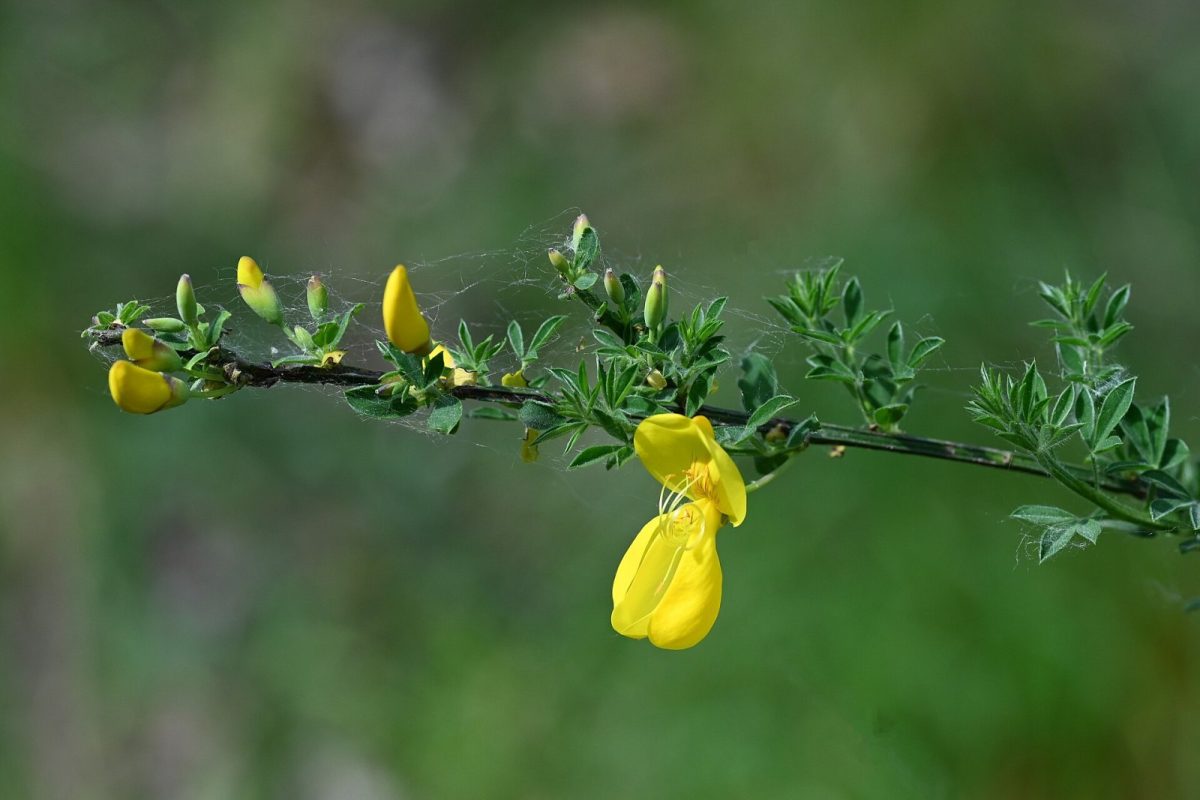
Fadiman recounted that a Yaqui healer or “shaman” from northern Mexico had received instructions in a vision to smoke the flowers of a plant. The informant called it “Scotch broom,” a name that usually refers to Cytisus scoparius. To clarify the identity, the researcher compared three ornamental shrubs near Palo Alto: Scotch broom, Spanish broom, and Canary broom.
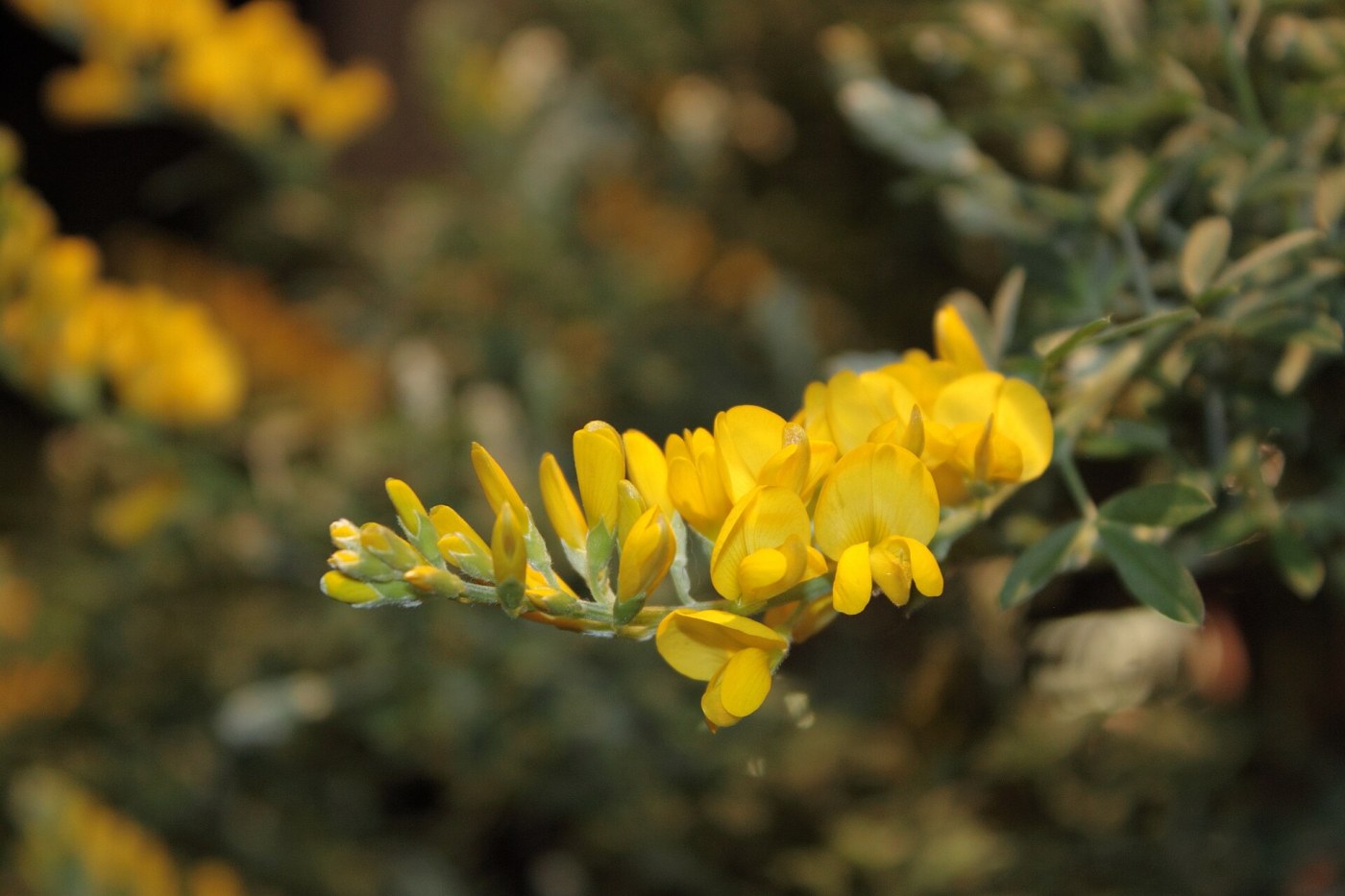
The text claimed the correct material was Genista canariensis, but it did not explain the identification procedure, did not cite a responsible botanist, and did not present a herbarium specimen linked to the informant. The absence matters because nursery brooms share yellow flowers, unstable trade names, and, in some cases, hybridization.
We also do not know where the healer was when he encountered the plant, whether he grew it in Sonora or in the United States, or if the practice belonged to a transmitted tradition. The article offered an anecdote; subsequent generations filled in the gaps.
What the Participants Actually Described
The experiences collected by Fadiman included relaxation, friendliness, a sense of mental clarity or flexibility, increased color contrast, and near-sleep images with eyes closed. These are subjective descriptions consistent with mild perceptual changes, autonomic stimulation, expectation, or moderate intoxication.
The decisive sentence is the one that usually disappears in summaries: no visual distortions or hallucinations were observed. Headaches were also reported. The material was not chemically analyzed, and the exposure was not standardized, so we do not even know if everyone received a comparable amount of the same alkaloids.
Calling the plant a “minor psychedelic” was an editorial choice of its time, not the result of a modern pharmacological classification.
Why That Was Not a Trial
There was no placebo, randomization, or blinding. The number of participants and the selection criteria were not defined with sufficient clarity. People knew they were testing a plant attributed as psychoactive, a condition capable of amplifying sensations through expectation.
No validated scales, systematic physiological measurements, or formal tracking of adverse events were used. Without dosage, chemical analysis, and a reference botanical sample, the work does not allow for the calculation of potency, frequency of effects, or margin of safety.
This does not make the note useless. It retains value as a historical document and as a generator of hypotheses. The error arises when an exploratory signal is presented as experimental proof.
From One to Many: Bibliographic Amplification
The story grew rapidly. In 1965, there was one anonymous Yaqui informant. In proceedings published in 1967, the wording already spoke in the plural of “Yaqui medicine men” who used Genista to produce hallucinations. Two changes in a single sentence: an individual became a collective, and subtle effects became hallucinations.
In 1976, Peter Furst presented the plant as a 19th-century import whose flowers were ritually smoked by Yaqui shamans. The date and the ritual character appeared as facts, but they were not supported by new ethnography, a historical inventory, or independent testimony.
Then came encyclopedias, websites, and lists of entheogens. Repetition created the appearance of consensus. However, many of those references descended from the same text. Ten pages that repeat Fadiman do not equal ten studies.
“Ten pages that repeat Fadiman are not ten studies.”
Classic Psychedelic, Nicotinic Intoxicant, or Expectation
Classic psychedelics, such as psilocybin, LSD, or mescaline, primarily share the activation of the 5-HT2A serotonin receptor. Cytisine, one of the alkaloids confirmed in the broom, acts on nicotinic acetylcholine receptors.
The mechanistic difference does not prevent someone from experiencing subjective changes. It does, however, require the use of more precise categories. Color enhancement can appear due to expectation or autonomic changes; hypnagogic images occur without substances when a person approaches sleep; dizziness or blurred vision can be signs of toxicity.
The right question is not “does it produce something?” but “what phenomenon does it produce, through what mechanism, at what dose, and with what risk?” The 1965 note cannot answer that.
The Mold Sentence That Ended Up Inverted
One of the most dangerous errors appeared when some sources claimed that letting the flowers mold or ferment increased their potency. Fadiman did not recommend such a practice. He suggested that certain headaches could be due to poorly prepared material, possibly moldy, or to the plant itself.
The chain of citations transformed a possible contamination and an adverse event into a potentiation technique. It is an extreme example of how an incorrect paraphrase can add microbiological risk to an already toxic plant.
When the Law Repeats Culture
The reputation also reached legislation. Louisiana included Genista canariensis in 2005 on a list of “hallucinogenic plants” and maintains restrictions for certain acts intended for human consumption, with landscaping and decorative exceptions.
In Texas, an initial version of SB 1868 from 2025 incorporated a list of plants that included the species. The list was removed in the subsequent version, and the bill did not become a ban on the broom. The chronology corrects a claim repeated on the Internet that placed the measure in 2013.
A legal category expresses a political and preventive decision. It does not validate a pharmacological mechanism. Sometimes the law feeds on the same cultural compendiums it should evaluate independently.
The True Story Behind the Myth
Fadiman’s note remains fascinating because it shows how a cultural object is born. An ornamental shrub, an anonymous informant, a Californian psychedelic context, and an uncertain taxonomy combined into a narrative capable of traveling for decades.
Reading it critically does not require declaring that everything was false. It requires separating what the article observed from what others added. What was observed were informal, subtle experiences without hallucinations. What was added was a collective tradition, a historical date, a sacrament, and a potency that the original source did not establish.
The lesson goes beyond this plant: extraordinary claims do not become more solid through repetition. They become more solid when samples, methods, controls, and independent sources appear.
Safety note. The species contains potentially toxic alkaloids. The historical review of its psychoactive reputation does not constitute an invitation to experiment with it.
Sources
- Fadiman, J. (1965). Genista canariensis: A Minor Psychedelic. Economic Botany.
- Efron, D. H. (ed.) (1967). Ethnopharmacologic Search for Psychoactive Drugs (proceedings).
- Furst, P. T. (1976). Hallucinogens and Culture.
- State of Louisiana. 2005 law on hallucinogenic plants.
- Texas Legislature. SB 1868 (2025) and its versions.
- Gotti, C. et al. (2021). Pharmacology of nicotinic receptors and cytisine.
Educational content written from a harm reduction perspective and with respect for individual freedom. It is not a substitute for advice from a healthcare professional and is not intended to encourage or condemn any drug use.


