
In brief
- A team from Uppsala University has reviewed 26 trials registered on ClinicalTrials.gov involving DMT, ayahuasca, or DMT combined with harmine.
- Registrations surged after 2020–2021; the landscape is dominated by Phase I trials, conservative inclusion criteria, and a primary focus on safety.
- Clinical data regarding efficacy remain preliminary and are concentrated primarily on depression.
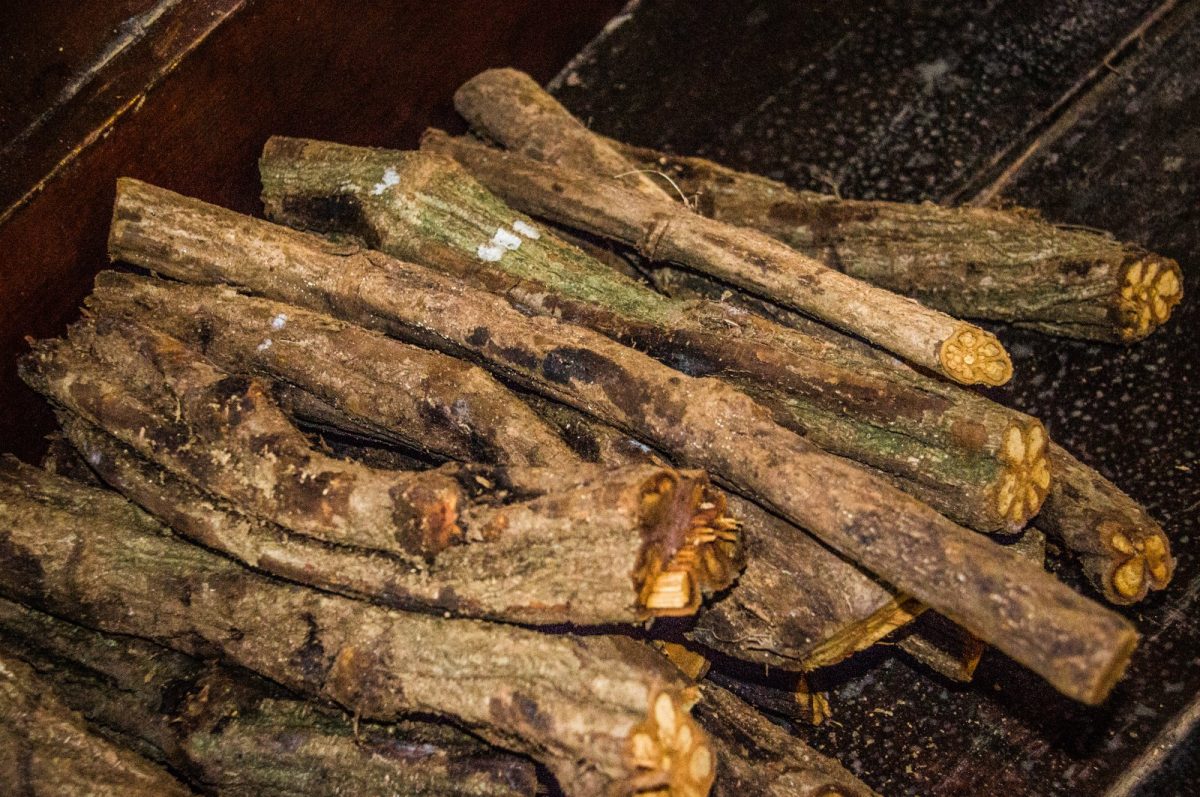
Ayahuasca and its primary active compound, N,N-dimethyltryptamine (DMT), have transitioned from traditional use and experimental research into clinical development. A new study published in Clinical Pharmacology & Therapeutics attempts to organize this landscape—not by evaluating whether these substances work, but by analyzing what is being tested, on whom, and under what design.
How the inventory was conducted
The authors, based at Uppsala University (Sweden), searched ClinicalTrials.gov on 14 July 2025 for interventional trials involving DMT, ayahuasca, or DMT combined with harmine. This yielded 26 eligible records. For each, they extracted and harmonized trial characteristics, participation criteria, enrollment numbers, design, administration routes, and registered outcomes, subsequently linking completed trials to their published results. Studies involving 5-MeO-DMT were excluded from the search.
What the registry shows
The number of trials took off starting in 2020–2021. The majority are in Phase I, and more than half were listed as completed at the time of data extraction. Trials using DMT alone predominate, and the registered sponsors are primarily academic institutions and hospitals; that label does not exclude commercial support absent from the registry.
Eligibility criteria remain cautious, with numerous cardiovascular and psychiatric exclusions (more than half of the trials recruit healthy volunteers, and about one-third recruit individuals with major depression). Consistent with this, primary objectives focus on acute safety and physiological monitoring, alongside structured characterization of the altered state of consciousness and subjective experience. Symptom-based endpoints for specific disorders appear less frequently as primary objectives.
Associated publications reflect this early stage: controlled administration, tolerability limits, refinement of routes and formulations, and initial mechanistic insights. A smaller subset of articles, stemming from depression-focused trials, provides preliminary evidence of clinical effect which, according to the authors, justifies controlled replications and larger-scale programs.
What it implies
The authors suggest the field is active and maturing; it has generated foundational knowledge regarding safety and administration protocols, but it remains dependent on a few programs focused on specific indications beyond depression. This is a portrait of the registry, not the results, and a registry only captures what someone has chosen to register. Nevertheless, it offers a useful takeaway—our own interpretation, not the authors’: the most robust information on these substances will, for some time, come from studies designed to measure safety in healthy individuals. For the traditional and pharmacological context of these molecules, we have a Psychedelics Guide, and for the general framework of clinical research, our page on psychedelic science and therapy.
Source
- Stojanović T, Nilsson KW, Fredriksson R, Schiöth HB, Moulin TC. Registered Clinical Trials of Ayahuasca and DMT: A Scoping Review. Clinical Pharmacology & Therapeutics, published online May 8, 2026 (Volume 120, Issue 1, July 2026).
Educational content written from a harm reduction perspective and with respect for individual freedom. It is not a substitute for advice from a healthcare professional and is not intended to encourage or condemn any drug use.