


The gathering will bring together researchers, activists, artists, and thinkers in Málaga to debate psychedelics, artificial intelligence, prohibitionism, mental health, and cognitive liberty
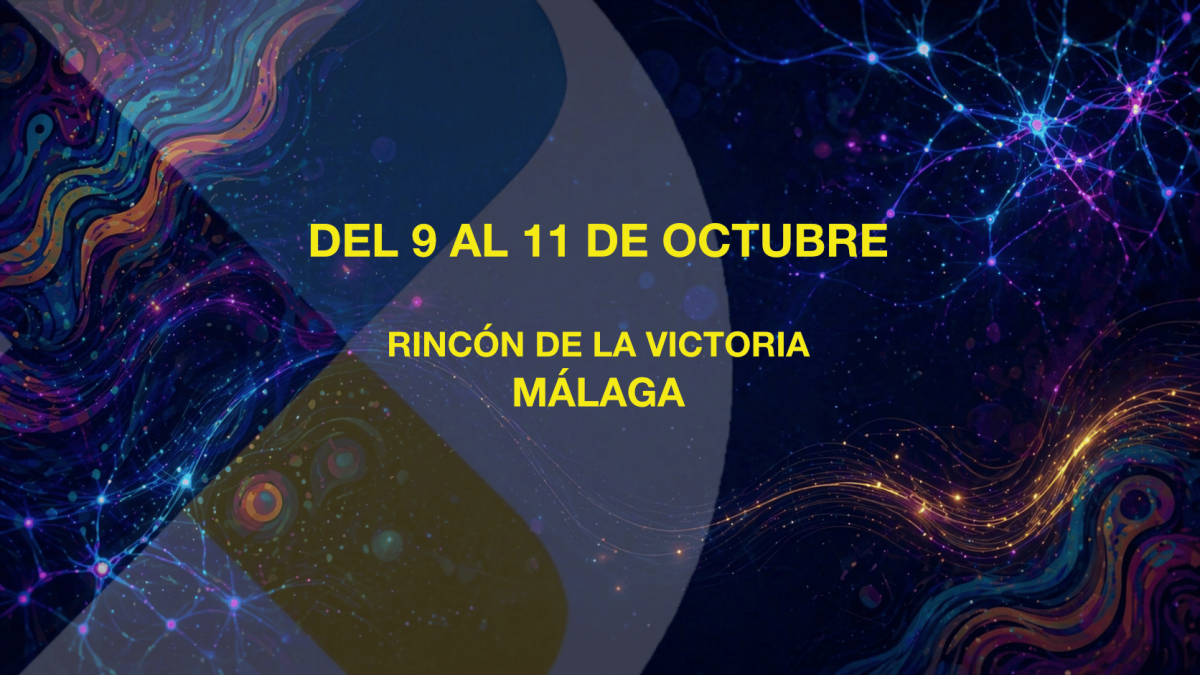
From October 9 to 11, Rincón de la Victoria will host Nexus 2026, an independent gathering dedicated to exploring states of consciousness through critical thinking, art, and cultural experimentation. Conferences, debates, poetry, music, live painting, and performances will shape three days aimed at opening conversations far removed from institutional discourse, commercial interests, and prefabricated certainties.
The expansion of psychedelic research has placed altered states of consciousness at the center of a new dispute. Medicine, the tech industry, venture capital, and major academic institutions are competing to define their applications, control their narratives, and establish who can access them.
In this context, Nexus 2026 proposes a different perspective. The gathering does not aim to deny the contribution of science or reject the potential therapeutic uses of psychedelics, but rather to broaden the debate beyond the laboratory, the doctor’s office, and the market.
Its program addresses issues that often remain in the background: the criminalization of certain experiences, the construction of stigma, the corporate appropriation of traditional knowledge, cognitive liberty, the role of counterculture, and the capacity of art to communicate what rational language cannot always express.
An independent space for thinking without obedience
Organized by the Universo Ulises Association, Nexus presents itself as a horizontal space where specialists, artists, activists, and the public share the same ground for discussion.
It is not a conventional academic congress or a trade fair. Nor does it seek to build a new orthodoxy around psychedelia. Its proposal consists of creating the conditions for ideas to clash, mix, and transform without being subjected to a single discipline or authority.
Attendance will be free, though it requires prior confirmation via the official website. The organizers summarize their philosophy with a direct formula: “Nobody charges, nobody pays.”
This model aims to maintain the independence of the gathering and reduce the distance between those speaking on stage and those participating from the audience. The goal is not to accumulate presentations, but to facilitate conversations capable of continuing beyond the program.
Words also build stigma
The first day will take place on Friday, October 9, at the Alma Playa restaurant. The opening will be led by historian and sociologist Juan Carlos Usó, who will present the lecture Flipando con las palabras (Tripping on Words).
His presentation will analyze the vocabulary used to talk about drugs, consumption, and altered states of consciousness. Seemingly descriptive terms can incorporate moral judgments, reinforce prejudices, or justify punitive policies.
The way we name a substance, a practice, or a person conditions their social perception. Expressions like “drug addict,” “substance abuser,” “problematic consumer,” or “patient” do not just describe a reality: they also assign identities, create hierarchies, and determine which responses are considered legitimate.
The day will continue with writer Missa Megías, who will present Días para no olvidar. Luces y sombras de una psiconauta (Days Not to Forget: Lights and Shadows of a Psychonaut). Her talk will shift the debate to the terrain of personal experience, memory, and the construction of identity.
Poet Jonás Sánchez Pedrero will subsequently offer a reading, before music closes a day conceived as a transition between thought, autobiographical narrative, and artistic expression.
Artificial intelligence as a mirror of consciousness
Saturday, October 10, will concentrate much of the conference program at the Hotel Fay. One of the first panels will be dedicated to the relationship between artificial intelligence and consciousness.
Titled La medida del misterio. La IA ante el enigma de nuestra propia luz (The Measure of Mystery: AI Facing the Enigma of Our Own Light), the session will raise questions that technology cannot yet answer clearly.
Can a machine develop a subjective experience? Is reproducing human language enough to speak of consciousness? Where does simulation end and experience begin? What does artificial intelligence reveal about our difficulty in defining ourselves?
Journalist, artist, and researcher Igor Domsac will address the possibility of a non-biological consciousness and the limits of current models. Artist Begoña Grande will advocate for a relationship with artificial intelligence based on responsibility, creativity, and collaboration, avoiding both uncritical enthusiasm and automatic rejection.
The panel will use artificial intelligence as a tool to review concepts traditionally associated with the human: intention, imagination, identity, sensitivity, and the production of meaning.
Who controls the psychedelic experience?
Another central session will be El precio de la epifanía. Psicodelia, entre el mercado y la libertad (The Price of Epiphany: Psychedelia, Between the Market and Liberty). The panel will examine the contradictions of a process in which certain substances move from the underground to the pharmaceutical market without the disappearance of punishment, stigma, or inequality.
Miguel Castejón will speak about the recovery of European rituals linked to entheogenic plants and substances. His approach will analyze the possibility of building practices connected to local territories, ecosystems, and traditions, without superficially reproducing ceremonies from other cultural contexts.
Raimundo Viejo Viñas will address the relationship between rave culture, ecstatic celebration, and drug policy. His intervention will focus on a contemporary paradox: an experience can be persecuted when it occurs in an autonomous space and receive legitimacy when it is integrated into a clinical protocol.
Designer and editor Xavi Vidal will analyze the role of underground activism, formed by networks and individuals who maintained the circulation of substances, knowledge, and practices during decades of prohibition.
This analysis will allow for a discussion on what ethical codes have operated in those environments and to what extent they can be compared to the dynamics of the organized illegal market or the new psychedelic industry.
Lawyer Fran Azorín will introduce the debate on social justice, amnesty, and reparation. The expansion of psychedelic treatments raises a question that is difficult to ignore: what happens to the people who were arrested, convicted, or stigmatized for practices that are now beginning to generate business opportunities?
Luis Otero will round out the panel with a historical look at the mail-order sale of psychoactive plants in Spain. Before the internet became widespread, specialized catalogs facilitated access to seeds, botanical species, and knowledge that circulated outside of institutions.
Art as a form of knowledge
Nexus 2026 will not treat art as a decorative element, but as a path of investigation into experience.
The panel El lienzo invisible. Estética de lo inefable y el arte como portal (The Invisible Canvas: Aesthetics of the Ineffable and Art as a Portal) will gather different approaches to visionary creation, poetry, and perception.
Philosopher and musician Juan Muriel will explore the relationships between sound, thought, and knowledge. Marina Ruty will address the influence of psychedelic states on perception, identity, and the creative process.
Jonás Sánchez Pedrero will analyze the value of metaphor as an instrument to communicate what is difficult to express through ordinary concepts. Aura Roig will present the experience of L’Arravalera, a community project in the Raval neighborhood of Barcelona where creation, mutual aid, and anti-prohibitionist activism converge.
The program is based on the idea that some experiences cannot be reduced to clinical data or neurological explanations. Painting, music, poetry, and performance can show subjective dimensions that other languages barely manage to describe.
Psychedelics do not begin or end in the clinic
The panel Psicodélicos: más allá de la salud mental (Psychedelics: Beyond Mental Health) will address the growing prominence of medicine and psychiatry in the legitimization of these substances.
Clinical psychologist and pharmacologist José Carlos Bouso will analyze the progress of research and the limits of a model focused almost exclusively on diagnosis and treatment.
The issue is not to deny the value of psychedelic-assisted therapy, but to ask whether medicine should become the only authority capable of recognizing an experience as legitimate.
Missa Megías will speak about the social construction of normality, diagnoses, and human diversity. Paula Lorenzo Sol will move the debate to everyday spaces such as families, classrooms, personal relationships, and consultations.
The conversation will examine whether the clinical framework can coexist with creative, spiritual, community, or personal exploration uses. It will also address the risk of turning psychedelia into a service reserved for those who can afford specialized treatments.
A manifesto open for discussion
Saturday will end with the presentation of the Nexus 2026 Manifesto, a text dedicated to consciousness, counterculture, and cognitive liberty.
The organizers do not present it as a closed declaration or a doctrine that must be accepted. After its reading, the public will be able to debate, question, modify, or reject it.
This format seeks to prevent the gathering’s conclusions from being monopolized by the speakers. The manifesto will function as a starting point for collective development, not as a definitive resolution.
Cognitive liberty will occupy a central place in that debate. The concept refers to the right of every person to access, modify, and explore their own mental states, always within a framework of responsibility and without causing harm to others.
Music, painting, and collective creation
On Sunday, October 11, Nexus will move to the Chiringuito El Muro to close the gathering with a day dedicated to artistic creation.
Begoña Grande will develop an audiovisual intervention in which images of the audience will be integrated into an installation projected onto different devices. Attendees will cease to be passive observers to become part of the work.
Marina Ruty will perform a live painting session, conceived as an open and transforming process. The musical programming will include DJs Davirus and Páramo, with sets linked to tech house, minimal, dark disco, and indie dance.
The organization also keeps a space open to receive new proposals for music, poetry, performance, and other disciplines. The purpose is for the final day not to function as a simple closing, but as a laboratory for collective creation.
A border that does not aim to become a center
Nexus 2026 follows a trajectory initiated with the creative and polyphonic gatherings held in Tortosa in 2011 and 2014, and later resumed in Rincón de la Victoria.
The 2026 edition adopts the motto Ulysses at the border. The border appears here as an intellectual and artistic territory where categories cease to be stable.
It is the place where science meets poetry, technology meets mystery, therapy meets liberty, and individual experience meets collective responsibility.
While the psychedelic industry attempts to turn consciousness into a new market and institutions maintain much of their prohibitionist policies, Nexus proposes recovering the uncomfortable questions.
Who decides which experiences are acceptable? Who controls access? What knowledge is left out of the official narrative? How can the damages of prohibition be repaired? Can a psychedelic culture exist that does not depend entirely on the clinic, the market, or the underground?
Nexus 2026 does not aim to offer a single answer. Its main contribution may consist precisely in preventing the debate from being reduced to a single voice.
Nexus 2026
Rincón de la Victoria, Málaga
October 9–11, 2026
Free access with prior confirmation
Full program and registration: ulises.nexus