

In brief
- The pharmaceutical company Benuvia Operations has requested a DEA license to manufacture large-scale mescaline, ibogaine, psilocybin, LSD, DMT, and other Schedule I substances for research purposes.
- According to Psychedelics Today, the Teesto chapter of the religious organization Azee Bee Nahagha of Diné Nation sent a July 16, 2026 letter seeking exclusion of mescaline. Neither the original letter nor a mandate from the entire Navajo government was verified here.
- The notice allowed comments from affected registered manufacturers and relevant applicants until July 17, 2026; this is a historical deadline, not a currently open period.
Since last April, the U.S. Drug Enforcement Administration (DEA) has been processing an application from a Texas pharmaceutical company to become a bulk manufacturer of a long list of controlled substances, including mescaline. The petition has met with formal opposition from a Diné (Navajo) community, which is requesting that this specific molecule be excluded from the permit due to its sacred role in Native American Church ceremonies.
A request covering nearly the entire psychedelic catalog
According to the notice published in the Federal Register on May 18, 2026 (docket DEA-1714), Benuvia Operations LLC, based in Round Rock, Texas, applied on April 22 to register as a bulk manufacturer of mescaline, ibogaine, LSD, marijuana extract, THC, MDA, MDMA, 5-MeO-DMT, DMT, psilocybin, psilocin, and 5-MeO-DIPT—all Schedule I substances—in addition to several Schedule II substances. The stated objective is internal research and the development of dosage formulations, with no authorization for any other activity involving these drug codes. The notice opened a comment period that expired on July 17, 2026.
The request attributed to the Teesto chapter
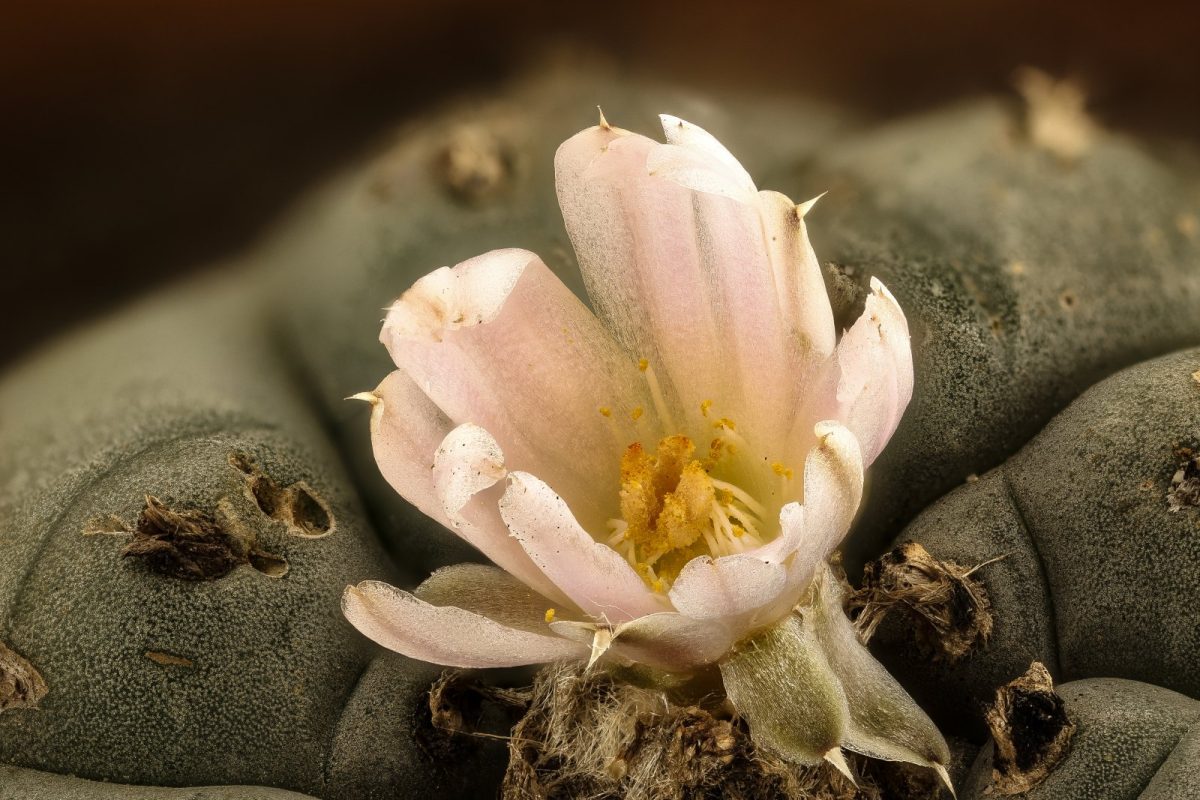
According to the July 20 Psychedelics Today report, on July 16, 2026 the organization Azee Bee Nahagha of Diné Nation, Teesto Chapter, sent a letter to the DEA requesting that the portion of the application referring to mescaline be denied. As reported by the newsletter Psychedelics Today, its president, Hershel W. Clark, expressed concern over “the expansion of commercial manufacturing of mescaline by synthetic and pharmaceutical companies” and maintained that the DEA moved forward with the process without the government-to-government consultations that, in his view, should have been conducted with the Navajo Nation, the National Congress of American Indians, and the Native American Church. The letter invokes the 1994 amendments to the American Indian Religious Freedom Act, the federal law that protects the ceremonial use of peyote—the plant from which mescaline is derived—for members of recognized tribes.
What this implies
The case does not question whether mescaline can be researched, but rather the procedure: whether a federal agency can expand the industrial production of a substance with deep ceremonial significance without first sitting down with those who have used it as a sacrament for generations. Native American Church communities have been warning for years that wild peyote is becoming scarce in its natural habitat in South Texas, so any move that increases the demand for mescaline—even if synthetic and lab-produced—is viewed with caution. The notice describes an application, not a granted authorization; neither its final outcome nor current docket status was verified here. The consultation claim is attributed to the chapter, not established as a judicial conclusion. It is worth noting that this is a process regarding manufacturing and research, not an authorization for the sale or consumption of the compound.
Source
- Drug Enforcement Administration. Bulk Manufacturer of Controlled Substances Application: Benuvia Operations, LLC (Docket No. DEA-1714). Federal Register, Vol. 91, No. 95, May 18, 2026.
- Psychedelics Today. Psychedelic Policy Briefing: Week of July 20th, 2026. Psychedelics Today, July 20, 2026.
Educational content written from a harm reduction perspective and with respect for individual freedom. It is not a substitute for advice from a healthcare professional and is not intended to encourage or condemn any drug use.