

In brief
- The U.S. Drug Enforcement Administration (DEA) has announced its intention to place 7-hydroxymitragynine (7-OH), a kratom alkaloid, into Schedule I, but only above a specific concentration.
- For botanical material it proposes more than 0.050% dry weight; specified synthetic or processed articles have additional criteria. It does not exempt every leaf or establish products below a threshold as safe or lawful everywhere.
- The 6 July notice contemplated a future two-year order, with a possible one-year extension, not to be issued before 5 August. A later order is not verified here.
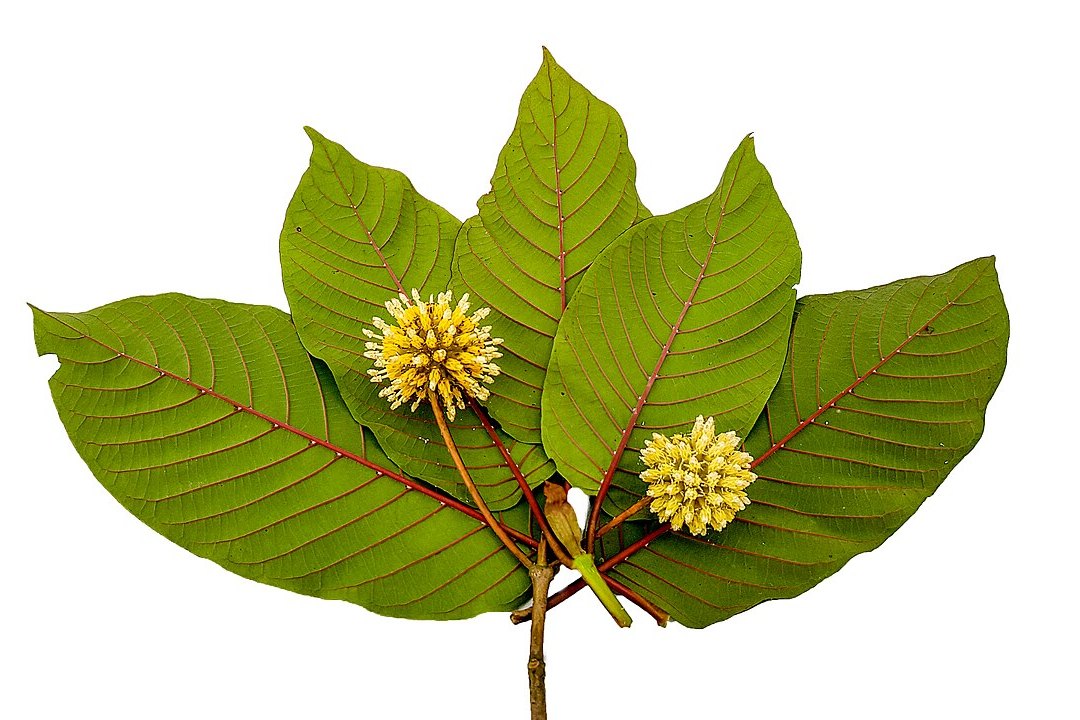
On July 6, the DEA published a notice of intent in the U.S. Federal Register to temporarily control 7-hydroxymitragynine, one of the alkaloids found in Mitragyna speciosa, or kratom. The novelty lies not in the substance itself, but in how the regulation is drafted: the proposed control is defined by thresholds, distinguishing between traditional leaf and the ultra-concentrated extracts that have proliferated in convenience stores across the country.
Where exactly the line is drawn
The text establishes three criteria. For botanical material, any product containing more than 0.050% 7-OH by dry weight would be controlled. For products obtained through synthesis or subsequent processing—extracts, concentrates, edibles, or tablets—the limit is the same 0.050% weight/weight, weight/volume, or volume/volume, or more than 1.00 milligram of 7-OH in the product. The scope also includes isomers, esters, ethers, and salts of the compound. The DEA itself acknowledges in the document that in unprocessed plants, 7-OH represents less than two percent of the total alkaloid content or appears only in trace amounts, a percentage of total alkaloids that is not directly comparable with a dry-weight threshold. The notice does not propose controlling mitragynine itself, but it does not guarantee every leaf or product’s composition.
Data used by the agency
The notice is supported by a scientific evaluation submitted by the Department of Health and Human Services (HHS) and data from U.S. poison control centers, which only began registering 7-OH with specific codes between February and May 2025. The notice reports 53 cases from February to April 2025 and 165 from January to July 2025; these are different, overlapping windows, not a like-for-like growth comparison. Of those involving only 7-OH, 35% resulted in serious health issues, and 67% required treatment at a healthcare facility. In the evaluation summarized by the notice, preclinical data associate 7-OH with opioid-type activity and risks, including tolerance, dependence and respiratory depression. The July notice states that controlled clinical trials had not established safe doses for these concentrates. It is worth noting that 7-OH is also an active metabolite of mitragynine in the body, which complicates the interpretation of some exposure data.
What it implies
The most interesting aspect of the text is the methodology: distinguishing product concentration and composition without treating a legal threshold as a safety guarantee, rather than treating an infused leaf and a highly potent extract the same way. That distinction is precisely the principle of harm reduction: knowing what is being consumed and in what quantity. The notice does not establish what market displacement this measure would cause or validate alternative analogues. For those who already use kratom, the underlying practical problem remains the same before and after the regulation: the enormous variability in concentration between products sold without reliable labeling or independent analysis. This is a notice of intent concerning possible temporary control, not verification of a later order. The text states that it does not preempt stricter state laws. Poison-centre calls do not estimate risk among all people who use these products.
Source
- Drug Enforcement Administration. Schedules of Controlled Substance: Temporary Placement of 7-Hydroxymitragynine Above a Specified Threshold in Schedule I. Federal Register, July 6, 2026.
Educational content written from a harm reduction perspective and with respect for individual freedom. It is not a substitute for advice from a healthcare professional and is not intended to encourage or condemn any drug use.