

A Warning That Never Expires
Almost everyone has heard some version of it: shadowy figures lurking outside elementary schools, handing out stickers, temporary tattoos, or decals soaked in LSD to get young kids hooked on drugs and secure a future clientele. The message typically arrives forwarded—once via photocopied fliers, now through messaging apps and social media—framed with breathless urgency and an explicit plea to share it “for the safety of our children.”
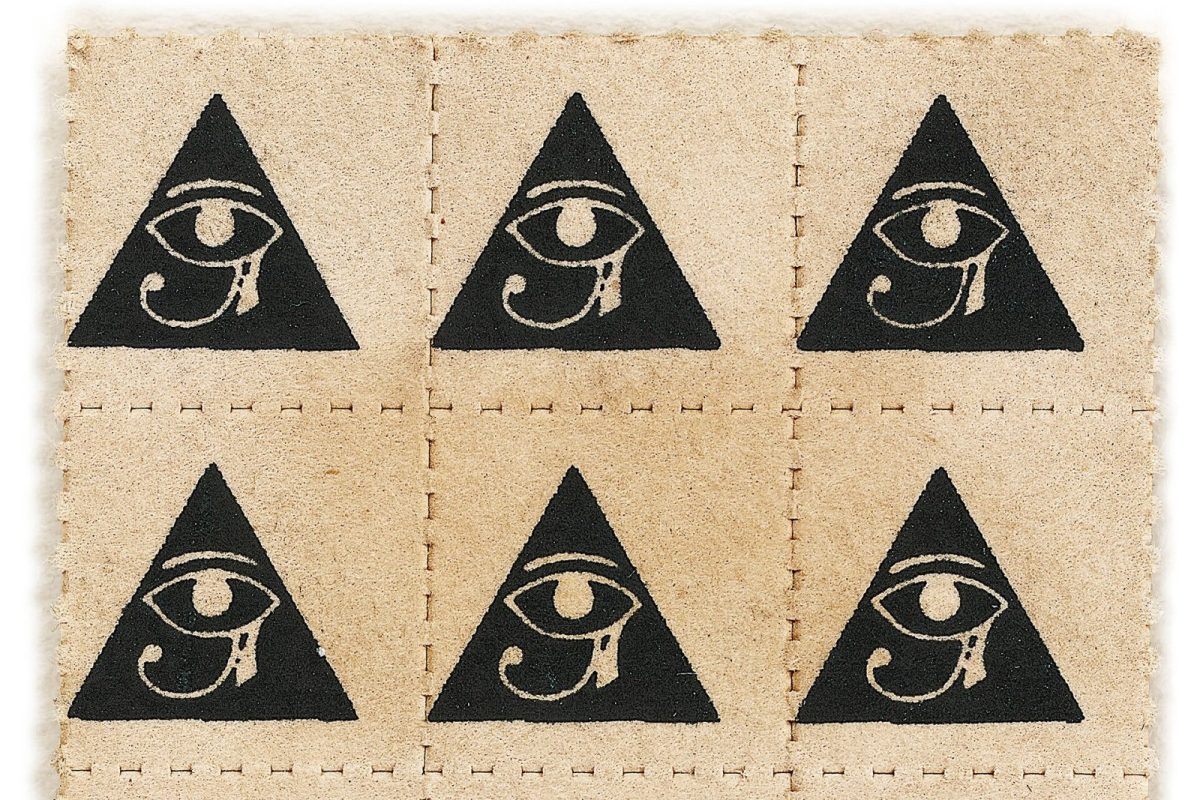
The standard flier describes stickers with names like “Blue Star,” “Red Pyramid,” or “Windowpane,” or designs featuring Bart Simpson, Mickey Mouse, butterflies, or clowns. It warns that the drug “absorbs directly through the skin simply by handling the paper” and reels off an alarming checklist of symptoms: hallucinations, vomiting, uncontrollable laughter, erratic body temperature, and memory loss. The entire narrative is crafted to terrify, not to inform.
Why the Narrative Falls Apart
Let’s start with the basics: LSD does not absorb in any meaningful amount through intact skin simply by touching a piece of paper. That premise, repeated across nearly every version of the hoax, is chemically baseless. But the underlying reality is even simpler: the temporary tattoos and stickers sold to children are standard novelty and stationery products, manufactured and distributed like any other toy. They have never been found to contain psychoactive substances, nor has there ever been a single verified case of a child intoxicated by handling them.
The laundry list of “symptoms” hardly helps the rumor’s credibility either, as it describes nearly point for point the everyday behavior of children letting loose after school: running around, bursting into laughter, crying two minutes later, running hot or cold for no clear reason, and forgetting what they did that afternoon. None of that requires a hallucinogen; it is simply what childhood looks like. That coincidental overlap is precisely what makes the warning “feel” convincing to anyone already primed to believe it.
The True Origin of the Confusion
The myth did not emerge out of thin air; it has a real, documented point of departure. For decades, LSD has indeed been distributed on small sheets of blotter paper (commonly called “blotter” or “tabs”) printed with all kinds of artwork. Sometimes these feature icons of adult counterculture or psychedelic history—figures associated with Albert Hofmann or Timothy Leary—while other times they feature cartoon characters. It is this imagery, superficially childlike yet intended for an adult audience, that likely triggered the initial alarm.
One need only imagine an adult with no knowledge of drug culture stumbling across a sheet of blotter printed with cartoon art. The cognitive leap is immediate: “This looks like it’s for kids, so it must be targeted at kids.” Amplified by word of mouth, that initial panic gave birth to the specter of predatory dealers targeting elementary school gates. The conflation of two items that share nothing beyond visual appearance—an innocuous sticker and a sheet of LSD blotter—is the true engine driving the legend.
A Legend with a Date and a Passport
Researchers tracking the myth’s trajectory often point to 1980 as a milestone, when the New Jersey State Police Narcotics Bureau published an advisory featuring images of LSD blotter emblazoned with Mickey Mouse, warning that young children might mistake them for temporary tattoos. Some researchers have traced similar variants circulating as far back as the 1960s. From there, the warning spread globally and mutated: counterfeit letterheads from hospitals, police departments, and school boards were tacked on to lend authority—a classic hallmark of panic chain letters.
The appearance of cartoon characters on blotter art is hardly coincidental. As historians of psychedelic culture have observed, that iconography partly traces back to the countercultural reinterpretation of Walt Disney’s Fantasia (1940), an animated film widely embraced for its psychedelic overtones and whose most famous segment starred Mickey Mouse. At its core, the hoax is simply a modern iteration of an ancient archetype: poison concealed within an innocent childhood object. Snow White’s poisoned apple operates on the exact same psychological mechanism.
Giving Credit to the Mythbusters
In the Spanish-speaking world, researcher and educator Eduardo Hidalgo tackled this issue in his “mythbusters” series on drugs, blending field research with sharp humor to reach a definitive conclusion: children’s temporary tattoos do not contain, and have never contained, LSD, and the “suspicious behavior” of kids is simply kids being kids. We highlight that conclusion here because it remains entirely valid, and because it illustrates an idea central to Psiconáutica: many “drug dangers” treated as conventional wisdom collapse under basic scrutiny.
A Critical Perspective
It is worth looking beyond merely saying “it was false.” Urban legends like this fulfill an enduring social function, which is why they survive every debunking: they channel genuine adult anxiety—the fear of failing to protect one’s children—onto a clear, external villain: the predatory stranger. That scapegoat is far more comforting than confronting the real drivers of problematic substance use, which are typically rooted in internal, family, and systemic issues.
Yet these moral panics are far from harmless. They flood the conversation with noise, erode the credibility of warnings that genuinely matter, and teach both children and adults to distrust public health messaging once the claims are proven false. Whenever a message weaponizes fear, demands urgent forwarding, and invokes nameless institutions that cannot be verified, there is ample reason to pause and question it before hitting share.
That said, honest drug education does not mean dismissing real risks. LSD is real, it is sold on blotter, and it is not a toy. Learning about actual substances, their effects, and their contexts is far more constructive than chasing phantom stickers at the schoolyard gate. Distinguishing fabricated panics from genuine harm is precisely what constitutes a mature, adult psychedelic culture.
Sources cited in the original (unlinked): Sampere and Ortí, Leyendas urbanas; J. Usó, Leyendas sin desperdicio; the Blue Star Tattoo Page from the Lycaeum archive.


