

In brief
- A randomized, double-blind trial at an oncology hospital in India compared intravenous infusions of ketamine and lidocaine in 66 people with cancer pain that no longer responded to high doses of opioids.
- Pain relief was similar between both drugs (84.8% for ketamine, 72.7% for lidocaine, a difference without statistical significance), and both equally reduced the amount of opioids required.
- Ketamine caused more adverse effects than lidocaine (30.3% versus 9.1%), leading the authors to prefer lidocaine as the first-line option in this context.
When cancer pain no longer responds to increasing doses of morphine or its equivalent, options become limited. A team from the Basavatarakam Indo American Cancer Hospital and Research Institute in Hyderabad has tested whether intravenous ketamine—known primarily for its psychiatric and anesthetic uses—offers any advantage over lidocaine, another drug already used for refractory pain, when opioids are no longer sufficient.
A head-to-head trial, not against placebo
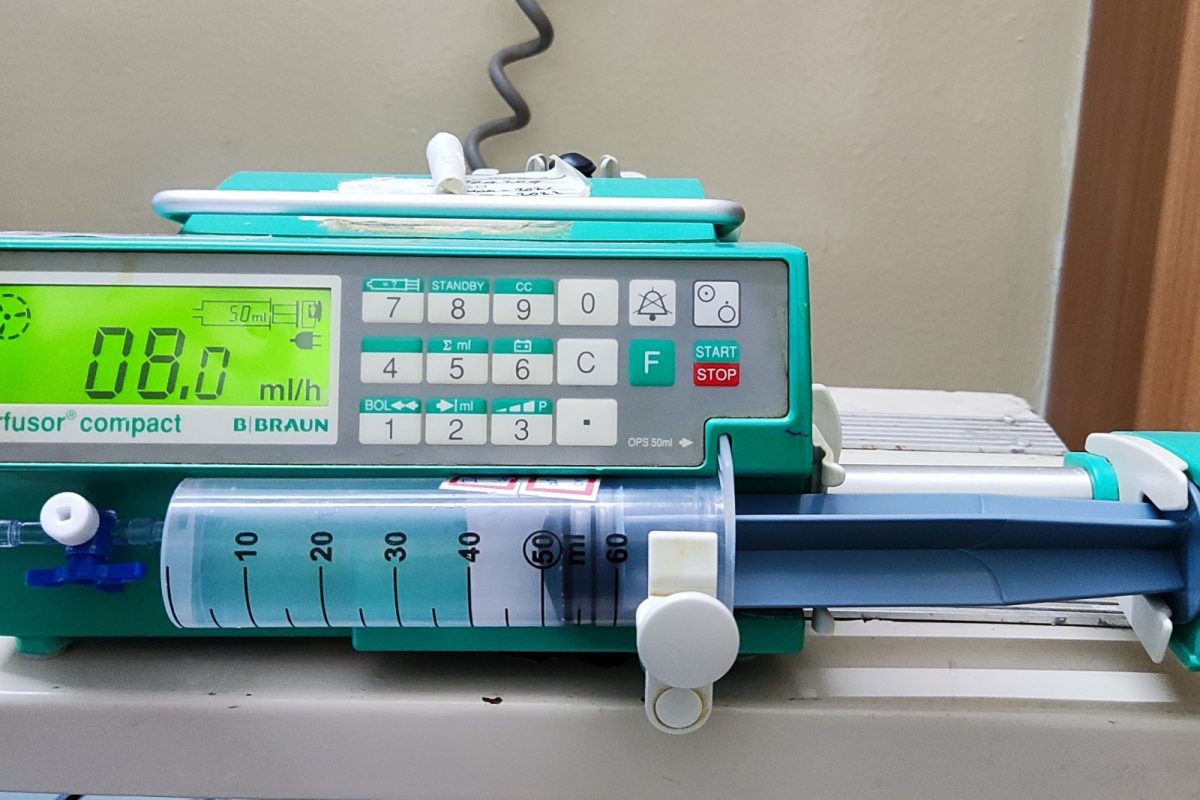
The study, published this week in BMJ Supportive & Palliative Care, recruited 66 adults between October 2023 and January 2025 who suffered from cancer pain that persisted despite exceeding 200 milligrams per day of oral morphine equivalents. Participants were randomly assigned to receive two six-hour infusions, separated by twelve hours, of either ketamine (0.3 mg/kg/hour) or lidocaine (2 mg/kg/hour), with neither patients nor evaluators knowing which drug was administered. The primary endpoint was achieving at least a 50% reduction in pain; secondary measures included adverse effects, breakthrough pain crises over a six-week follow-up, and changes in opioid dosage following the infusion.
Tie in efficacy, advantage for lidocaine in safety
Effective relief was achieved by 84.8% of those who received ketamine and 72.7% of those who received lidocaine, a difference that did not reach statistical significance (p=0.228). Both groups showed a similar and significant reduction in the dose of opioids required after the infusion, with no relevant difference between them (p=0.738). A clear difference emerged in adverse effects: 30.3% of those who took ketamine experienced them, compared to 9.1% with lidocaine (p=0.03). Breakthrough pain crises during follow-up were numerically more frequent with ketamine (42.9% versus 29.2%), although this difference was not statistically significant.
What this implies
This is a small, single-center trial that compares two active drugs rather than using a placebo, which limits the generalizability of the findings. Even so, as a double-blind, randomized study, it provides something rare in the field of refractory cancer pain: a direct comparison between two alternatives already used in clinical practice. The authors’ own conclusion is not that ketamine fails, but that, given equal relief, lidocaine offers a safer profile and should be considered the preferred option. For those who follow the medical use of ketamine—in depression or chronic pain—the relevant data is not a new indication, but a reminder that “it works” and “it is the best option” do not always coincide. This is also applicable to ketamine in other contexts, medical or otherwise, and connects to the idea, central to harm reduction, that every substance has its own balance between benefits and adverse effects that should be explained without exaggeration in either direction.
Source
- Pulluri SS, Kodisharapu PK, Suvvari P, et al. Comparison of ketamine versus lignocaine intravenous infusion in refractory cancer pain: a prospective randomised double-blind controlled study. BMJ Supportive & Palliative Care, September 25, 2026.
Educational content written from a harm reduction perspective and with respect for individual freedom. It is not a substitute for advice from a healthcare professional and is not intended to encourage or condemn any drug use.


