

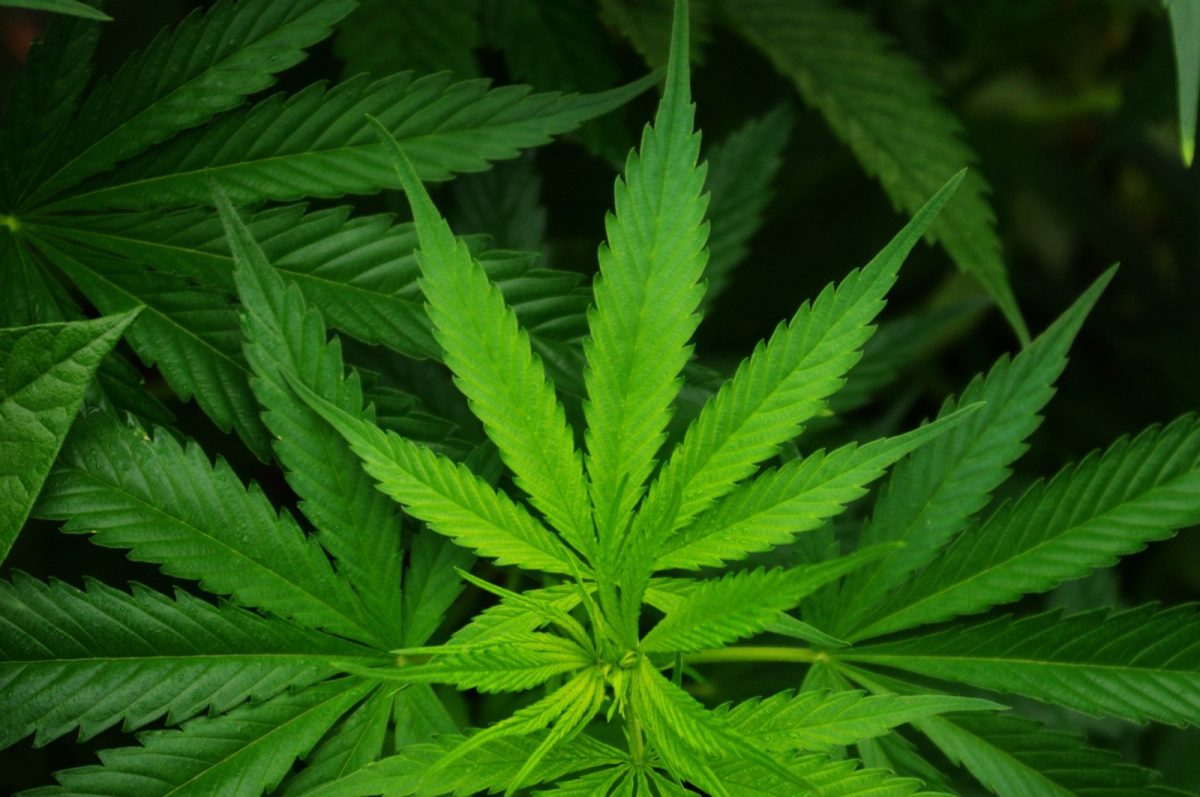
Three People, One Plant
Let us imagine three adult men. The first, unemployed, smokes between five and thirteen joints a day. The second, who works at a consulting firm, allows himself one or two in the evening once his daily responsibilities are handled. The third turns to cannabis only about four times a year, at carefully chosen moments, to engage in a specific kind of intellectual work. All three claim they have no problem with the substance. Looking closer, however, that claim holds up very differently across each case.
The interesting question is not which of them “uses heavily,” but a far more uncomfortable one: which came first, the problem or the cannabis? Framing the question this way shifts the focus from the plant to the person—and that shift is precisely what public debate routinely avoids.
The Rhetorical Water Trick
There is an easy way to prove that anything is “addictive” and “dangerous”: simply apply the logic of prohibition. Let us try it with water. If someone drinks a massive amount all at once, beyond what the body can process, it can trigger severe water intoxication (psychogenic polydipsia describes this kind of compulsive consumption). Yet no one would dream of labeling water an “evil substance” on an autopsy report: everyone would accept that the problem lay in the behavior, and clinicians would seek the underlying cause of that behavior to treat it.
With psychoactive substances, that logic gets inverted. If something happens to an individual and it turns out they had consumed a substance, the drug takes the blame before conclusive evidence even emerges. Individual agency is hijacked, so to speak, by chemistry, and the knee-jerk conclusion is that every psychoactive compound must be removed from circulation to protect a defenseless public. It is a mental shortcut designed to avoid thinking.
Use, Abuse, Dependence: Not the Same Thing
It helps to separate three concepts that everyday language routinely conflates. Clear definitions offer a useful starting point.
Use means employing something for a purpose, enjoying it, or engaging with it out of habit. Anyone who turns to cannabis with a specific goal, or simply for occasional pleasure, fits here. The tricky nuance is habit: when consumption becomes automatic, the original intention may be lost. It is no longer chosen; it is merely repeated.
Abuse means using something improperly, excessively, or harmfully. Here lies the crux of the matter: what makes a drug problematic is not the drug itself, but the behavior of the person using it. A hammer can be used to assemble furniture or to break someone’s bone; no one would blame the hammer. With psychoactive substances, however, shifting responsibility onto the object is the default standard.
Dependence implies something deeper: the individual introduces an intermediary between their perception of themselves and reality. That catalyst serves a function—soothing, sleeping, socializing, escaping—without which the consumption would be unnecessary. Dependence generates distress when it cannot be satisfied, and that distress drives repetition. If we push the water analogy once more, we are utterly dependent on water: stop drinking it for three days and see what happens. The difference is that we do not attach a moral verdict to that dependence.
Something useful emerges from this distinction: the foundation of addiction is not the substance, but the individual and how they manage their internal mental states. That is where any real analysis—and any meaningful change—must begin.
Returning to the Three Cases
The first consumer—five to thirteen joints a day for over a decade—seems like a textbook case of dependence. But cannabis here is not “the cause”: it is the tool he uses to blunt chronic anxiety he cannot otherwise manage. If he walked into a clinic and left with a long-term prescription for benzodiazepines, we would have simply swapped one crutch for another without addressing the underlying issue: the dependence would remain, just with a prescription label. The constructive work lies in examining why he smokes and addressing that root cause—building social skills if the issue is relational, establishing healthy sleep hygiene if he smokes to fall asleep—until the joint becomes dispensable. Learned helplessness, not the plant, is what is crying out for help; if it weren’t cannabis, it would be alcohol, gambling, or the internet.
The second—one or two joints after wrapping up the day—demonstrates neither abuse nor dependence in the strict sense, yet he admits he would prefer to smoke less and that he does so largely out of habit and a lack of evening leisure alternatives. Any change, if it comes, must be his own choice after weighing short- and long-term pros and cons. The key is not strict self-prohibition, but recognizing use as something that can be chosen and modified at will: in his case, saving cannabis for weekends and making plans outside the house on weeknights.
The third illustrates the opposite extreme: four times a year, in controlled settings, explicitly treating cannabis as a cognitive tool to examine specific topics from a different vantage point. He even arrives with a list of questions he wants to explore. Here, the substance is the properly wielded hammer: a means to an end, not an end in itself.
The Tool Doesn’t Decide; the Person Does
Three different patterns of using the same plant show that the problem—when one exists—does not reside in the substance, but in the function it fulfills and the personal coping resources of the individual. This is not an apologetic defense; it is the exact opposite of surrendering agency to chemistry. Anyone who suspects their use is no longer an intentional choice and has become a prop to endure what they cannot face otherwise would do well to seek professional guidance. The goal is neither to defend nor demonize cannabis, but to return control over one’s internal states to the person.
Critical Reading
This essay reasons from clinical psychology and harm reduction rather than quantitative pharmacology. It is worth keeping in mind: cannabis does have documented dependence potential in the scientific literature, particularly with heavy, early-onset, or daily use, and specific vulnerability profiles exist (psychosis risk, young age, underlying mental health conditions) where “it depends on the person” should never be interpreted as “anyone can handle it.” The hammer and water analogies are useful rhetorical devices for highlighting personal agency, but they oversimplify: a psychoactive substance directly modulates the central nervous system in ways a hammer never could. The three cases are illustrative rather than a representative sample, and the assessment that “there is no problem” reflects the author’s perspective. Take this, then, as an invitation to examine drug use through the lens of function and context, complemented by rigorous clinical evidence before drawing conclusions about any specific situation.