

In brief
- An article published in the journal Psychedelics argues that the “ancestral” ceremony involving Sonoran Desert toad secretion for inhaling 5-MeO-DMT lacks ethnographic support and actually began in 2011.
- The authors trace the narrative to the OTA.C Foundation, created within the Comcáac (Seri) community to curb methamphetamine use, and its subsequent spread via a book (2016) and a documentary (2019).
- The use of plant-based 5-MeO-DMT, in snuffs prepared with yopo seeds (Anadenanthera peregrina), does have historical documentation; the toad-based practice does not.
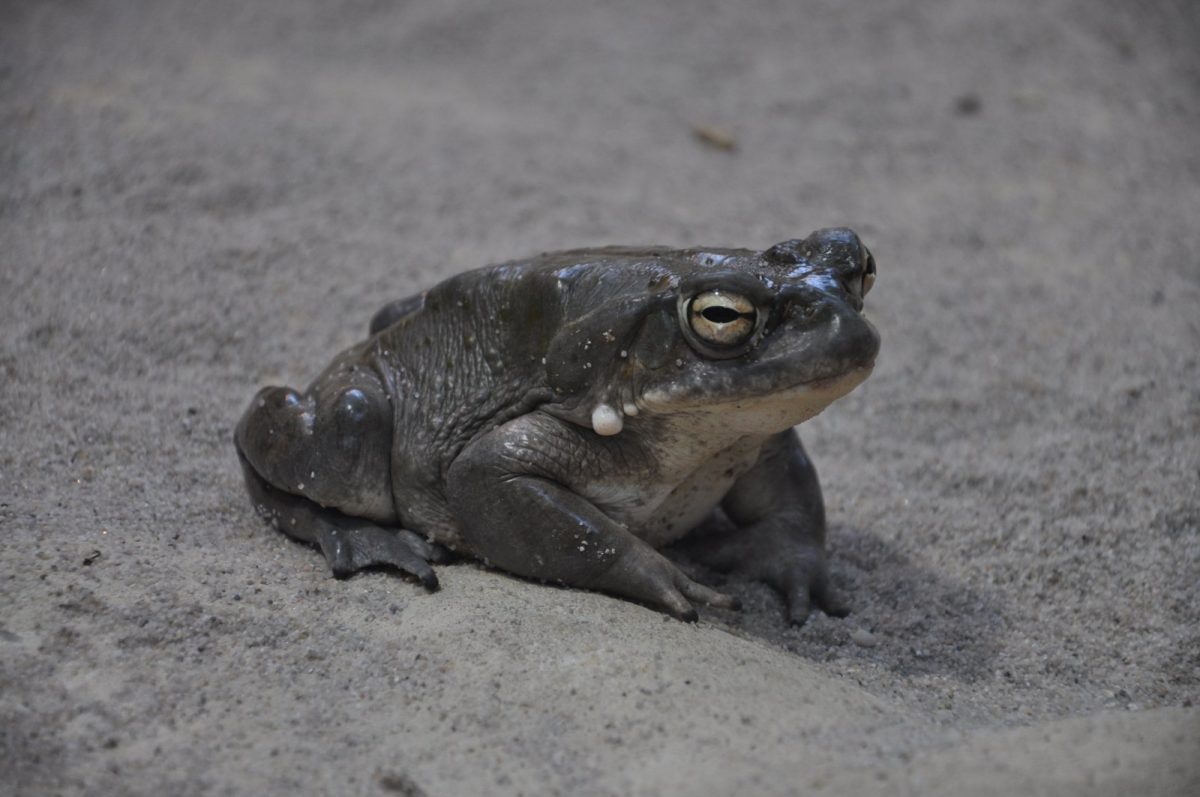
A team of researchers has published an ethnographic and historical analysis in the Elsevier journal Psychedelics that challenges one of the most repeated narratives of the psychedelic renaissance: that smoking the secretion of the Sonoran Desert toad (Incilius alvarius) to obtain 5-MeO-DMT is an ancient ceremonial practice of indigenous peoples in northern Mexico. According to the study, this “ancestrality” was constructed just over a decade ago.
From community remedy to global phenomenon
The study, authored by A. M. Ortiz Bernal, C. L. Raison, A. M. Vargas Prieto, and A. K. Davis, reconstructs how members of the Comcáac (Seri) community in Punta Chueca, Sonora, launched the OTA.C Foundation in 2011 with the stated goal of curbing methamphetamine use among youth through the use of inhaled 5-MeO-DMT. The molecule itself is not a recent discovery—it was first synthesized in 1936, and its presence in toad glands was verified in 1965. What the authors cannot find is any ethnographic record of ceremonial consumption of that secretion prior to these dates.
How the narrative spread
The paper identifies two milestones in the international popularization of the narrative: the 2016 publication of the book The Toad of Dawn by Mexican physician Octavio Rettig Hinojosa, and the 2019 release of the documentary OTAC & the Ancient Sacred Medicine Ceremony, directed by Leonardo Bondani. From there, the “toad” became part of the transnational psychedelic tourism circuit: OTA.C began issuing permits for “authentic” ceremonies for $500, and a kilogram of secretion can fetch up to $50,000 on the international entheogenic market. The researchers contrast this case with plant-based 5-MeO-DMT, found in snuffs made from yopo seeds (Anadenanthera peregrina) or Virola theiodora sap, whose ritual use among Central and South American peoples is indeed documented.
What it implies
The article does not question the experience of those who participate in toad ceremonies, but rather the cultural framework under which they are sold. Presenting a practice that is barely fifteen years old as ancestral knowledge has consequences, the authors note, both for the genuine recognition of indigenous peoples—to whom a tradition they did not claim is attributed—and for the conservation of Incilius alvarius, which is under increasing pressure due to the demand for fresh secretion. It is worth remembering a practical detail: laboratory-synthesized 5-MeO-DMT is chemically identical to that secreted by the amphibian, meaning there is a way to access the compound without extracting it from a wild animal. In fact, the pharmaceutical industry is already exploring this route, as we reported when Eli Lilly purchased a 5-MeO-DMT nasal spray. Educating oneself about the origin of what is consumed is part of harm reduction, and in this case, the harm does not fall only on the person inhaling.
Source
- Ortiz Bernal AM, Raison CL, Vargas Prieto AM, Davis AK. “Fabricated ancestrality: The Sonoran Desert toad, psychedelic globalization, and the ecological politics of 5-MeO-DMT”. Psychedelics, vol. 3, art. 100012, June 2026.
Educational content written from a harm reduction perspective and with respect for individual freedom. It is not a substitute for advice from a healthcare professional and is not intended to encourage or condemn any drug use.


