

In brief
- An article published in the journal Psychedelics argues that claims of an ancestral Sonoran Desert toad-secretion ceremony lack historical and ethnographic support. This review does not set a single origin date for every practice.
- The authors analyze the narrative’s transnational circulation and ecological consequences. It is not an addiction-treatment trial or an inventory of every oral tradition.
- The use of plant-based 5-MeO-DMT, in snuffs prepared with yopo seeds (Anadenanthera peregrina), does have historical documentation; the toad-based practice does not.
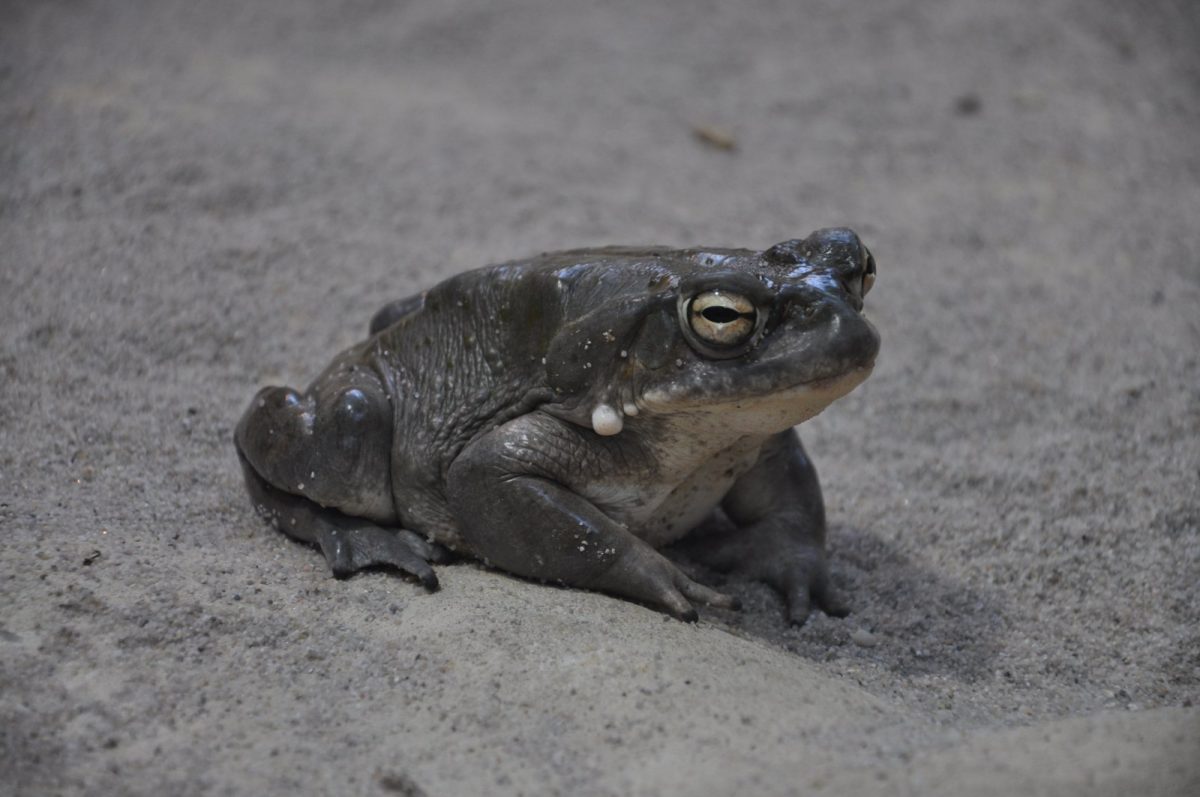
A team of researchers has published an ethnographic and historical analysis in the Elsevier journal Psychedelics that challenges one of the most repeated narratives of the psychedelic renaissance: that smoking the secretion of the Sonoran Desert toad (Incilius alvarius) to obtain 5-MeO-DMT is an ancient ceremonial practice of indigenous peoples in northern Mexico. The abstract interprets that narrative as attributing antiquity to recent practices; a universal origin date for every practice is not established here.
From community remedy to global phenomenon
The analysis by A. M. Ortiz Bernal and colleagues examines how ancestral legitimacy and Comcáac tradition have been attributed to contemporary use of 5-MeO-DMT from the toad. The abstract interprets this as reframing recent practices; it does not establish efficacy against methamphetamine use. Without inspecting the complete field documents, this review does not certify exact historical dates or the foundation’s organization described in the earlier version.
How the narrative spread
The earlier version mentioned the book The Toad of Dawn and the documentary OTAC & the Ancient Sacred Medicine Ceremony, but this review did not verify those materials, dates, ceremony charges or secretion prices. The abstract does link media dissemination, retreat economies and pressure on the toad. It distinguishes that narrative from historically documented plant snuffs prepared with Anadenanthera peregrina or Virola theiodora resin, whose use in Indigenous South American and Caribbean contexts is described in the introduction. That documentation is not proof of ancestral toad-secretion use.
What it implies
The authors question documentary support for an ancestry narrative and call for historical rigor and ecological accountability. Their interpretation does not justify denying every oral tradition or claiming no community identifies with a practice. They also link commercialization to extractive pressure on Incilius alvarius, without this review auditing wild populations or their changes. Synthetic material permits 5-MeO-DMT research without collecting secretion, but does not make synthetic products and secretions equivalent mixtures or safe treatments. For commercial context, we reported that Eli Lilly announced an agreement on a 5-MeO-DMT nasal spray. Educating oneself about the origin of what is consumed is part of harm reduction, and in this case, the harm does not fall only on the person inhaling.
Source
- Ortiz Bernal AM, Raison CL, Vargas Prieto AM, Davis AK. “Fabricated ancestrality: The Sonoran Desert toad, psychedelic globalization, and the ecological politics of 5-MeO-DMT”. Psychedelics, vol. 3, art. 100012, June 2026.
Educational content written from a harm reduction perspective and with respect for individual freedom. It is not a substitute for advice from a healthcare professional and is not intended to encourage or condemn any drug use.