In brief
- Salvia divinorum (ska Pastora or “leaves of the Shepherdess”) is a plant from the Mazatec Sierra of Oaxaca, Mexico, used traditionally by healers in divination and healing ceremonies.
- María Sabina, famous for the sacred mushrooms, noted that the leaves of the Shepherdess were used when mushrooms were scarce.
- Its active principle, salvinorin A, acts on the kappa-opioid receptor—a mechanism distinct from that of classic psychedelics. Its potential therapeutic interest is being investigated, though evidence remains preliminary.
Among the visionary plants of Mexico, Salvia divinorum occupies a unique place. Its green leaves have accompanied Mazatec healers for generations, and its history is intertwined with that of María Sabina, the curandera who introduced the sacred mushrooms of Huautla to the world. This article reviews its traditional use and what science knows today, with calm and without sensationalism.
The plant and its Mazatec name
Salvia divinorum is a perennial plant in the Lamiaceae family (the same as mint and sage), native to the humid and shaded areas of the Mazatec Sierra in the state of Oaxaca. It was botanically described by Epling and Játiva-M. in 1962, although its ritual use had already been recorded in writing earlier, around 1939, by researcher Jean B. Johnson while he was studying Mazatec shamanism.
The Mazatec people know it as ska Pastora or ska María Pastora, which can be translated as “leaf of the Shepherdess” or “herb of the Virgin Mary.” In their worldview, the plant is associated with a sacred female figure, a trait of syncretism between indigenous beliefs and Catholicism. Hence the popular name “leaves of the Shepherdess.” The tradition also attributes to it, in addition to divination, uses for accompanying ailments such as anemia, rheumatism, headaches, or digestive discomfort.
María Sabina and the veladas
María Sabina Magdalena García (Huautla de Jiménez, 1894–1985) was the most influential chjota chjine—“the one who knows”—of Mexican mysticism. She achieved worldwide fame when, in the 1950s, ethnomycologist Robert Gordon Wasson participated in one of her veladas (night vigils) with Psilocybe mushrooms and publicized the experience. That public exposure, which she did not seek, transformed her life and that of her community.
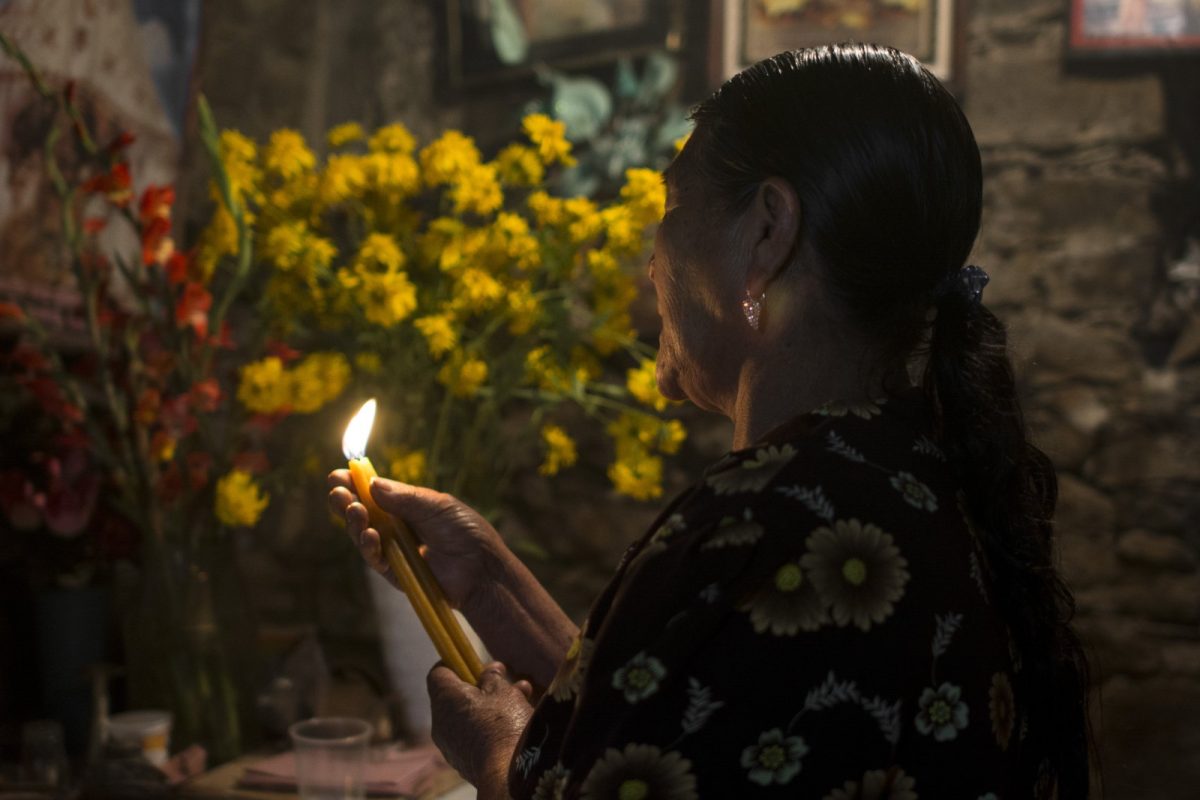
Salvia divinorum belongs to the same ceremonial universe. The Mazatec velada is a nocturnal rite, held in dim light and silence, guided by the healer through chants and prayers. When the leaves of the Shepherdess were used, they were crushed fresh and taken with water, or chewed. María Sabina explained to ethnobotanists that these leaves were used primarily when mushrooms were not available, a sign that they were part of the same repertoire of master plants at the service of diagnosis and healing, within a carefully maintained ritual framework.
What science says: salvinorin A
The compound responsible for the plant’s effects is salvinorin A, a neoclerodane diterpene that is notable for two reasons. First, it is a non-nitrogenous molecule, which is exceptional among psychoactive substances. Second, according to the review by Butelman and Kreek published in Frontiers in Pharmacology (2015), it acts as a highly potent and selective agonist of the kappa-opioid receptor (KOR), a target completely different from that of classic serotonergic psychedelics like psilocybin or LSD, which operate on the 5-HT2A receptor.
It is considered one of the most potent natural psychoactive substances known by weight. Its effects are rapid and short-lived: when smoked, they appear in seconds, peak around two minutes, and subside within about half an hour; when chewed, the onset is slower and more gradual. The experience is usually intense and disorienting, with a strong disconnection from the environment and, in animal models, signs of aversion and anhedonia. Current scientific interest involves using this molecule as a template to develop drugs for mood disorders or addiction, although this is preliminary and experimental research: for now, there are no medications developed from it.
Harm reduction
Anyone who decides to approach this plant outside of its ceremonial context gains much by knowing how it behaves. Salvia divinorum is potent and its effects can be overwhelming: momentary loss of body control, involuntary movements with a risk of falls and bumps, intense confusion, or episodes of distress. These are not reasons for fear, but data to prepare for the experience with a clear head. Harm reduction guides agree on simple precautions: have a sober and trusted person present to accompany you from beginning to end (a “sitter”), choose a clear and safe space—without furniture with sharp corners or stairs nearby—and let the effect pass without driving or operating machinery. Your current life situation also counts: during phases of psychological distress or with a history of mental disorders, many people prefer to postpone it.
On the legal front, the landscape is heterogeneous. In Spain, the plant does not appear on the lists of controlled substances, so possession and personal cultivation are not prohibited, although its trade is subject to controls; many countries, however, have expressly restricted or prohibited it. This is useful context to know, especially if you are traveling.
Sources
- Butelman ER, Kreek MJ. Salvinorin A, a kappa-opioid receptor agonist hallucinogen: pharmacology and potential template for novel pharmacotherapeutic agents in neuropsychiatric disorders. Frontiers in Pharmacology, 2015.
- ICEERS. Salvia divinorum: basic information. ICEERS, accessed in 2026.
- Legal status of Salvia divinorum. Wikipedia, accessed in 2026.
Educational content written from a harm reduction perspective and with respect for individual freedom. It is not a substitute for advice from a healthcare professional and is not intended to encourage or condemn any drug use.