

In brief
- A team at the Weizmann Institute of Science (Israel) has genetically modified a tobacco relative to simultaneously produce five psychedelic tryptamines: DMT, 5-MeO-DMT, psilocybin, psilocin, and bufotenin.
- Researchers reconstructed pathways for compounds associated with plants, fungi and toads, also using plant enzyme functions for steps not yet elucidated in the toad, and by changing a single amino acid, they increased 5-MeO-DMT production 40-fold.
- The work, published in Science Advances, is laboratory-based synthetic biology, not a clinical trial; its immediate value is producing these compounds more cleanly and consistently for research.
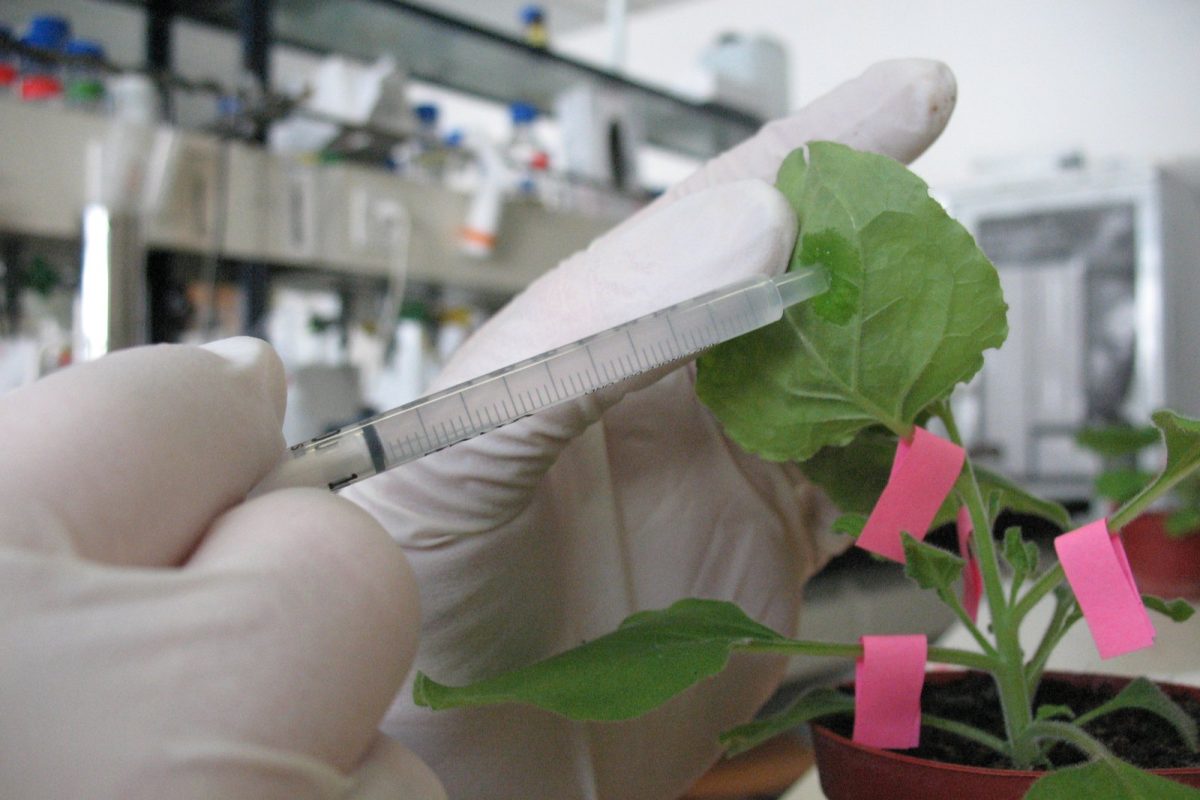
A group of researchers at the Weizmann Institute of Science in Israel has achieved something nature never does on its own: gathering five psychedelic molecules in a single organism that are normally distributed across plants, fungi, and an amphibian. The modified plant, a wild relative of tobacco commonly used in plant biology, now manufactures DMT, 5-MeO-DMT, psilocybin, psilocin, and bufotenin. The study was published in Science Advances on April 1, 2026.
From ayahuasca to the toad, all in one leaf
DMT occurs in plants traditionally used in ayahuasca; 5-MeO-DMT is a distinct molecule and should not be presented as the same ingredient of that preparation; psilocybin and psilocin come from certain mushrooms, and bufotenin is primarily associated with the secretions of the Sonoran Desert toad (Bufo alvarius). As the authors explain, the central challenge was reproducing the pathway that converts the amino acid tryptophan into DMT: they located the pair of plant enzymes responsible (known as TDC and NMT) and introduced them into Nicotiana benthamiana, a plant that began generating the compound within days without the need to extract it from its natural source.
A single-letter change multiplies yield
From there, the team added genes from other organisms—including plant enzyme functions to reconstruct bufotenin and 5-MeO-DMT biosynthesis, only partly elucidated in the toad—until a single plant could synthesize all five molecules. Using protein design tools, researcher Paula Berman describes how “we mutated one amino acid in the sequence and obtained a 40-fold increase” in 5-MeO-DMT production. The team, led by Professor Asaph Aharoni, went further by adding bacterial enzymes to create halogenated variants of these tryptamines that do not exist in nature. The authors themselves acknowledge a significant limitation: by activating several metabolic pathways at once, they compete for the same precursors, which still reduces the overall efficiency of the system.
What this implies
It is important to place this finding in context: it is laboratory-based synthetic biology, not a study on humans or an immediate therapeutic promise. Its most immediate practical value is offering a more controlled and scalable production route for molecules currently obtained by extracting them from wild mushrooms, Amazonian plants, or toads, which places pressure on those populations. The researchers themselves propose, as a still-speculative horizon, designing plants capable of reproducing more complex mixtures—like ayahuasca itself—or even edible crops for more controlled dosing in research contexts. None of these applications are near or have been tested in humans; what this work provides is a production tool, not a conclusion on efficacy or safety. As always in early-stage research, prudence dictates not anticipating clinical uses that science does not yet support, without detracting from an advancement that opens interesting doors for those who study these substances with rigor.
Source
- Weizmann Institute of Science. “One plant, three kingdoms, five trips”. EurekAlert! / Science Advances, July 7, 2026.
Educational content written from a harm reduction perspective and with respect for individual freedom. It is not a substitute for advice from a healthcare professional and is not intended to encourage or condemn any drug use.

