

In brief
- Salvinorin A, the active principle of Salvia divinorum, is the most potent naturally occurring hallucinogen known. It acts on kappa-opioid receptors, not on serotonin like classic psychedelics.
- Its dissociative effects are brief but highly intense and disorienting. The primary concern is not toxicity, but the environment, to prevent accidents and support potential reactions of fear or confusion.
- Traditionally used by Mazatec communities, it is currently of interest as a template for researching drugs for addiction, pain, or mood disorders, though this remains in the preclinical phase.
Salvia divinorum is a plant famous for the abruptness and strangeness of its effects. Unlike other psychedelics, it does not typically produce euphoria or a contemplative journey, but rather an abrupt disconnection from reality that many people describe as unpleasant. This article gathers, calmly and without drama, what is currently known about its effects and how those who decide to approach it can take care of themselves.
What is Salvia divinorum
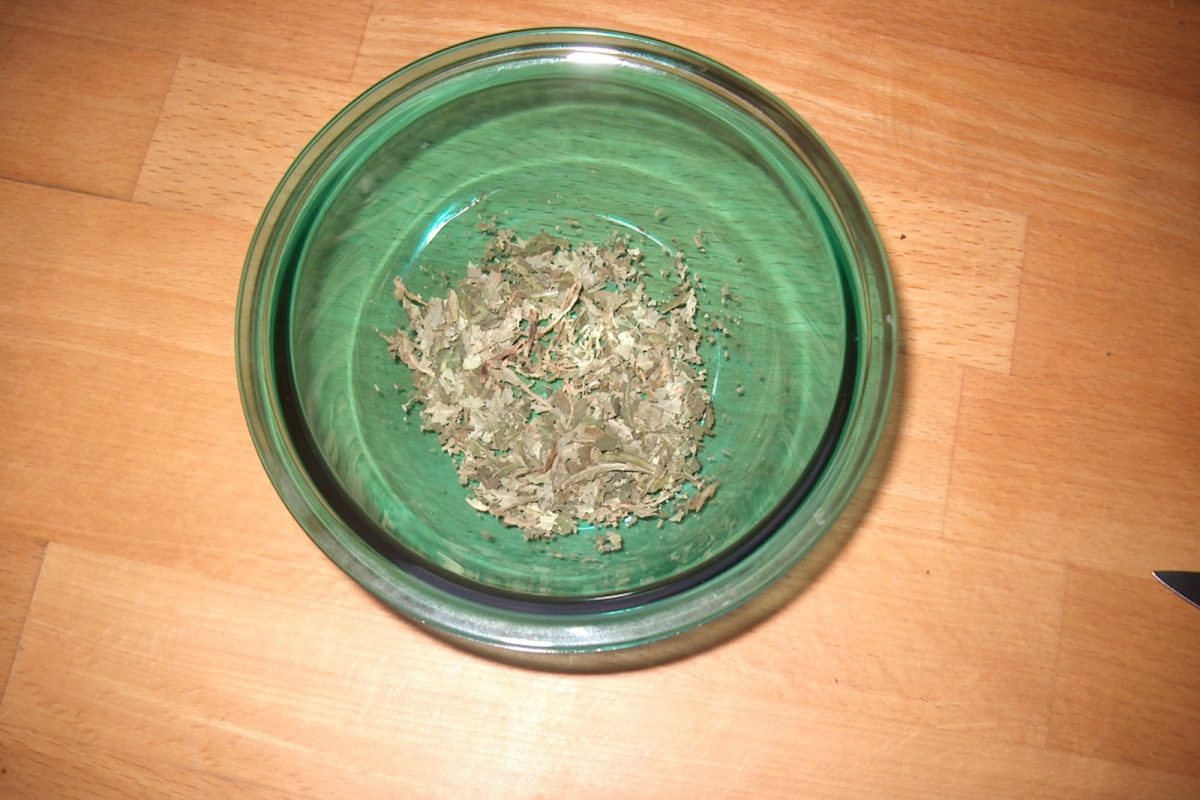
It is a plant in the mint family (Lamiaceae) native to the Sierra Mazateca of Oaxaca, Mexico, where Mazatec communities have traditionally used it for divinatory and healing purposes. Its active principle, salvinorin A, is a diterpene that scientific literature describes as the most potent naturally occurring hallucinogen identified to date. It is consumed by chewing fresh leaves, in sublingual tinctures, or by smoking dried leaves, and the intensity varies enormously depending on the route and the concentration of the preparation.
How it acts: the kappa-opioid receptor
This is the pharmacological peculiarity of salvia. Salvinorin A is a selective and potent agonist of kappa-opioid receptors, not the serotonin (5-HT2A) receptors responsible for the effects of LSD or psilocybin. It also does not act on mu-opioid receptors, so it does not share the risk of respiratory depression or the addictive potential typical of classic opioids. This mechanism explains the dissociative nature of the experience: a sense of unreality, visual and auditory hallucinations, distortion of objects, loss of contact with one’s own body or depersonalization, dizziness, and motor incoordination.
The duration depends on the route. When smoked, the effects appear in a matter of seconds, reach a very intense peak, and usually subside in about twenty minutes; the NIDA itself has colloquially described it as a very brief but abrupt trip. Orally or sublingually, the onset is slower (between five and ten minutes) and the experience lasts somewhat longer. The half-life of the active compound is only a few minutes, which is consistent with the ephemeral nature of its effects.
Real risks
Controlled studies with purified salvinorin A have not found significant alterations in vital signs, and the substance was tolerated without serious adverse effects under laboratory conditions. It is worth stating this clearly so as not to exaggerate the danger. What matters most is not organic toxicity, but the mental state it induces: the disconnection is so abrupt and disorienting that the person may fall, hit themselves, or move uncontrollably, which is why environment management is the key piece.
Psychologically, reports and case series document panic attacks, intense anxiety, paranoia, and confusion during the episode. There are also isolated reports of prolonged psychotic-type reactions, although their interpretation is difficult because they often involve the simultaneous use of other substances or a prior predisposition. Evidence on long-term effects is scarce. The addictive potential is considered low, though not zero. Physical effects described include nausea, dizziness, incoordination, and slurred speech.
A good portion of research interest today focuses on salvinorin A and its analogs as a possible template for drugs to treat addiction, pain, or mood disorders. For now, this is preclinical and experimental research: clinical application is yet to be developed, limited precisely by the intensity of its psychotropic effects.
Harm reduction
As context: in Spain, Salvia divinorum is not a controlled substance. It was once included in a list of plants with restricted sales (Order SCO/190/2004), but that regulation was annulled by the courts in 2005, so there is currently no specific state regulation prohibiting its sale. Its status varies greatly from one country to another. With this on the table, the decision to approach it or not belongs to each individual; what follows are precautions for those who choose to do so.
The dissociation is so abrupt that having company matters more than with almost any other substance: having a sober and trusted person to accompany you and prevent falls completely changes the experience. It helps to be sitting or lying down in a quiet place, away from stairs, windows, water, fire, or any object you could hit yourself against, and to leave driving or operating machinery for another time. Mixing it with alcohol or other depressants clouds the experience and should be avoided. Anyone with a personal or family history of psychosis or bipolar disorder has a significant reason to consider this with special care. If an intense crisis occurs or symptoms do not subside, seeking timely medical attention is always the best option.
Sources
- Int. J. Mol. Sci. (MDPI). Salvinorin A and Salvia divinorum: Toxicology, Pharmacological Profile, and Therapeutic Potential. International Journal of Molecular Sciences, 2025.
- Pharmaceuticals (MDPI). Pharmacokinetics and Pharmacodynamics of Salvinorin A and Salvia divinorum: Clinical and Forensic Aspects. Pharmaceuticals, 2021.
- National Institute on Drug Abuse (NIDA). Drugs A to Z: Salvia. NIDA, USA.
Educational content written from a harm reduction perspective and with respect for individual freedom. It is not a substitute for advice from a healthcare professional and is not intended to encourage or condemn any drug use.


