

In brief
- A magnetoencephalography (MEG) reanalysis of 17 volunteers indicates that LSD accelerates the brain’s alpha and beta rhythms, in addition to weakening them.
- Brain signals become more complex and fractal in sensory, language, emotional, and imagery networks, but not in the motor cortex.
- Music did not robustly reinforce these signatures; it even showed a tendency to attenuate them.
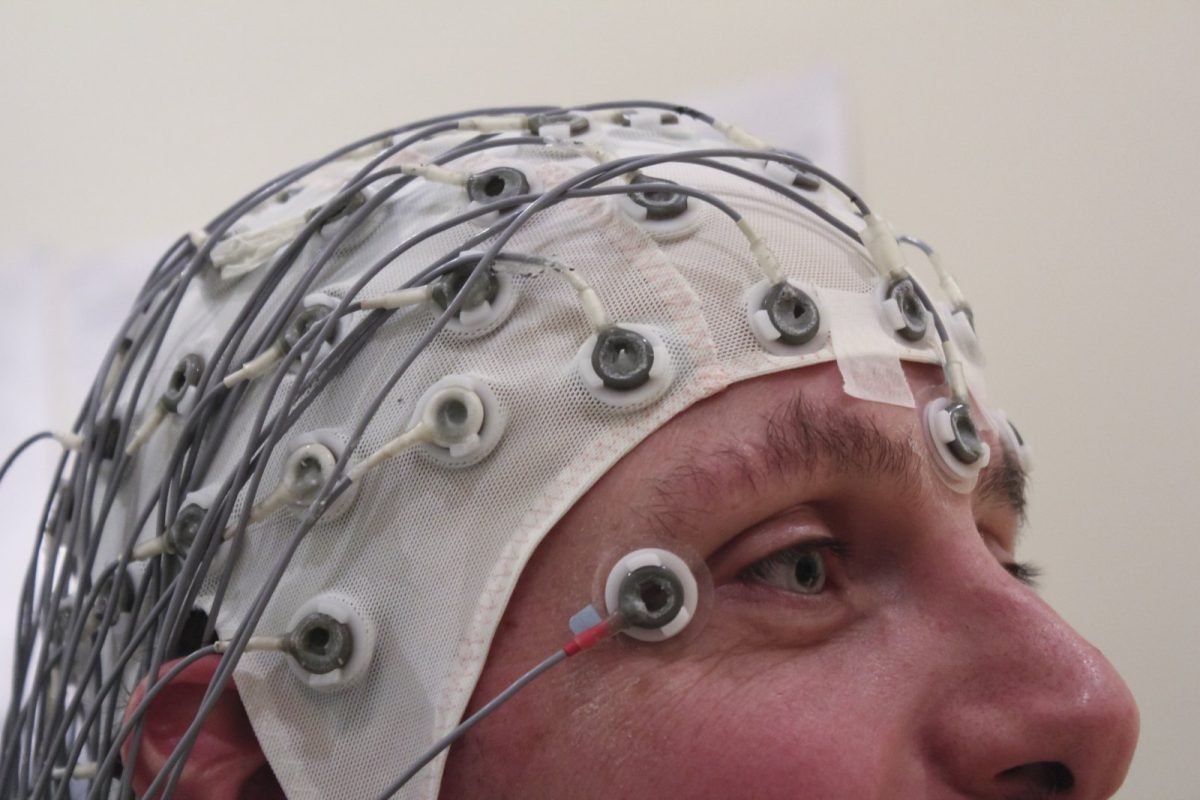
A team led by researchers at the University of Montreal has reanalyzed magnetoencephalography recordings from volunteers under the effects of LSD. Their conclusion: the drug, in addition to dampening the rhythmic activity of the cortex, changes the frequency at which it oscillates. The work was published on October 7, 2026, in Communications Biology.
Lower power, but faster rhythms
A classic result in psychedelic research is cortical “desynchronization,” which is usually inferred from a drop in spectral power. The authors point out a methodological issue: if the peak of a rhythm shifts toward higher frequencies, it may appear weakened when measured with fixed bands, even though it has actually changed speed. For this reason, they applied spectral parameterization to separate rhythmic from non-rhythmic activity.
Using this approach, they found robust, spatially patterned increases in the peak frequencies of alpha and beta rhythms, alongside a genuine attenuation of oscillatory power. Both phenomena exhibited partially distinct cortical distributions. Beyond rhythms, LSD was associated with a flattening of the 1/f spectral slope and increased fractality and signal complexity. These changes were concentrated in sensory, language, emotional, and imagery networks, while sparing the motor cortex. Machine learning models identified peak frequency shifts, aperiodic parameters, and complexity measures as the features that best distinguished the psychedelic state from the placebo.
The data and the role of music
This is not a new trial. The authors reused data from 17 participants collected by Carhart-Harris and colleagues, using a within-subject, single-blind, counterbalanced design. In one session, participants received 75 µg of LSD intravenously, and in another, a saline solution, with 14 days between sessions. The MEG was recorded approximately four hours after injection, in seven-minute segments with eyes closed, with or without music: two tracks from an ambient electroacoustic album.
Music did not robustly amplify the LSD signatures and showed a tendency to attenuate them. The authors relate this to previous work suggesting that the acute effect of psychedelics may diminish when a person attends to external stimuli. Global correlations with subjective experience were exploratory and were not corrected for multiple comparisons.
What it implies
The study offers a finer electrophysiological description of how LSD reorganizes cortical dynamics and proposes features that could differentiate its signature from that of other psychedelics, although that comparison remains a hypothesis. The authors themselves note the limitations: the sample size is only 17 people, the analysis may lack the power to detect the interaction between the drug and music, and subjective ratings were collected relative to the peak effect while the MEG was acquired about 150 minutes after that peak. There was also no electromyography recording to compare muscle activity between conditions. These are basic neuroscience findings, not evidence of therapeutic efficacy.
If you would like more context on this substance, you can consult our guide on LSD and ergot. Regarding other recent neuroimaging work, read about the largest brain mapping of psychedelics.
Source
- Subramani V. et al. LSD reconfigures cortical dynamics through faster brain rhythms and increased fractal dimension. Communications Biology 9, 1244, October 7, 2026. DOI 10.1038/s42003-026-10629-7.
Educational content written from a harm reduction perspective and with respect for individual freedom. It is not a substitute for advice from a healthcare professional and is not intended to encourage or condemn any drug use.