

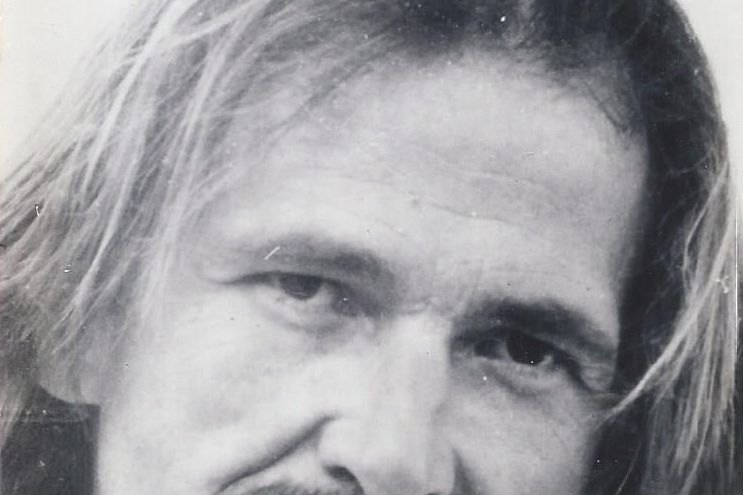
A Classic Worth Rereading With Some Distance
Few books have weighed as heavily on Spanish-language psychoactive culture as Antonio Escohotado’s Historia General de las Drogas. His pages on cannabis have circulated for years among people coming to the plant, and they remain a good way in. But they should be read for what they are: an erudite, passionate fresco, written at another time, with data that time has moved around. Here we summarize what it says and, at the end, point out where to tread carefully. If you want to understand cannabis through Escohotado’s eyes, this is the place to start.
How Use Jumped From the Pharmacy to the Street
Escohotado recalls that, beyond coteries such as the Parisian Club des Hashischins, nonmedical use of hemp in the West was marginal until the psychedelic ferment of the mid-1960s spread it rapidly among European and American youth. From there, what had been a minority curiosity became a mass phenomenon.
The Map of Production as Escohotado Described It
In his account, a decade after that takeoff the big marijuana producers were Mexico, Colombia, and parts of the Caribbean—Panama and Jamaica—with smaller contributions from Thailand and Laos. By the 1980s he placed North America as the world’s top producer, thanks to a technically advanced outdoor and indoor cultivation capable of developing very potent strains. He cited an official estimate according to which the 1988 US harvest would have been worth some $33 billion, with a yield greater than that of all the country’s grain, partly because the tax authorities could hardly reach a fraction of it.
For hashish, Escohotado named Afghanistan, Pakistan, Nepal, and Tibet as the classic producers, along with the Muslim Mediterranean—Turkey, Egypt, Lebanon, and Morocco. Of these, only Afghanistan, Pakistan, and Morocco were still producing on a large scale. Because Asian varieties rarely reached Europe, he attributed to Morocco a nearly monopolistic role as the continent’s supplier, and from that enormous demand set against limited capacity he deduced a tendency toward declining quality in the exported product.
The Botany of Hemp in a Few Lines
Hemp is an annual shrub that can exceed ten feet (three meters). It grows wild, but it only does well with enough water and rich soils. Escohotado describes the difference between male and female plants: males hold very little THC, while unfertilized females accumulate the highest proportion in their mature flower clusters. He also notes that the seeds are not psychoactive for people—though, curiously, they are for some birds—and goes over the Moroccan terminology: grifa for the leaf, kif for a chopped blend of leaves and flowers with a little tobacco. Traditional drying, hanging the plant upside down in a dark, ventilated place, completes the cycle.
A Portrait of the Effects, Not a Manual
The chapter devotes several pages to pharmacology. Escohotado stresses the enormous variability between harvests and tells how a Mexican marijuana from Sinaloa surprised him, a veteran smoker by then, with a potency he associated more with peyote or LSD than with the hemp he knew. He underscores that, besides potency, there are differences of nuance between origins that are hard to explain given that THC is always the same molecule.
On safety, his central thesis is well known: there is no recorded case of a lethal overdose by inhalation, which is notable given the sheer number of people who use it, and by the digestive route it would take enormous quantities to cause anything more than a stupor that is slept off. He describes common effects such as dry mouth, increased appetite, bronchodilation, mild drowsiness, and some analgesia, and an intoxication that appears within a few minutes, peaks at around half an hour, and usually fades in an hour or two.
He also mentions two reactions worth attention: lipothymia—a fainting spell from a sudden drop in blood pressure—when cannabis is combined with alcohol, and nausea or discomfort of a more anxious origin in people who anticipate losing control. In both cases he describes situations that can be frightening, though he presents them as passing.
A Critical Reading
Escohotado’s text is an author’s popularization, not a work with an apparatus of verifiable sources, and that means reading it with your head switched on. Three warnings:
The data have a date. The production figures, prices, and export maps date from the late twentieth century. Today, legalization in several countries, home growing, and regulated markets have completely redrawn that landscape. Take them as a historical portrait, not as the current state of things.
“Negligible toxicity” is not “harmless.” It is true and relevant that no deaths from inhaled overdose are documented, but that does not settle the question of risk. Later evidence associates use—especially heavy use, early use, and use by vulnerable people—with respiratory problems from smoking, episodes of anxiety or psychosis, and dependence. The average potency of today’s products, moreover, is far higher than that of the strains Escohotado was dealing with.
Anecdotes are not protocol. The personal experiences he recounts illustrate, but they do not replace health-based judgment. If you are going to talk about specific risks, mixing with alcohol or other substances, or adverse reactions, the reference is public health information and professional care, not a chapter written decades ago.
With those caveats, the text keeps its value: as a piece of cultural history and as a reminder that the debate over cannabis is much older—and more nuanced—than any recent headline.