

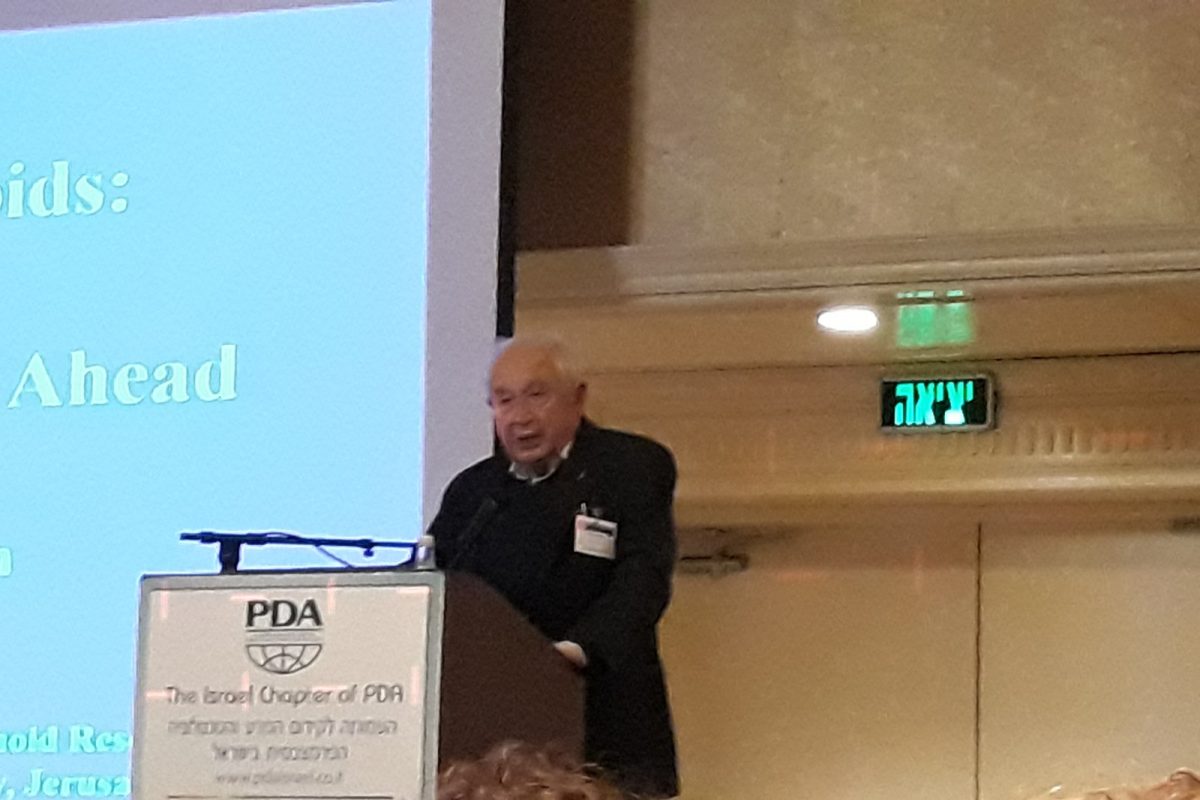
The history of modern pharmacology is dotted with figures who fundamentally altered our understanding of biological processes. Yet few substances have suffered a fate as contradictory as cannabis. For decades, prohibition and stigma sidelined the scientific study of this plant across the West, even as other psychoactive compounds were systematically investigated. Only after analytical technologies matured and political will emerged did cannabinoids transition from botanical curiosities into the cornerstone of a revolutionary field of research.
In brief
- Historical delays: Prohibition and 19th-century technical limitations prevented researchers from isolating active principles until the 1960s.
- Raphael Mechoulam: The Israeli chemist accomplished what once seemed impossible: mapping the molecular structures of THC and other key cannabinoids.
- The endocannabinoid system: These breakthroughs paved the way for identifying the CB1 and CB2 receptors alongside endogenous molecules like anandamide.
- Current bottlenecks: Human clinical trials face severe bureaucratic hurdles due to pharmaceutical-grade requirements and restrictions on seized samples.
- Future outlook: Research on the endocannabinoid system holds immense therapeutic promise, provided it secures adequate funding and moves past cultural stigma.
A Century of Chemical Silence
To grasp the magnitude of recent scientific achievements, one must look at the historical context. At the turn of the 20th century, organic chemistry was advancing by leaps and bounds. Chemists successfully isolated complex molecules like morphine and cocaine, revolutionizing pain management and ocular surgery. Yet when researchers attempted to apply that same rigor to cannabis, they hit a wall.
The technical limitations of the era made it virtually impossible to separate the hundreds of compounds within the plant. Still, the decisive obstacle was not merely technological; it was social and legal. Prohibition transformed a botanical raw material into contraband, deterring serious scientists who risked their reputations or their freedom by studying it.
It took until the 1960s for circumstances to align so that someone could finally tackle the challenge. That was when Raphael Mechoulam stepped in—a defining figure in the history of contemporary pharmacology.
Raphael Mechoulam: The Chemist and the Hashish
Born in Bulgaria and educated under communist rule before emigrating to Israel in 1949, Mechoulam lived a life shaped by persecution. The son of a Jewish physician, he survived antisemitic wartime persecution during World War II. His early scientific work centered on military-related projects involving insecticides and anabolic steroids.
In the late 1950s, Mechoulam set out to determine which molecules were responsible for the effects of cannabis. After scouring older scientific literature in Russian, French, and German, he realized that virtually no one had successfully isolated its specific chemical structures. Crucially, his university had just acquired a nuclear magnetic resonance spectrometer—a cutting-edge analytical tool for the era.
The story of how he obtained his initial supply illustrates both the era and the researcher’s practical ingenuity. Unfamiliar with Israel’s formal bureaucratic protocols for controlled substances, he walked straight into a police station. After confirming his academic credentials, officers handed him five kilograms of confiscated Lebanese hashish. Mechoulam carried the stash back to his laboratory in a backpack, later realizing that he had technically bypassed legal channels and that a single misstep could have derailed his career. Fortunately, the matter was resolved with a minor reprimand once the proper paperwork was filed.
This arrangement set a precedent: Mechoulam maintained close ties with Israeli health authorities, securing consistent access to research materials for decades. Yet this situation remains an outlier. Across most Western nations, regulatory red tape continues to present almost insurmountable barriers.
Isolating THC and the Cannabinoids
In 1964, Mechoulam’s team achieved a major milestone: they elucidated the complete chemical structure of cannabidiol (CBD). Although the finding appeared in a modest journal and drew little immediate fanfare, it laid the foundation for recognizing that cannabis is not a monolithic substance.
Two years later, using advanced nuclear magnetic resonance spectroscopy, they resolved the molecular structure of tetrahydrocannabinol. A common historical footnote stems from early naming conventions: the compound was initially dubbed “delta-1-tetrahydrocannabinol.” Due to standard chemical nomenclature updates, it is now universally recognized as “delta-9-THC.”
To evaluate the psychoactive potency of the newly isolated molecule, researchers administered both whole cannabis and pure THC to monkeys. The behavioral effects were virtually identical, confirming that THC was the primary driver of cannabis intoxication. Over the following years, the team characterized several minor cannabinoids, though their specific psychological actions were not readily apparent in those early animal models.
The Discovery of the Endocannabinoid System
The work of Mechoulam and his collaborators eventually moved far beyond plant chemistry and into human physiology. They discovered that our bodies produce their own endogenous cannabinoids, leading to the formulation of the endocannabinoid system.
This biological network functions as a fundamental homeostatic regulator. Through the discovery of CB1 and CB2 receptors, alongside endogenous signaling molecules such as anandamide and 2-arachidonoylglycerol (2-AG), scientists realized that this system modulates critical processes ranging from pain perception and immune function to appetite and memory.
Its significance is comparable to the discovery of insulin or thyroid hormones. Unraveling the mechanisms of these signaling molecules opens doors to innovative treatments for metabolic issues, neurological conditions, and cardiovascular disease. The therapeutic potential is vast: modulating the endocannabinoid system may offer novel avenues for addressing complex, treatment-resistant pathologies.
Harm Reduction and a Critical Perspective
Despite these scientific advances, clinical research in humans continues to face substantial roadblocks. Decades ago, researchers often relied on police-seized materials. Today, regulations have tightened: human volunteers can no longer be given seized street samples due to health hazards and the complete lack of standardization.
Substances administered in clinical trials must meet stringent Good Manufacturing Practice (GMP) standards to guarantee purity and batch consistency. This makes sourcing extraordinarily expensive, as very few facilities synthesize these molecules under certified medical conditions. Consequently, human trials involving cannabinoids, MDMA, or psychedelics are routinely stymied by these financial and regulatory barriers.
This creates a glaring ethical paradox: while research creeps forward because safe, certified samples are legally difficult and expensive to procure, hundreds of thousands of people continue consuming unregulated products of unknown purity on the illicit market. Protecting clinical trial participants is necessary and non-negotiable; however, policies that obstruct access to pure compounds in medically supervised settings often function more like bureaucratic roadblocks than genuine harm reduction measures.
Conclusion: Science Over Stigma
The history of cannabinoids illustrates how fear and dogma can stifle scientific progress. Raphael Mechoulam proved that with persistence and rigorous methodology, even heavily stigmatized substances can yield vital insights for human health.
Today, we understand that cannabis contains an intricate spectrum of compounds with distinct biological profiles. THC targets CB1 receptors to produce its characteristic psychoactive effects, while CBD and minor cannabinoids like THCV and CBC exhibit therapeutic potential without inducing intoxication. Basic science has confirmed their biological relevance; the remaining challenge is translating these findings into broad clinical practice.
Doing so will require significant investment and, above all, elevating objective science over cultural and legal prejudice. Only then can we develop targeted therapies to improve the lives of patients suffering from chronic pain, treatment-resistant epilepsy, and neurological disorders. Psiconáutica views cannabis not merely as a recreational drug, but as a compelling subject of inquiry whose rigorous understanding is essential for advancing modern medicine and supporting informed, evidence-based harm reduction.


