

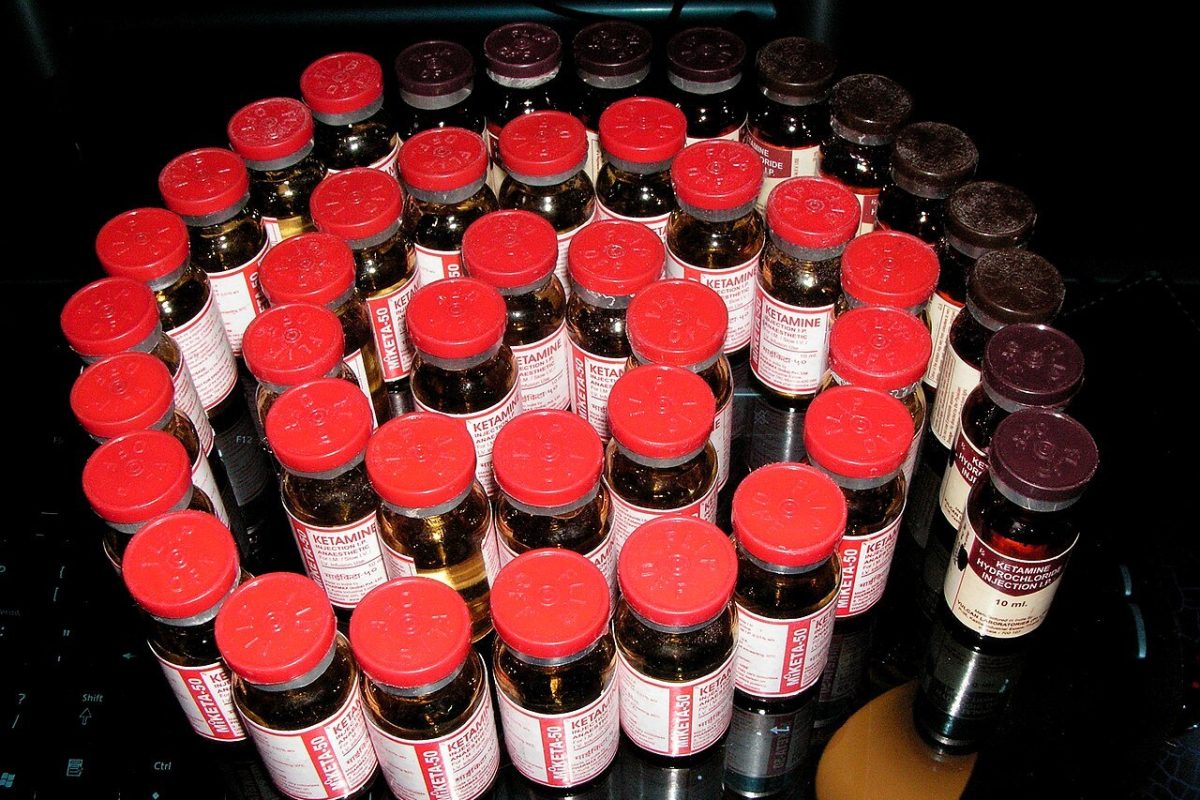
In the vast landscape of modern pharmacology, few compounds have managed to transcend their veterinary origins so effectively to become fundamental pillars of human medicine. Ketamine represents a paradigmatic case of therapeutic versatility. Initially conceived as a safe anesthetic for vulnerable populations—children and the elderly—because it does not compromise cardiorespiratory function, its profile has evolved toward the treatment of chronic pain and, more recently, toward cutting-edge psychiatric interventions.
In brief
- Mechanism of action: A non-competitive NMDA receptor antagonist, it protects the brain against glutamate-induced excitotoxicity.
- Dissociative effect: It induces a psychological state where the mind seems to separate from the body, with implications for near-death experiences (NDEs).
- Treatment-resistant depression: A single intravenous dose can reverse severe depressive symptoms and reduce suicide risk in less than 24 hours.
- Addictions: Russian programs have demonstrated high abstinence rates in heroin users, although its use is strictly regulated.
- Psychiatric risks: A minority percentage (approx. 15%) may experience post-traumatic symptoms following intense drug-induced experiences.
Physiology and brain protection: The glutamate paradox
To understand the clinical utility of this agent, it is imperative to understand its interaction with N-Methyl-D-Aspartate (NMDA) receptors. These receptors are crucial in situations of alertness or intense learning, facilitating the release of glutamate. Glutamate acts as the brain’s primary excitatory neurotransmitter; however, when released in excess due to physical trauma—such as a stroke, heart attack, or hypoxia—it triggers a process called excitotoxicity.
In this pathological scenario, the glutamate overload attacks and destroys living neurons. Ketamine intervenes in this biological equation by acting as a shield: by occupying NMDA receptors, it prevents harmful glutamate from binding to them, thereby preserving neuronal integrity. This neuroprotective mechanism is vital in contexts of acute brain trauma.
The dissociative phenomenon and near-death experiences
At sub-anesthetic doses, ketamine induces a unique psychological state: dissociation. In this state, the body may feel anesthetized while the mind experiences a sense of detachment or a journey disconnected from immediate physical reality. Some people have likened these experiences to Near-Death Experiences (NDEs).
NDEs are characterized by accounts of being transported to luminous spaces, encounters with deceased loved ones, and a feeling of absolute peace before returning to the physical body. Although the exact mechanism remains the subject of research—with speculation regarding the endogenous release of substances that mimic ketamine—there is a notable similarity in symptoms: visual dissociation (seeing from above) and a sense of personal renewal following the event.
It is crucial to clarify that not all experiences are transformative. Preliminary studies indicate that approximately 15% of subjects may present an adverse reaction, experiencing post-traumatic symptoms such as intrusive thoughts or behavioral avoidance. Therefore, the therapeutic context and monitoring are essential to mitigate risks.
Psychedelic-assisted therapy: A model of success in Russia
Ketamine has been used for decades in addiction treatment programs, particularly in Russia under the name Ketamine Psychedelic Therapy (KPT). This approach combines conventional talk therapy with the controlled administration of the drug. The typical protocol includes preparation sessions and an integration phase following the experience.
The results obtained in these programs have been statistically significant compared to control groups: abstinence rates in heroin users reached 86% one month after treatment, compared to 54% without pharmacological intervention. At twelve months, the difference remained notable (25% vs 5%). However, regulatory factors have recently limited the availability of this promising protocol in certain contexts.
A revolution for treatment-resistant major depression
The most recent and relevant discovery lies in the treatment of treatment-resistant major depression. Intravenous ketamine has demonstrated the ability to reverse severe and intractable depressive states with a single dose, the effects of which can last up to seven days. Unlike traditional antidepressants that require weeks to take effect, this drug offers a rapid response to suicide risk and hopelessness.
Research suggests that in depressed patients, synaptic connections are atrophied, preventing proper neuronal function. Ketamine appears to stimulate the regeneration of these connections, an effect not observed with placebos. In current clinical treatment, administration is slow (approximately 40 minutes) to ensure safety and minimize immediate adverse effects.
Harm reduction and clinical considerations
Despite its cardiovascular safety profile compared to other anesthetics, the use of ketamine requires rigorous precautions. The emergence of unwanted post-traumatic or dissociative symptoms underscores the need for a controlled environment and professionals trained to manage patient reactions.
Scientific evidence clearly distinguishes between regulated uses (anesthesia, chronic pain, treatment-resistant depression) and recreational use. The latter carries significant risks of dependence and psychological adverse effects that should not be underestimated. Prudence in prescribing and clinical follow-up are ethical imperatives.
Editorial closing
Ketamine perfectly illustrates how a drug can evolve from its basic surgical application to become a tool for neuronal regeneration and mental health. Its history invites us to reflect on the complexity of the human brain: an organ capable of learning, protecting itself, and, under certain conditions, transcending its usual limits.
In the realm of Psiconáutica, this drug reminds us that consciousness is not static. Whether as a neuronal defense mechanism against excitotoxicity or as a gateway to transformative experiences, ketamine challenges our notions about depression and recovery. The future of its application will depend on how we balance therapeutic innovation with a deep understanding of psychosocial risks, always keeping the focus on the patient’s holistic health.


