
A Chemist on the Trail of Mexican Entheogens
After stumbling upon LSD in the Sandoz laboratory, Albert Hofmann devoted a good part of his career to a different goal: understanding, through modern chemistry, the plants and mushrooms that various Mesoamerican cultures had used for centuries for ritual and divinatory purposes. Peyote and its mescaline, the psilocybin mushrooms, and ololiuqui formed a kind of triad—the so-called “magic drugs” of pre-Hispanic Mexico—and Hofmann wanted to reduce each one to its molecules.
This installment picks up that stretch of his work: the close of the research on the mushrooms and the start of the research on ololiuqui. It is above all a story of laboratory and method, not a manual; it should be read as a historical document and not as a guide to use.
Why Animals Failed and Self-Experiment Succeeded
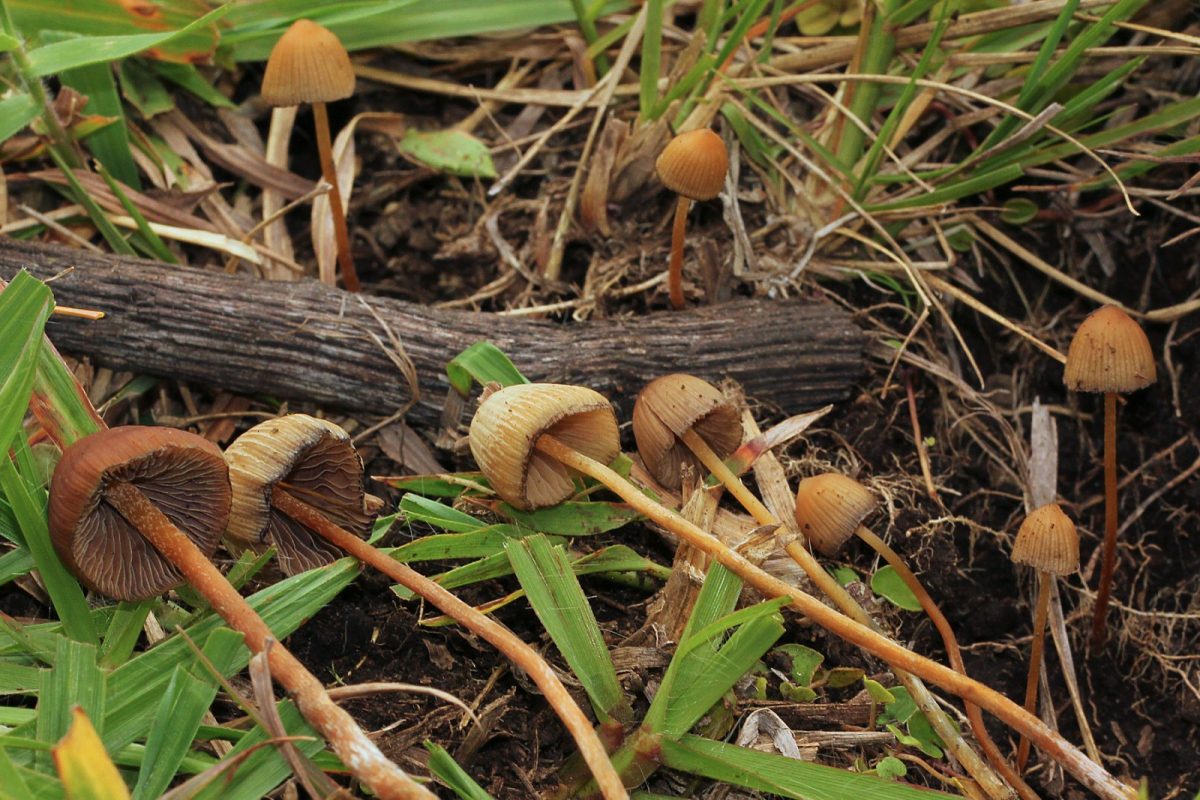
The first tests of the mushrooms on animals showed nothing conclusive, which threatened to write off as inactive mushrooms that healers used precisely for their effects. The key, as Hofmann told it, lay not in the plant material but in the subject: the psychic effects barely translated into observable behavior in mice or frogs. Only a human body could “report” on what was happening inside.
Self-experimentation—a method as characteristic of that generation of pharmacologists as it is problematic by today’s ethics—confirmed that the active principle existed and that it was worth pursuing. From there it became possible to extract, purify, and crystallize it. The main compound was named psilocybin; a much scarcer accompanying alkaloid, psilocin.
What Was Odd About These Molecules
Structural analysis revealed a new type of indole derivative. Psilocybin turned out to be the first—and for a long time the only—known natural indole compound to carry a phosphoric acid group. Together with psilocin, it was also the first indole alkaloid with a free or phosphorylated hydroxyl group at position 4 of the ring, whereas the other indole alkaloids carry it at positions 5, 6, or 7. The complete synthesis of both molecules confirmed the proposed structures, and soon producing them in the lab proved cheaper than extracting them from the mushrooms. A team of Sandoz chemists took part in that work, among them Arthur Brack, Albert Frey, Hans Kobel, Hans Ott, Theodor Petrzilka, and Franz Troxler.
Psilocybin and psilocin have a similar potency to each other: comparatively, they are on the order of a hundred times more active than mescaline and about a hundred times less than LSD. One more interesting fact for what it suggests: there is cross-tolerance between LSD and psilocybin, which points to both acting on shared neurochemical mechanisms—something later pharmacology would confirm by placing the serotonin 5-HT2A receptors at the center of the question.
María Sabina and the Definitive Test
In 1963 Hofmann traveled to Mexico with his friend Gordon Wasson and went up to Huautla de Jiménez, where the famed Mazatec healer María Sabina had received them. Out of season there were no mushrooms, so Hofmann offered her tablets of synthetic psilocybin, in an amount equivalent to the mushrooms she usually used. At dawn, once the ritual vigil was over, the interpreter relayed the healer’s verdict: between the pills and the mushrooms there was no difference. For a chemist, that sentence counted as validation: the laboratory’s molecule was identical to nature’s product.
The episode also has an uncomfortable side. The arrival of Wasson first, and of tourists and experience seekers afterward, changed the life of María Sabina and her community forever. The ethnobotany of those years opened up invaluable knowledge, but at the cost of extracting sacred practices from their context without much reciprocity. This is worth keeping in mind when reading these chronicles with their tone of scientific feat.
The Enigma of Ololiuqui
With the case of the mushrooms—teonanácatl—solved, the third “magic drug” remained. Ololiuqui is the Nahuatl name for the seeds of certain morning glory vines that the Aztecs and other peoples used in religious ceremonies and healing practices. Its use has persisted among Zapotec, Chinantec, Mazatec, and Mixtec communities of southern Mexico, relatively isolated and little touched by Christianity.
The documentary trail is long. The Spanish physician Francisco Hernández, who between 1570 and 1575 inventoried Mexican flora and fauna on commission from Philip II, described and illustrated the plant in his Rerum Medicarum Novae Hispaniae Thesaurus (Rome, 1651): a vine with thin leaves, white flowers, and round seeds resembling those of coriander, which priests ingested—according to his account, tinged with colonial demonology—to “communicate with the gods.” In the twentieth century, the botanist Richard Evans Schultes of the Harvard Botanical Museum produced in 1941 the modern review of the question, identifying ololiuqui with Rivea corymbosa.
Contradictory Results Before Hofmann
The chemistry of ololiuqui resisted. The pharmacologist Santesson, in Stockholm, tried around 1937 to isolate its compounds without managing to crystallize them; his extracts only produced a kind of partial narcosis in frogs and mice. Human tests didn’t clarify much either: the psychiatrist Humphry Osmond, self-experimenting in 1955, described a state of apathy followed by a prolonged feeling of relaxation; Kinross-Wright, by contrast, reported in 1958 on volunteers who noticed no effect at all. That disparity—so common when working with plant material of variable composition—foreshadows one of the field’s great difficulties.
Old Friends: When Ololiuqui Crossed Paths With LSD
With Wasson’s help, Hofmann obtained authentic ololiuqui through a Zapotec informant near Oaxaca. The sample contained two types of seed: the brown ones of Rivea corymbosa (the “badoh”) and the black ones of Ipomoea violacea (the “black badoh”), sometimes used interchangeably. The analysis brought a notable surprise: the psychoactive compounds turned out to be derivatives of lysergic acid—amides of lysergic acid and other alkaloids related to ergot. That is, the same chemical families Hofmann’s lab had been studying since he synthesized LSD in the 1930s.
The main component, lysergic acid amide, differs from LSD by an apparently minor yet decisive detail: where LSD carries two ethyl groups, the principle of ololiuqui keeps the two hydrogens of the amide. That small variation is enough to make it considerably less potent and to give it a profile of physical effects qualitatively different from LSD’s. An elegant lesson in structure-activity relationships: in psychedelic pharmacology, the nuances of a molecule decide the outcome.
A Critical Reading
This series is a historical text, written by its protagonist, and as such it mixes rigorous science with the discoverer’s heroic narrative. Three cautions when reading it today:
- Variable composition and different reactions. The seeds of divinatory vines contain ergot alkaloids in amounts and proportions that vary widely by species, batch, and origin. That variability explains why the first tests gave such contradictory results, and why plant material is never equivalent to a characterized molecule.
- Real risks, not anecdotal ones. Ergot alkaloids have a long toxic history (the “St. Anthony’s fire” of ergotism) because of their vasoconstrictor effect; they are not harmless substances. In addition, a good share of commercial seeds are treated with fungicides and other products meant for gardening, not for ingestion.
- Ethnocentrism and decontextualization. Both the colonial chronicles and the twentieth-century expeditions look at these practices from outside. Recognizing their cultural value also requires recognizing the harm done by extracting them from their community context.
The references Hofmann himself cited—Heim and Wasson’s work on the mushrooms, Schultes’s monograph on ololiuqui, and his own publications in pharmaceutical chemistry journals—remain the primary sources for this episode for anyone who wants to go to the original.