

An itinerary that ends where it began
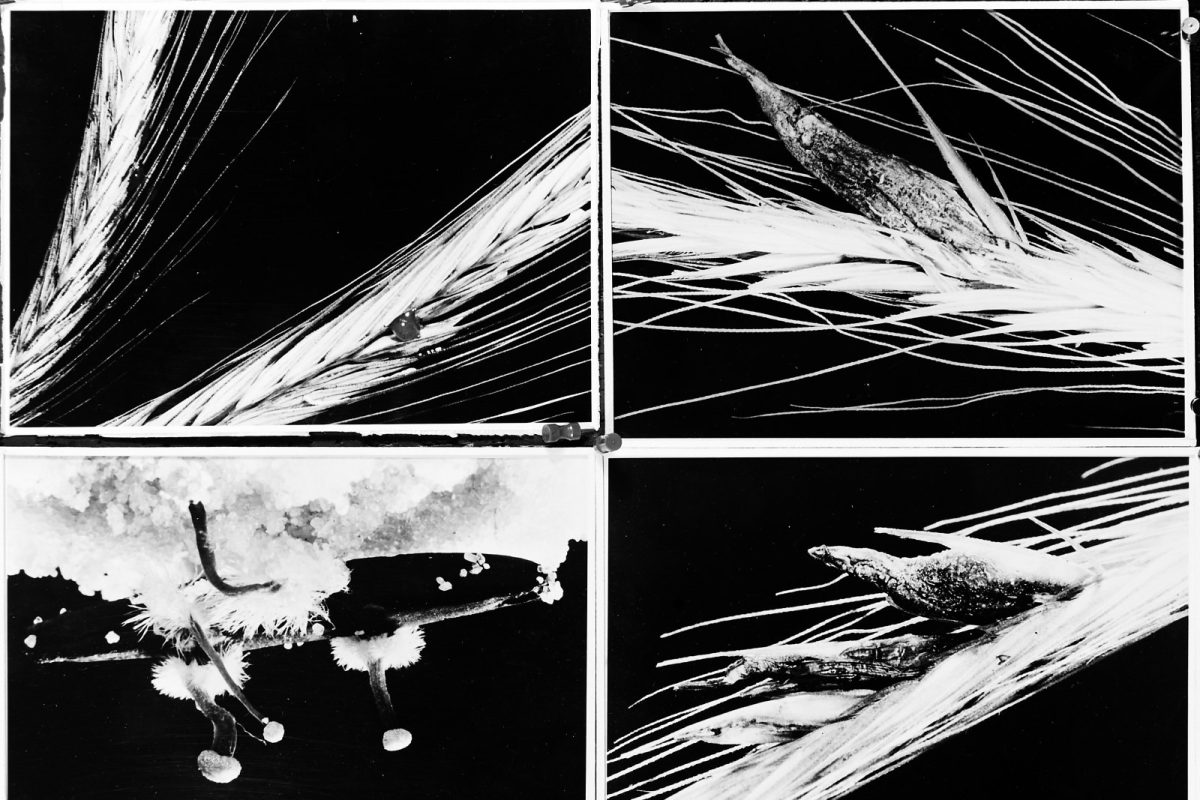
Some scientific careers seem to trace a straight line, while others draw a circle. Albert Hofmann’s belongs to the latter type, and he was fully aware of it. He began in the 1930s studying ergot alkaloids—Claviceps purpurea, the fungus that ruins harvests and caused centuries of gangrene and delirium epidemics—with a purely pharmacological goal. From that line of work emerged, almost by accident, lysergic acid diethylamide: LSD.
Decades later, while analyzing ololiuqui, a sacred Mesoamerican plant, Hofmann found himself face-to-face with those same ergot alkaloids. The starting point and the destination coincided. In this final installment, we follow the closing of that circle and let Hofmann speak for himself.
Ololiuqui: ergot alkaloids in a vine
Ololiuqui is the Nahuatl name for the seeds of certain morning glories used ritually in Central America since pre-Columbian times. The surprising thing, from the perspective of plant chemistry, is what Hofmann found inside: lysergic acid amides—compounds related to those in ergot. Alongside the main component, minor alkaloids appeared, such as chanoclavine, elymoclavine, and lysergol; in the seeds of Ipomoea violacea, another morning glory, the composition was almost identical, with ergometrine taking the place of lysergol.
Why was this so striking? Until then, lysergic acid alkaloids had only been isolated in lower fungi—the genera Claviceps, Penicillium, and Rhizopus. Finding them in flowering plants, in a family of angiosperms, raised a profound botanical and evolutionary question: how had that same chemical machinery reached such distant lineages?
LA-111: the same molecule, long before we knew it
Here appears one of those coincidences that Hofmann loved so much. Lysergic acid amide, the main active ingredient in ololiuqui, had already passed through the laboratory years earlier under a catalog name, LA-111, during studies on LSD and its relatives. In other words, the substance known to Mexican tradition as a power plant had been characterized by European industrial chemistry before anyone knew its cultural origin.
The relevant data for understanding these plants—and it is worth stating this without turning it into a guide—is comparative and qualitative: the psychoactive components of ololiuqui proved to be significantly less potent than LSD and, above all, of a very different nature. Where LSD is stimulating and visual, the trials of the time described the profile of ololiuqui as dull, sedative, and marked by apathy, fatigue, and a sense of emptiness. It is not a lesser version of LSD; it is something else, with a pronounced depressive and narcotic component.
Chemistry that resembles our brain
The most conceptual part of Hofmann’s text is also the most relevant today. When placing the structures of the main classic hallucinogens side by side, their kinship with the nervous system’s own neurotransmitters becomes obvious. Mescaline is a phenethylamine, from the same chemical family as norepinephrine and epinephrine. LSD, the alkaloids of ololiuqui, and the active ingredients in Psilocybe mushrooms—psilocybin and psilocin—are indoles derived from tryptamine, just like serotonin.
Hofmann did not believe this resemblance was accidental. He intuited that the activity of these substances had to do with their ability to interfere with neurotransmission systems. Decades of subsequent research have proven him right in essence: today we know that a large part of the effects of classic psychedelics involves the serotonin receptor family. What was a structural intuition in 1970 is now a field of psychopharmacology.
The chemist who recognized his limits
It is worth highlighting a gesture by Hofmann himself that speaks volumes about his intellectual honesty. He was a chemist, and he stuck to that: he explained the history, chemistry, and phytochemistry of these discoveries, and made it clear that the clinical effects and the “paramedical use and misuse” of these substances were another story, too complex to be dismissed in passing. That prudence—separating what one knows from what one opines—is precisely what is missing in much of the current conversation about psychedelics.
Critical reading
Hofmann’s text is, above all, the personal testimony of a researcher involved in his own object of study. It should be read with three cautions. First, the self-experiments he and his collaborators describe belong to an era without the ethical frameworks or controls required today; they are historical documents, not protocols to be imitated. Second, the enthusiasm for the “magic circle” of coincidences is narratively seductive, but chance also selects findings that fit into a good story and forgets those that do not. And third, just because a plant has a millenary ritual use does not make it harmless, nor does a molecule resembling a neurotransmitter make it a medicine. Ololiuqui, to name one, illustrates well that “relative of LSD” does not mean “like LSD.”
For those who wish to delve deeper, the two sources the original text relies on can be searched by name: Hofmann’s article “The discovery of LSD and subsequent investigations on naturally occurring hallucinogens,” included in Discoveries in Biological Psychiatry (1970), and R. Gordon Wasson’s famous report on Mexican mushrooms published in Life magazine. The autobiography was distributed through the MAPS organization newsletter.
“Looking back”: Hofmann by Hofmann
We close as Hofmann himself closes: with the memory of a childhood. The following text is the brief autobiography he wrote to be read at his funeral, and it begins with a mixture of irony and wonder at destiny that was very much his own.
He was born on January 11, 1906, in Baden, in the Swiss canton of Aargau. His father, Adolf Hofmann, worked as a locksmith—and later as a workshop foreman—at the electrical engineering company Brown-Boveri; his mother, Elisabeth Schenk, supported a large family of modest income with him. Hofmann remembered a childhood with hardships but, on the whole, a happy one, alongside a younger brother and two younger sisters.
His earliest images are almost painterly: a large berry tree in the garden that his mother would lift him into; the night in 1910 when people went out into the street to point at Halley’s Comet; the move to Martinsberg Street, at the foot of the hill where the ruins of Stein Castle stood, among rowan trees with golden leaves. There, between the ages of five and ten, he played with a farmer’s children, rode in ox-drawn carts, helped make hay, and spent hours in the smithy watching horses being shod and the red-hot iron tires being fitted onto wagon wheels. From the top of Allmend, he recounts, one could hear the distant rumble of cannons in Alsace: these were the years of the First World War.
There is something eloquent in the fact that a man who went down in history for one of the most disturbing molecules of the 20th century chose, for his farewell, not to speak of LSD, but of an old bridge, trees in the autumn sun, and the voice of his mother calling him to dinner. The text itself breaks off there, with a “to be continued” that his life would no longer complete.
With this installment, we close the series dedicated to Albert Hofmann, who passed away on April 29, 2008. Let this serve as a tribute to a scientist who knew how to look at both the structure of a molecule and the leaves of a rowan tree, and distinguish what he knew from what he only intuited.


