

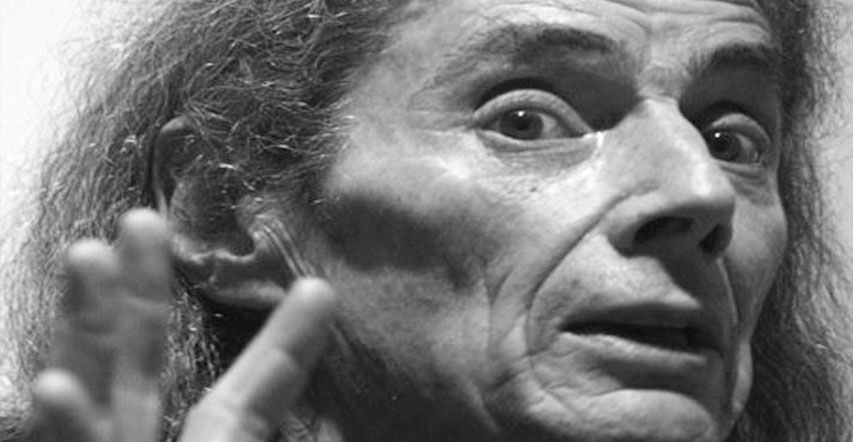
Talk by Jonathan Ott at the Third Conference on Entheogens, held in Barcelona on March 21–23, 1998, delivered directly in Spanish.
Good morning, or good afternoon, and welcome. As always, I feel very much at home here in Catalonia, and it is always a pleasure to come back and talk with you. As Dr. Fericgla kindly told you, I am going to talk about this new book called Pharmacophilia, or the Natural Paradises. And I’m coming with neologisms again: with pharmacophilia I mean to replace the phrase “drug abuse” or “drug addiction” and several other labels for this. I think it is simply pharmacophilia, the love of drugs, and as we are going to see, in my view it is not a pathological thing but an utterly natural and ordinary one, not to say normal, in human beings and in many other animals. I’m going to briefly explain my theory of pharmacophilia, which is a novel kind of theory of psychic intoxication and of habituation to drugs. I use the word habituation instead of addiction, since the word addiction now carries a very heavy political charge and is extremely pejorative, and since I, I emphasize, don’t regard this as anything extraordinary in animals or in human beings, one has to be very careful with the terminology we use in this regard.
Also, as Dr. Fericgla mentioned, we are in the process of forming a new publishing house here in Spain. We don’t have a fixed name yet, but we are going to start by launching Pharmacophilia, or the Natural Paradises in Spanish. Then the new book by Antonio Escohotado will come out, and we hope to be on the Spanish market by the end of this year.
ARTIFICIAL AND NATURAL PARADISES
Well, first I want to say a few words about artificial and natural paradises. The subtitle of my book is no accident, since, as you all must know, in 1860 the famous French poet and essayist Charles Baudelaire published Artificial Paradises, speaking specifically of opiate and also cannabis intoxication—hashish and opium. Laudanum and oral preparations of hashish that were commonly taken in France in the middle of the last century. Baudelaire characterized these as artificial paradises, and that conception became the starting point and source of information for the Western philosophy and jurisprudence on intoxication that followed.
It seems that if you read Baudelaire’s text carefully you realize he does not argue that intoxication is an artificial paradise. He says repeatedly, he underlines, he highlights the natural character of intoxication. But they say he chose this title because he liked the sound of it; he had seen it on the sign of a shop that sold glass flowers, artificial flowers. And he liked the title, and it is a good title, but unfortunately his essay goes the other way, and keeps turning up more and more evidence of the natural quality of intoxication and not its artificiality. Of course this book has been translated into Spanish more than once, and also into English and several other languages, and it remains the best-known book in Baudelaire’s work.
So what do we mean by artificial and natural intoxication? That is, are they artificial or natural paradises? Well, I could quote you some extracts from Baudelaire, but it is better to read him in the original. In the case of both the opiates and cannabis, he ends up saying that this only reveals what is inside oneself; that is, it is a natural thing. On one occasion he calls it a distorting mirror, but only a mirror, which merely reveals what already exists. I began to look at this from the point of view of modern science, and I can cite two lines of argument showing that the paradises of intoxication are utterly natural.
First, zoopharmacognosy—what is this?—it is the use of drugs by nonhuman animals, and we have more and more data on this interesting subject. And having, more or less, an ethnopharmacognostic or ethnobotanical orientation toward these substances, I can tell you that it is quite common in the traditional world to find that human beings discovered the effect of this or that drug by watching other animals eating plants. As an example I can cite the use of the coca leaf. In the Andes it is attributed to llamas, which eat leaves from shrubs that stimulate them. There are less remote examples in history. Coffee in Arabia, which is attributed to goats and shepherds. Those clever shepherds, seeing that the goats perked up on eating coffee fruits in one case and khat leaves in another, obviously ran trials themselves. With entheogens it is also worth mentioning that in Siberia it is well known that reindeer love the Amanita muscaria; they are in fact passionate about this plant, or mushroom, and there are also caribou, which are wild animals, that eat it as well. Another example I can cite is iboga in Africa. Wild boars, baboons, and other animals in the natural environment eat the root of this shrub.
So this is very common and we have more and more data in the modern world. I can only cite one book that comments on these subjects, by Brian Seagull, a study of the use by nonhuman animals of different intoxicants, both in captivity and in the wild. From this I conclude that intoxication is a part of our natural environment. I consider that as animals we are not very different from other animals.
The other argument I will mention is the neurochemistry of intoxication in the two examples Baudelaire deals with, that is, cannabis and the opiates, as supposed examples of artificial paradises. In 1976, the mid-seventies, within a span of three or four years, it became quickly known that the brains of mammals and of human beings had fixed, specific receptors for opiates, to which the morphine of opium could bind, and that shortly afterward a whole series was identified. Six compounds are now known to be endopiates, or endogenous opiates, that our brain produces, and which can be said to be the natural substances that bind to this receptor of the brain called the opiate receptor, of several subclasses.
Morphine is the main intoxicating molecule, and also analgesic, of opium, the sleep-bringing poppy, and it binds to what is called the mu opiate receptor, after the Greek letter mu. Then, something not well known outside esoteric circles, it was discovered that morphine itself is an animal product; it exists in our brains as a natural product. At first it was thought that perhaps it was sequestered from plant sources and stored in the brain, because we now know it occurs in small quantities in plants other than the opium poppy. But it has now been conclusively shown that we have the same enzyme systems for the biosynthesis of morphine, and also codeine and other biochemically related derivatives, that the poppy has. And it arises from animal biosynthesis along the same pathway as in the poppy. So morphine itself is an endopiate, a natural substance in our brains that binds to these opiate receptors in the brain.
From this one can conclude once again that the paradise of intoxication to which opium or morphine or their artificial derivatives take us is utterly natural. And this was intuited in 1700 by a well-known English physician named John Jones, who published in London The Mysteries of Opium Reveal’d. In this book he says that we carry an opiate within us naturally. Purely by intuition, because he had no biochemical data on opiate receptors. And he stated it perfectly. He was relying purely on what Baudelaire would intuit a century and a half later about the quite natural nature of opium intoxication.
The same can be said of hemp and its active principles, although the evidence we have for this is more partial and less complete than in the case of the opiates because it is more recent. In the middle of the following decade, the eighties, it was discovered that we carry receptors in the brain for THC, or tetrahydrocannabinol, which is a complex of several active isomers, cannabinoid substances of hemp, Cannabis indica/sativa, the famous marijuana. So, as in the case of the endopiates, two or three years after this discovery—of course other biochemists were on the trail of the natural substance that binds to this receptor, the cannabis or cannabinoid receptor—in Israel, where THC had first been isolated in the mid-sixties, they isolated a natural substance from the brains of mammals, also known in human beings, called anandamide, which is a rather common, ordinary nitrogen-containing hydrocarbon in the human brain that binds to this receptor and produces effects analogous to THC.
So again we can say that we have an inner THC. So far it has not been found that THC itself can be synthesized in animals and occur as a natural substance in brains, but that would be neither more nor less surprising than the discovery of morphine as an endogenous substance in mammalian brains. So it can be argued biochemically as well that hashish intoxication is utterly natural. In both cases, opium and hemp, used by Baudelaire, the active principles of these plants take us to a paradise of natural intoxication since they are either identical or biochemically similar enough to our natural, inner, endogenous intoxicants in our brains to fit into the same receptor in the brain. So, again, I emphasize that the intoxication of these plants is utterly natural. They are simply plugging into an extremely sensitive system, our brain.
Lately these observations can be extended to other classes of intoxicants, although I won’t spend much time on this; I mention it only as another example. The benzodiazepines are a fortuitous example of pharmaceutical research in which, owing to an error in chemical synthesis in a project of the mid-fifties, a badly synthesized compound was left over that was different from what the researchers thought, and which was ignored in some fruitless tests in which they were looking for another class of substances. It was later used in sedative research and they discovered in this substance an effect somewhat analogous to the barbiturates, which then turned out to be Librium, the first of this class. And derivatives were made from this and they arrived at Valium in the early sixties, which was one of the most successful on the market. But my point is that this was fortuitous; it was an example of what we call serendipity in English, and this word doesn’t exist in Spanish, but Antonio Escohotado has tried to introduce it a couple of times, “serendipitoso” or something like that, and it means that you are fixedly looking for one thing but find another in the process. It is not an accident, it is fortuitous, but you are looking for something and you find something else, like LSD; it is not that it suddenly falls from the sky as a benefit from the gods. The discovery of LSD was not an accident, it was serendipity, and this too was serendipity.
So, since previously a natural model had always been used in the pharmaceutical industry to look for an active principle, which was then investigated and the molecule found, in this case there was no such thing; only by accident did they discover this compound, which turned out to be very active in bioassays, and a whole range of drugs of great commercial and therapeutic success was developed, anxiolytics—this is the common name of the class—which dissolve anxiety.
I mention this because we now know, and this is very surprising given the unusual history of this class of compounds, that the benzodiazepines are also natural substances, even though they were first created as artificial ones. In the last ten years it has been seen that they exist not only in plants but in animals too. And it has not yet been settled in the case of the benzodiazepines whether animals sequester these compounds or biosynthesize them, but plants can biosynthesize them, and there are several plants, even very common ones such as wheat or the agaricus mushroom, etc., that biosynthesize them. That is, it seems they are widely distributed in the realm of living things. And we definitely have a receptor for benzodiazepines in the brain, which is an ion channel; I’ll say a little more about this later.
So it can also be said that benzodiazepine intoxication, however artificial and fortuitous its discovery may have been in the world of pharmaceutical companies, is once again a natural paradise; it is something of our natural environment. And every time we investigate these subjects we realize that there really is much less that is new under the sun than we think. Things that are artificial suddenly turn out to be natural. That is, something that was created in the chemical industry as artificial is later discovered in a plant, as in the case of the benzodiazepines, a good example.
THE CELESTIAL PHARMACY
Now I’m going to move on from the subject of paradises and say a few words about a terrain better known to me, which is what Baudelaire called the “celestial pharmacy.” Just before his death, in 1867, in a draft of the preface to his book of famous poems, The Flowers of Evil, Baudelaire said that although he had dealt with the mad intoxications of wine and opium, he saw an intoxication unknown on earth that the Celestial Pharmacy had not yet been able to provide him. And this was very prophetic, since in his lifetime, while he was publishing Artificial Paradises in 1860, a parallel book came out in London, unknown to Baudelaire as far as we know, and within five years two books appeared here in Europe, one in Edinburgh in 1855 by the Scottish physician James F. Johnston. The other, published in Germany, in Leipzig, by Von Bibra, a man of the German nobility. Both came out in the spring of 1855. Johnston’s book was called The Chemistry of Common Life and is a treatise on general biochemistry, what we would today call biochemistry. But the second volume focuses more on what he called the narcotics we take. Von Bibra’s book was called Die Genußmittel und der Mensch, which, trying to translate it, would be more or less—figuratively—Narcotic Delicacies and Human Beings. This book focuses entirely on intoxicants. Then in 1860 in London the British mycologist M. C. Cooke published The Seven Sisters of Sleep, which also dealt exclusively with intoxicating plants. So with those three books the foundations were laid, already in Baudelaire’s lifetime, of psychotropic ethnopharmacognosy, or the study of intoxicants. And each book mentioned in some detail, though they focused above all on what we would call recreational substances or recreational drugs, the sacred use of intoxicants by traditional peoples, specifically in the Andes, in Siberia, and elsewhere, involving Amanita muscaria and Brugmansia in these cases, Brugmansia being tree daturas. So, although Baudelaire didn’t know of this, the foundations were already being laid for what he had conceived as the Celestial Pharmacy. And to summarize in brief strokes, the most important event of this new science came in 1896, in Leipzig, when the German chemist Arthur Heffter isolated the compound mescaline among four alkaloids he had isolated from peyotl, or peyote, Lophophora williamsii, the famous Mexican cactus. Through psychonautic bioassays, that is, self-tests of these alkaloids, he determined that mescaline was the most important visionary principle of the cactus. It was in November of the following year, 1897, that Heffter definitively proved, by ingesting 150 milligrams of mescaline hydrochloride, that this was the most important visionary principle. From then on we knew what an alkaloid was, or an active principle in pure form, that was a visionary principle of a plant. A little over 20 years later this compound was synthesized, also in Germany, in 1919. With this Heffter was the first, as far as we know, anywhere in the world, to take a journey or a psychic excursion with a pure, crystalline, defined compound isolated from a plant. Then, 23 years later, it could actually be synthesized; this was already possible with something made in the laboratory. Now we had a true science of the Celestial Pharmacy.
The next most important event, which in turn is the most famous, was the synthesis in 1938 by Albert Hofmann of LSD and the later discovery in ’43 of its extraordinary psychotropic effects, which I believe are not very unfamiliar to this audience. So we had not only a science of the Celestial Pharmacy, but we were already getting ahead of mother nature and creating hitherto artificial compounds like LSD, which was by a wide margin an improvement in potency over its natural counterparts such as mescaline. LSD has thousands of times the activity of mescaline, four or five thousand times.
If we extend the reflections I have just made, on the artificial or natural character of intoxication, to the visionary substances, to the entheogens as we now call them, we can also conclude something interesting. Twelve years after Hofmann’s discovery of the psychotropic effect of LSD in ’43, Gordon Wasson, a New York banker, on his vacation in Mexico in 1955 met the then-famous shaman María Sabina and, as we know, he and his photographer became the first outsiders, the first strange white men, to be initiated into the sacred archaic mystery of the psychotropic mushroom, the Mexican sacred mushroom that many know by the name Teonanácatl, which is the “wondrous mushroom” in Nahuatl, although the Mazatecs don’t call it that. Wasson was equipped to weave together, let’s say, various threads of this new science of the celestial pharmacy into a kind of fabric, quite intricate, quite novel and innovative. Wasson went to Mexico not as an anthropologist, not trying to make a scientific discovery, but, as he himself and his wife and collaborator Valentina Wasson said, as pilgrims in search of the Holy Grail. And he didn’t want to study the Indians but to make friends with them in the hope that they would share with him, would initiate him into what was for him a sacred mystery and the key, the clue, to archaic religion.
That night, July 29, 1955, when Wasson first experienced the effect of Psilocybe caerulescens, in a good dose, suddenly for him everything came together as a very fixed and very precise image of what the key to archaic religion was, and he saw María Sabina’s shamanic rite for the first time as a living example of what archaic religion was, and he has published this in several books and I won’t spend more time on it.
So one can say that in the matter of religion, returning to the subject of natural and artificial, which is natural and which artificial in religion, and I’m going to twist common sense a bit again in this field, I would say that natural religion is the entheogenic one, the one based on drugs, and the artificial is the one based on artifice, on human reasoning, on abstract reasoning, on theology, on philosophy. Natural religion is what is reached as other animals do, by ingesting entheogens from the environment, and the rest is an artificial creation of human beings. So what we take as normal religion, as such, is, in my judgment, utterly artificial. The natural is what is reached through drugs.
Now, it is worth mentioning another important book of this century, which came out in 1936, just before Wasson’s work, though Wasson was already well on his way toward his discovery with María Sabina. The French historian of religions Philippe de Félice published in 1936 an important book called Poisons Sacrés, Ivresses Divines, or Sacred Poisons and Divine Intoxications, and he made a very interesting kind of catalogue or compilation with almost two hundred citations from the history of intoxicants in religion, but within the framework, utterly mistaken in my judgment, of what I call the psychopathology of prophecy and the drug addiction of theism, reviewing this as an example of psychopathology. This was in effect also the attitude of Johnston, Cooke, and Von Bibra toward this event, as if saying: “Ah, well, now we can…!” And you know that Freud also advanced theories of this kind about the mythology of religion, that is, characterizing it not as the sacred, the most central thing to culture, but as a pathological thing. And this is very strange and, in my judgment, very hard to defend.
So we had this idea of the psychopathology of prophecy, of the drug addiction of theism, and suddenly Wasson comes along and says no, that this is the true rebirth of culture itself, of our religion, that everything we take as sacred is born from this well—the mimir, as it is called in Norse mythology—from which an illumination flows; the well of the mimir is a good image of this.
DRUG AND FOOD
So, that’s how it is: what we used to take as artificial or natural is a bit blurry; the facts reveal that things are a little different. Perhaps some will object to what I’m saying: “well, that’s all very nice, but it’s pure sophistry,” because indeed what is most natural is religion based on praying, meditating, reading sacred books and all that, and paradises, whether natural or artificial, can be reached through oneself without ingesting any substance foreign to the body. And in the case of what I am calling natural religion, based on ingesting a drug, a plant, it is indeed a sophistical argument, because we cannot not ingest in our lives; we are open ecosystems, and we are constantly ingesting. Whether gases or through our skin and lungs, we are exchanging fluids with the ecosystem. The very atoms of our tissues and our bones are, as it were, weaving in and out of our bodies constantly, in a permanent exchange of matter with the ecosystem. And if contemplating a work of art, for example a structure like a painting, leads one to a kind of aesthetic paradise, let’s say, this is no different from the ingestion of a substance. The eyes themselves are ingesting in the same sense that the brain is receiving impacts of alkaloids or whatever on its receptors. The individual’s eye is receiving impacts of photons that trigger a sequence of neurochemical reactions in the optic nerve that in no way differ from the nature of the impact of morphine on a receptor in the brain or of THC on another. And likewise, if one reaches an aesthetic paradise through an auditory art, whether listening to music or poetry, the pressure and compression waves of the air on the ear trigger a sequence of neurochemical actions that in no way differ from the impact of these substances on receptors. From there no distinction can be made.
And I’m going to put to you the concept that there really is no difference between a food and a drug; that is, they are artificial categories we use to classify certain things. Any food we take to nourish the body is a drug, and anything we call a drug has its nutritional side. And it would save us many problems if we could discuss the phenomena of intoxication in this context, as a phenomenon of nutrition and not something different or strange. As an example I’ll give you milk, whether human or cow’s: milk contains morphine in low quantities and also has other active drugs. The very protein of milk, casein, when digested in the stomach, is cut into pieces by the stomach’s proteases, and many of these pieces are opiates; they are called casomorphins, that is, morphines of casein, the milk protein. So, even by digesting the proteins of milk we produce opiates called exorphins, to distinguish them from the endorphins that we produce ourselves. And their neurochemical effects and specific impact on receptors have been documented. Some of these casomorphins even reach the brain.
So, is milk a food or a drug? Let’s also examine coca and cocaine. We used to dismiss coca by saying: “come on, this is a joke, coca a food?” But in the Andes the coca leaf is very important in the diet of Andean people, and it has been shown after decades of stupidities—speaking with a peculiar circular sophistical logic, saying: “well, coca is at once the product and the cause of malnutrition, it produces it because it is only an appetite suppressant and it causes it because they spend their money on coca instead of food.” So they accused it at once of causing and of being the result of the malnutrition of Andean people. But it has been proven in the laboratories of the United States Department of Agriculture, in Maryland, that coca is one of the most nutritious plants within the reach of Andean people, and is very important in their nutrition. It is a food, there is no difference, as William Golden Mortimer already said in his classic book on the history of coca in 1901, that it is a food. And even when drugs are ingested in more or less pure form, they contribute something to nutrition to a greater or lesser degree. Alcohol is a classic example: is it a food or is it a drug? We can see it as a drug because it makes us babble, makes us fall, makes us dizzy and all that, but the body processes it like any other carbohydrate, and extracts all its nutritional value, so again we see that it is both. And I won’t dwell on this any longer; I only wanted to raise this idea, that the distinction between what is a food and what is a drug is very difficult and very artificial. I prefer to see intoxication as a nutritional phenomenon (laughter); they are like vitamins for the spirit, or vitamins for the brain, specifically.
BIOCHEMICAL IDIOSYNCRASY
So now let’s talk a bit more about applied psychonautics. What can we do with these ideas and how can they give us a hand in confronting the drug problem. It is worth mentioning beforehand that, in my view, the most serious drug problem in today’s world is that there aren’t enough of them (laughter), that we need more and better ones; it’s not that there is an overproduction of these bad things, it’s that there aren’t enough; it’s a supply problem that we are heroically fighting to improve.
I’m going to say a few words first about how the word idiosyncrasy entered the title, and pharmacophilia, the subject of idiosyncrasy and pharmacophilia. I knew that according to Galenic medicine, which is attributed to Hippocrates, though it was popularized by Galen and Polano, the ancients managed to classify human beings into primarily four types according to the humors. Today, when we speak of complexion we are referring to the surface of the body, to appearances. But in fact the word complexion comes from the complexion of the humors to make a certain type of character in human beings. These characters are well known: the choleric, melancholic, phlegmatic, and sanguine, though I think this last word is not used so much in Spanish, and each with its own tendency. Medicinal plants were classified according to their potential to improve or overcome a deficiency in one of these humors suffered by the patient; it was a matter of balancing that. Each was tied to one of the elements: fire, earth, water, and air, and so they were based on a very simple idea: living beings are composed of four elements and four humors.
Now, we know the world is a bit more complex than this, that our natural environment is composed of ninety elements according to modern science. Our bodies use twenty-five, perhaps a few more, and our bodies can also sequester some elements that take no part in biochemistry, such as lead, cadmium, or mercury directly, so perhaps up to thirty elements enter into the constitution of our bodies. But I am going to suggest that the ancients, however simple or perhaps even a bit naive this elemental science of the universe seems to us, were in fact right as to the idiosyncrasy of the human being, to the idea of a fixed character in the person, and I’m going to say a few words about this.
It is worth mentioning beforehand that the word idiosyncrasy is used very widely today, but it was originally a pharmacological word. It is well known to doctors, and especially to surgeons, that there is a lot of anatomical variation in human beings: the size of the stomach varies greatly, as does the placement of the heart valves, and so on. But it is less well known that there is a parallel biochemical variation among human beings. And to give you a few examples, by examining just two or three dozen subjects, variations of up to twenty times in the dietary requirements for a certain element such as calcium, or for a vitamin, have been identified. And it is not surprising to learn that we do indeed vary in our metabolism of drugs. This has been shown with very simple experiments; for example, when a fixed amount of inhaled cocaine freebase vapor is given to ten people, the maximum amount reached in the blood of a specific subject varies four or five times among just ten people. This is what is called pharmacogenetics.
There are strains of laboratory animals, research guinea pigs and mice, that have been selected specifically for these tendencies, for example variations in susceptibility to benzodiazepines or to alcohol, or a variation in susceptibility to morphine. There are a few dozen pure strains of laboratory animals and it has now become possible to map their genes so as to place these variants in specific genes of their genome. These are what we call DNA polymorphisms, for genes of important proteins in the neurochemical system. You can imagine that the important sites among them are the enzymes, which are proteins that synthesize the neurotransmitters themselves, that is, compounds that mediate transmission from one cell to another. The compounds that make up the receptors for these neurochemicals, that is, where these neurotransmitters such as morphine, which is a type of neurotransmitter, make their impact, are proteins too. Also, when this synaptic impact between neurotransmitter and receptor takes place, it has the effect of opening ion channels in the membrane of the postsynaptic cell, and these are proteins too, subject to genetics. Then there are the enzymes that metabolize the neurotransmitters. Those are the main sites.
So it has already been achieved, quite clearly in a rat, to make a genetic map placing these variants of susceptibility to drugs in specific mutations or polymorphisms in key proteins of the neurochemical system.
We are only beginning to carry this over to the human genome, but some examples of human pharmacogenetics are already quite well known. I’ll cite a few. In North America, in Canada and Mexico, ten percent of Caucasians, white individuals let’s say, North Americans, lack an active enzyme that is key in the internal processing, in the biosynthesis, of the opiates. And the result is that, for example, for them codeine—everyone knows the drug codeine, which is also a natural alkaloid of opium and is the methyl ether of morphine, like thebaine, and is transformed into morphine, both being pro-drugs—the result is morphine, our endopiate. So ten percent of North Americans do not have the enzyme to metabolize codeine into morphine. And for them codeine has no analgesic or opiate effect at all, one in every ten North Americans. This is due to the absence of an enzyme or of its activity; the enzyme may be present but the active site is altered by that mutation. Well, that has not been measured in Europe or in other populations, but it is an example.
Another well-known example is the enzyme alcohol dehydrogenase, which processes alcohol in our livers. It is known that northern Asians and Native Americans have lower levels of this enzyme than Caucasians or Africans or people of African descent. So they are by constitution more susceptible to ethanol than the rest. There are even more general differences between the sexes. For example, men have this enzyme in the stomach and women do not. So men, in general, can hold more alcohol, ethanol, than women in any population, without reaching a certain level in the blood, because they have this enzyme in the stomach and some is processed before it reaches the blood. Well, and there are other examples. Everyone knows the ayahuasca effect involves an MAOI, a substance that inhibits an enzyme, monoamine oxidase, together with a tryptamine. Well, it is known that there are people who have a constitutional deficiency of monoamine oxidase, from a single mutation in the gene for the protein that makes this enzyme, and they have the condition that I call congenihuasca or endohuasca; they can have the ayahuasca effect just by ingesting DMT. This is very uncommon; it has so far been identified in only one population, a single family in Europe, in Holland.
SMART DRUGS AND DUMB DRUGS
In general we are talking above all about variants of susceptibility to drugs in human beings. So I am going to put forward the proposal that each drug, each substance, is not a soft drug or a hard drug, there are no good ones and bad ones, but there are smart drugs and dumb drugs. And each drug can be a smart drug for someone and, conversely, a dumb drug for another person, according to their particular susceptibility to drugs. If someone has a congenital deficiency in the system that processes alcohol, for example, it comes to be that for him or her this alcohol business represents a weakness, a special danger. And if someone has a deficiency in their endopiate system, this affects their susceptibility to opiate intoxication and also to habituation. And this should not surprise us, just as it surprises no one that everybody has different tastes in food. We know we have receptors on the tongue for the taste of food, and that these vary from person to person. But so it is in our brains and our inner systems, and I think what neurochemistry is revealing to us is that human variation is especially infinite. The brain is such a complex system that there is no such thing as a normal brain; we are all extremely idiosyncratic, and as we have different tastes in food, we also have tastes in drugs. I believe that just as our fingerprints and our faces are subject to an infinity of variations, the same occurs with our brain, which has a plasticity until recently unimaginable; that is, the number of receptors for a given neurotransmitter in a fixed part of the brain is highly variable, something that keeps changing according to the biochemical environment. So if you put in a drug, an opiate for example, if you take codeine or morphine every day, the brain responds by lowering the number of opiate receptors in a certain part of the brain. These are the adaptation processes involved in the phenomena of tolerance and withdrawal syndrome, but I won’t dwell on this.
So what should science do with this? Well, first we have to throw in the trash that concept of drug addiction and all the words we use that are in effect pejorative toward intoxication. That is, what for one person is a grave danger, those people who manage to ruin their lives, for others is a tremendous benefit, a kind of neuroregulator that is no different from insulin for a diabetic; there is a very definite and very idiosyncratic biochemical deficiency in that person. The same can be said of alcohol, benzodiazepines, or stimulants; that is, for some who suffer from an excessive and uncontrolled use of amphetamines, it may be that amphetamine or cocaine with something is a dumb drug, but it is well known that amphetamines are smart drugs for many people. For those who suffer from what is known in English as ADHD—Attention Deficit Hyperactivity Disorder—they turn out to be drugs that increase intelligence, the ability to learn and to study. In the United States today a large percentage of children who supposedly have this syndrome use it.
So, this can be said for all drugs, that according to our requirements they represent a smart drug or a dumb drug: if it is something that tends to throw an innate biochemical deficiency even further out of calibration, then it is our dumb drug. And if it is a substance that helps remedy some constitutional deficiency, it can be our smart drug. And it is our duty now—and science gives us no help in this matter for now—to find this out for ourselves. So what I have done, through bioassays, is to test all my neuroreceptors with every class of drugs to the point of becoming habituated to them, even the ones I don’t much like, simply out of pure eagerness for discovery, and I have discovered which are my dumb drugs and my smart drugs. The problem with this is that many people, on discovering which is their dumb drug, may already be under its power to the point of not being able to get out easily, so it is not a task without dangers. But science can help with this. In the same way that we use simple biochemical tests to detect other genetic defects, very simple tests can be devised to apply to children in schools, to help them identify, if they have one, a specific weakness toward a certain type of drug or a corresponding need for stimulation in another direction. It can be identified without having to do what I did, becoming habituated to all sorts of drugs and then getting unhooked and seeing what suits me and what doesn’t.
So this is a very important thing that science can contribute. This is one face of the coin of psychopharmacological engineering. The other is that science can give us better and less toxic intoxicants, which is what we need. One can take any pharmaceutical substance—the morphine molecule in the case of opiates, for example, THC in the case of hemp, or the benzodiazepines—and go looking for ever more active compounds, with fewer side effects and a longer reach, that is, a longer duration in the body, or the blood, to optimize it in each case. That is psychopharmacological engineering. Normally in the pharmaceutical industry capitalist economics is completely twisted: if people like something too much that turns out to be bad; whether it’s shoes or bicycles or sports cars or whatever, they always look for what most people want, but with drugs, if it is very, very popular, well, that’s wrong, you mustn’t sell that. But we have to apply the same… that is, drugs are no different from any other product in that sense. So very precise research should be done on this, and something has already been done. For example with the opiates. Starting from morphine as the base molecule, we have a level of activity of roughly 10 milligrams in a human being, and one can easily tolerate 200 in a single dose if one has some tolerance or habituation. But in the pharmaceutical world and also in the black market, compounds have been developed with thousands of times this activity. LSD has thousands of times the activity of mescaline; there are opiates like that, there are some that last six to eight times longer per dose than morphine. So something of this has already been done with the opiates. Dr. Shulgin, who is going to talk to you about his work, is an excellent example. It is in the field of the entheogens, precisely because they are illegal and not for sale on the regular market but on the black market, that the science of psychopharmacological engineering has advanced most, and Shulgin almost single-handedly has made some two hundred variants along this line and has tested them on himself and then on a group of friends, discovering substances with far greater activity than mescaline, the base molecule. That is what we should do with all classes of drugs, to devise ever better and more potent ones, for economic, ecological, and biochemical reasons. Because the more potent the drug, the safer it is: this is another example that has been twisted for the drug addict. If it’s more potent it’s more dangerous—well, no. The less the body has to process, the better; that is, it is much better to take something with an activity level of one milligram than of one gram: there is no doubt about it, it is better to take LSD than mescaline in general terms. With mescaline you have to take one gram or six-tenths of a gram; in the case of LSD 4 milligrams is plenty, more than enough. This is in general terms; I’m generalizing.
This is psychopharmacological engineering and this is what science should do: help us discover our dumb drugs and our smart drugs, to give us better examples of each class of drug. Even to devise new classes, and some of that is happening.
PHARMACOHEDONOLOGY AND PSYCHONAUTIC POSOLOGY
To finish I am going to offer a few reflections on what I call pharmacohedonology. That is, all of this comes to be elements of what I call pharmacohedonology, or the science of pleasure itself through drugs, and specifically I’ll comment a little on what I call psychonautic posology. Another important area of research is the phenomena of posology, or the science of how substances are ingested. I can give you the example of nicotine or tobacco. It is known that smoking a cigarette is not a very healthy way of taking a drug; that is, if you start from the point that an important part of the tobacco habit is, in my judgment, a nicotine habit, a fixed alkaloid, then by burning tobacco leaf, especially if some four hundred chemicals have been added to modify its flavor, its burning rate, and everything, it is going to generate a few hundred combustion compounds—almost a thousand have been reported—which are then deposited as tars in the lung, and a large part of the health problems that come from the tobacco habit come from this. The plant itself also sequesters heavy elements from the soil such as mercury or cadmium, and radioactive elements. Tobacco does this; it puts radiation directly into the lungs.
Now, what can be done? Well, better ways of taking nicotine can be devised that don’t involve this. Something has already been done; there has been a lot of experimentation replacing tobacco with pure forms of nicotine, but the ones that get made are very weak; that is, they aren’t properly applying the principles of pharmacohedonology. And if you have a chewing gum, well, I have chewed up to two of the four-milligram ones, eight milligrams at once, and it doesn’t do much, it isn’t very satisfying. And if you take the simple step of putting in pure nicotine, which in its natural form is an oil, diluted in water or in alcohol and putting in sublingual drops, four milligrams is a rather strong dose for someone without tolerance, and it is much more euphoric than smoking a cigarette, at least of commercial tobacco. And there are other ways too; that is, substances can be delivered by aerosol, and it is known, for example, that antiasthmatic drugs use aerosols. This can be done and preliminary tests have been carried out with nicotine. This should be done with all drugs: not only inventing better drugs, but studying the science of psychonautic posology very closely to improve their euphoric performance in the brain, their euphoric efficacy, which is what matters here. It is not a matter of a bad, temporary substitute for tobacco to get people unhooked, it is a matter of offering them a better alternative that is longer lasting, more euphoric, toward which people would gravitate without any pressure, without any coercion. So this is what I call psychonautic posology.
To sum up: in our neurochemical environment, we all have what neurochemists call a reward circuit. It is an example of the most archaic part of the brain that we share with all animals. We have just reflected on these subjects, and we find that indeed this is what hooks us so easily on all kinds of drugs, whether electronic (television), pharmacological, or any habituation, because it activates our reward circuit. The main neurotransmitter of this circuit is dopamine. It is something like ten thousand neurons that connect a part of the frontal cortex of the brain with what is called the mesencephalon, or midbrain. It is about ten thousand neurons whose main neurotransmitter is dopamine, and all the important recreational drugs end up affecting this circuit very significantly. Neurochemists say, very innocently, that, well, the problem with drugs of abuse is that they provide a more robust and lasting activation of the pleasure circuits than anything else. But then, what is the problem in that? I see it as a marvel (laughter). If they are more robust and more lasting and can be made even more robust and more lasting and more delicious… this is, as Huxley said, the man who invents a better intoxicant will be the most magnificent benefactor of the human being in all of history, not a villain or a producer of drug addictions. So the fact that these natural paradises of intoxication are more robust, more lasting even than sex, even than food, turns out to be very useful: we should exploit them because indeed the main good is not to suffer, it is to have a good time. That is, I don’t understand this philosophy that the more suffering the better for the soul and for the human being (laughter); I think that biologically, if one can speak of good and evil, pain is bad and pleasure is good, so drugs are the best things for producing pleasure. So we have to use science to help all of us do this at a minimum biochemical and health cost, because this does have some cost. Just as any food has its toxicity, any plant: there are no toxic and beneficial plants, every plant is toxic; that is, if we lived on carrots alone we would die. Well, I thank you for your attention. Thank you very much.
Bibliography
Jonathan Ott
Pharmacotheon
Libros de la Liebre de Marzo
Colección Cogniciones
Jonathan Ott
Pharmacophilia o Los Paraísos Naturales
Ed. Phantástica
M. C. Cooke
“The Seven Sisters of Sleep. Popular History of the Seven Prevailing Narcotics of the World”, 1860
E. F. Von Bibra
“Die Genußmittel und der Mensch”, 1855
“Plant Intoxicants: A Classic Text on the Use of Mind-Altering Plants”
First published in German by Wilhelm Schmid, Nuremberg, 1855, and here translated by Hedwig Schleiffer, with a foreword by Martin Haseneier (an authority on Von Bibra) and technical notes by Jonathan Ott (an ethnobotanist). Von Bibra drew on his own travel experiences as well as writings of his predecessors to examine the cultivation, preparation, and consumption of the world’s major stimulants and inebriants. He devotes a full chapter to each of 17 plants, ranging from coffee and tea, through tobacco and hashish, to powerful narcotics and hallucinogens such as opium and fly agaric. Witty, engaging, and intellectually open. Available from Healing Arts Press, Inner Traditions International, 1 Park St., Rochester, VT 05767.
Baudelaire
“Antología poética de Baudelaire: Las Flores del Mal” (Selected Poems: The Flowers of Evil)
Sant Cugat del Vallès: Ediciones 29, 11/1993
ISBN: 84-7175-356-1
“Paraísos artificiales” (Artificial Paradises), 1860
Ediciones Akal, S.A., 05/1993
ISBN: 84-460-0231-0
James F. Johnston
“The Chemistry of Common Life”, 1855
Philippe de Félice
“Poisons Sacrés, Ivresses Divines”, 1936