

Psiconáutica Editorial Team · November 25, 2026
In brief
- A King’s College London scoping review gathered 34 sources on trauma before age 18 and psychological outcomes after using classic psychedelics or MDMA. Only one is a randomized trial.
- The signals point in two directions. In some samples, post-traumatic symptoms fall. In a large survey, people with more childhood adversity more often had difficulties lasting more than a day or a week.
- The designs are cross-sectional, self-report is retrospective and control groups are almost absent, so the review cannot show whether trauma causes these differences, or in whom.
Does a history of abuse, neglect or other childhood adversity change what happens after a psychedelic? The question comes up often in harm reduction services and user communities. A review published this year allows an honest answer: there are signals, but not with the precision that many optimistic or alarmist messages suggest.
A review that maps rather than rules
The authors are Lorraine Li, Paige Seath, Nadav Liam Modlin and James Rucker of the Department of Psychological Medicine at King’s College London. The review was published online on 30 July 2026 in npj Mental Health Research, and its version of record is dated 18 November. It is not a new study with patients, nor is it this week’s news. It is a scoping review: a synthesis that maps what has been studied and how, without calculating an average effect.
The authors searched databases, trial registries and grey literature on 13 July 2025 and updated the search on 10 February 2026. They included adults who had used classic psychedelics or MDMA in therapeutic, ceremonial or self-exploratory settings, provided that trauma before age 18 was examined in relation to what happened afterwards. They excluded studies describing only acute effects, and recreational use with no therapeutic framing or outcome assessment.
Of 3,131 records (2,764 initial and 367 from the update), 34 sources remained, and only 12 focused on childhood trauma. Psilocybin was the most studied substance (11 sources), followed by psychedelic use in general (10), MDMA (4) and ayahuasca (4).
Signals in both directions
A prospective study followed adults with a history of maltreatment. About two months after using psychedelics at ceremonies or raves, their symptoms of post-traumatic stress disorder (PTSD), both simple and complex, and their internalised shame had decreased. The only randomized trial tested MDMA-assisted therapy for PTSD. In it, having four or more adverse childhood experiences (an ACE score of 4 or more) did not change efficacy. In a study at an ayahuasca retreat, more maltreatment was associated with a greater immediate reduction in depression. At six months, that association held only for emotional neglect.
The surveys show the other side. In a large survey of naturalistic use, an ACE score of 4 or more was associated with higher odds of difficulties lasting more than a day and more than a week, but not more than a month or a year. In exploratory analyses, childhood sexual abuse was also associated with difficulties lasting more than a month. In another survey, 40% of respondents said a traumatic childhood experience had contributed to their difficulties.
One case report describes PTSD symptoms and severe opioid use disorder after a memory of abuse resurfaced during unsupervised LSD and DMT use. Its authors could neither confirm the memory nor establish a causal link. Qualitative studies describe trajectories ranging from integration and growth to destabilisation.
Why there is no simple rule
The authors list the limitations themselves. The designs are cross-sectional or observational, and self-report is retrospective. The samples are convenience samples made up mostly of White, highly educated people of higher socioeconomic status. Control groups are missing, and reporting of dose, preparation and integration is incomplete. Trauma is measured with different tools, and the review may have missed studies that mentioned it only in passing.
Declared interests
Modlin is an employee of subsidiaries of Compass Pathways and has received consultancy fees from Sunstone Therapies. According to the article, that contribution was made outside the employee role at Compass, and the company did not contribute to the content or views of the publication and did not financially support its preparation.
Rucker declares paid articles for Janssen, paid talks for Lundbeck, and support to attend conferences from Compass Pathways (in the past) and Janssen. Rucker has also been awarded grant funding, received and managed by King’s College London, from Compass Pathways, Beckley PsyTech, MAPS, Transcend Therapeutics, MindMed, Cybin, the NIHR, the Wellcome Trust and the Biomedical Research Centre at South London and Maudsley. The other authors declare no competing interests. The work was part-funded by the NIHR Biomedical Research Centre at South London and Maudsley and King’s College London.
What it means
For anyone considering a psychedelic experience or supporting others through one, this review is neither a green light nor a prohibition. It suggests that trauma history is a relevant factor that can cut both ways. The authors recommend:
- stabilising the person before engaging with traumatic material, and monitoring for dissociation;
- trauma-trained facilitators, crisis and follow-up plans, and structured integration support;
- informed consent that warns that memories of uncertain accuracy may resurface.
Prolonged difficulties are being studied, as we explained when covering the Emory protocol on persistent difficulties. For general guidance, see our harm reduction guide.
Sources
- Li L, Seath P, Modlin NL, Rucker J. Childhood trauma and psychological outcomes following psychedelic use: a scoping review. npj Mental Health Research 5, 57 (2026). Open access, CC BY 4.0. Full text read; supplements not consulted.
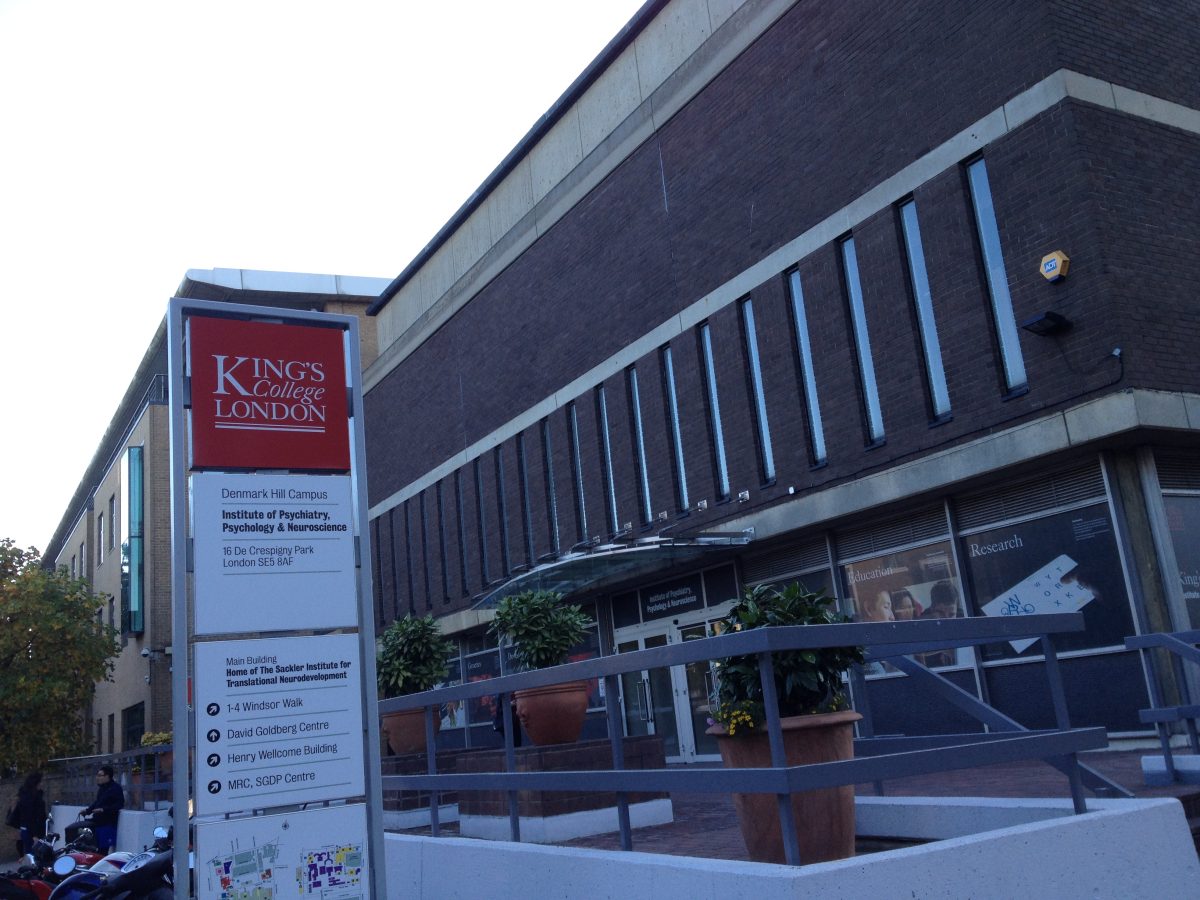
Illustrative image: the King’s College London sign and the main building of the Institute of Psychiatry, Psychology & Neuroscience on the Denmark Hill campus, London, in 2015. It does not show study participants. Photo by KiloCharlieLima, Wikimedia Commons, licensed under CC BY-SA 4.0.
Educational content written from a harm reduction perspective and with respect for individual freedom. It does not replace advice from a health professional and is not intended to encourage or condemn any drug use.