

In brief
- A crossover trial with 45 healthy volunteers at the University of Fribourg (Switzerland) compared 100 micrograms of LSD with a placebo.
- The day after dosing, participants showed significantly better consolidation of a new motor task (“offline” learning).
- One week later, changes in brain activity were still being recorded, alongside lower perceived stress and higher self-reported cognitive flexibility.
A team at the University of Fribourg, led by researcher Abigail E. Calder and psychiatrist Gregor Hasler, has published a randomized controlled trial in the journal Neuropsychopharmacology (part of the Nature portfolio) exploring how a single dose of LSD affects the brain and learning in the hours and days that follow, long after the subjective effects have worn off. This was not a clinical trial to treat any condition, but rather a mechanistic study in healthy individuals designed to understand if LSD opens temporary “windows” of brain plasticity.
What was done
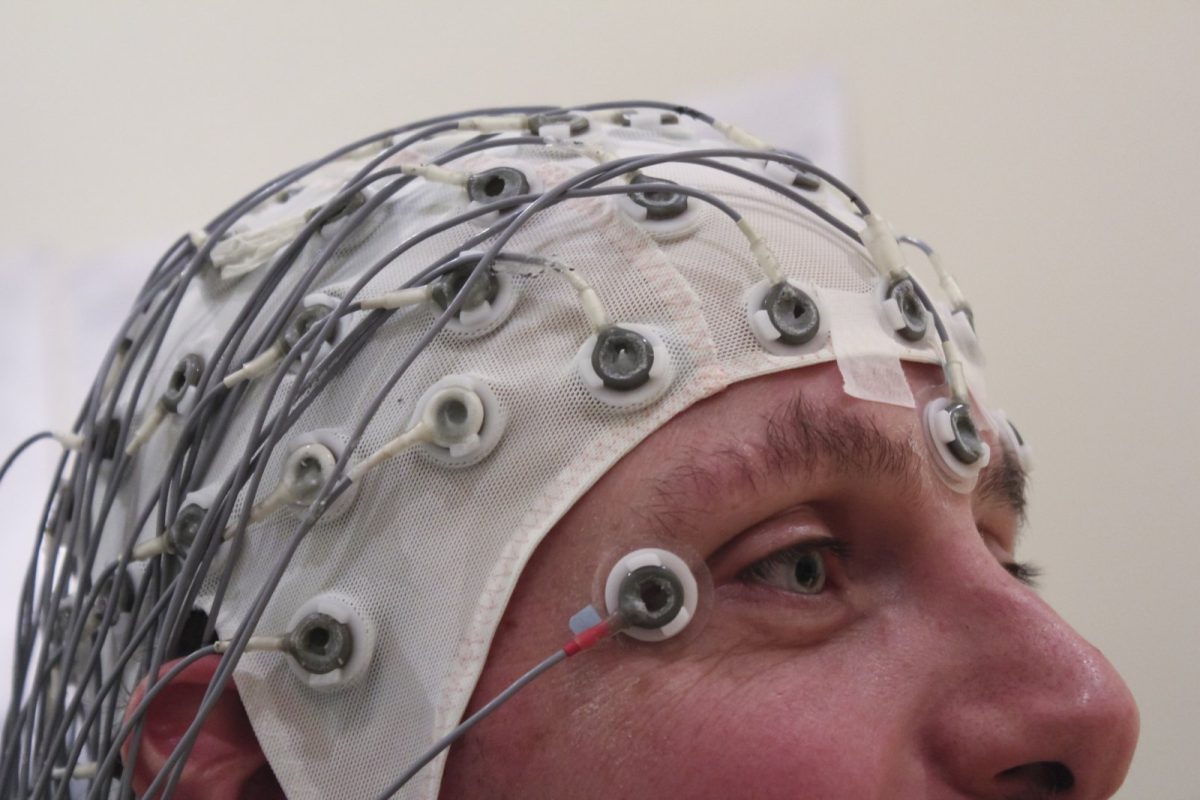
Forty-five healthy volunteers (24 women) participated in a crossover design: each person received, in separate sessions, 100 micrograms of LSD and a placebo, under a blinded protocol, although all identified the LSD condition by its effects, according to the paper’s limitations. Researchers measured brain response using electroencephalography (EEG) via repeated auditory stimulation, and associative transcranial magnetic stimulation (TMS) to record motor evoked potentials. They also analyzed blood levels of brain-derived neurotrophic factor (BDNF), a protein linked to neuronal plasticity. The day after each session, participants performed a sequence-typing task to assess improvement after 10 and 80 minutes of awake rest; sleep consolidation was not measured.
What they found
The central finding is that motor learning consolidation (“offline”—that is, the improvement that occurs without further practice) was significantly greater the day after taking LSD than after the placebo. On a neurophysiological level, LSD acutely reduced the amplitude of certain components of the brain’s response to sounds (the N1 and P2 potentials), and the one-week P2 modulation should be considered exploratory, according to the authors. With magnetic stimulation, motor evoked potentials showed greater amplitude and a faster response under LSD. Blood BDNF levels, however, did not vary between conditions, which qualifies the hypothesis that this specific marker explains the observed changes. One week after the dose, participants also reported feeling less stress and greater mental flexibility in their daily lives.
What it implies
This is a small study in healthy people with no stated therapeutic goal, so its results cannot be directly extrapolated to any clinical use or to microdosing, which follows a different administration pattern. It also does not establish how long these changes actually last beyond the one-week follow-up, nor what biological mechanism produces them, since BDNF—the usual candidate—did not explain the improvement. Its value lies in providing objective and measurable evidence (EEG, TMS) that a single dose of LSD leaves functional traces in the human brain several days after the acute effect, fueling the hypothesis that these substances could open temporary windows of plasticity that could be harnessed for learning or rehabilitation. As always in this field, replications with larger samples are needed, and if practical applications are to be explored, trials designed specifically for that purpose.
Source
- Calder AE, Diehl VJ, Lietz MP, et al. “Acute and post-acute neurobehavioral responses to lysergic acid diethylamide in healthy subjects: a randomized controlled study”. Neuropsychopharmacology, June 18, 2026.
Educational content written from a harm reduction perspective and with respect for individual freedom. It is not a substitute for advice from a healthcare professional and is not intended to encourage or condemn any drug use.


