

In brief
- The UK government has agreed to classify ethylbromazolam, a designer benzodiazepine, as a Class C controlled substance.
- It has already shown up in hundreds of counterfeit pills sold on the illicit market as diazepam, alprazolam, or clonazepam.
- In six study samples, BTNX strips gave three negatives; the three positives contained other benzodiazepines, and no pure standard was tested.
The UK Home Office confirmed this past July that it will follow the recommendation of its Advisory Council on the Misuse of Drugs (ACMD) and place ethylbromazolam under Class C of the Misuse of Drugs Act 1971. The decision comes after the Welsh drug-testing service WEDINOS and other forensic laboratories across the country detected the substance in hundreds of samples over little more than a year.
A bromazolam analogue spreading rapidly
Ethylbromazolam is an analogue of bromazolam, the designer benzodiazepine that dominated the unregulated market until several countries placed it under control. The chemical difference is subtle: an ethyl group replaces a methyl group on the triazole ring. A study published in May in Archives of Toxicology, conducted by researchers at Linköping University alongside colleagues from Canada, the UK, Australia, and Germany, confirmed in laboratory testing that it acts on GABA-A receptors with virtually the same potency as bromazolam, and that flumazenil antagonizes this activity in vitro; this does not establish safe clinical reversal.
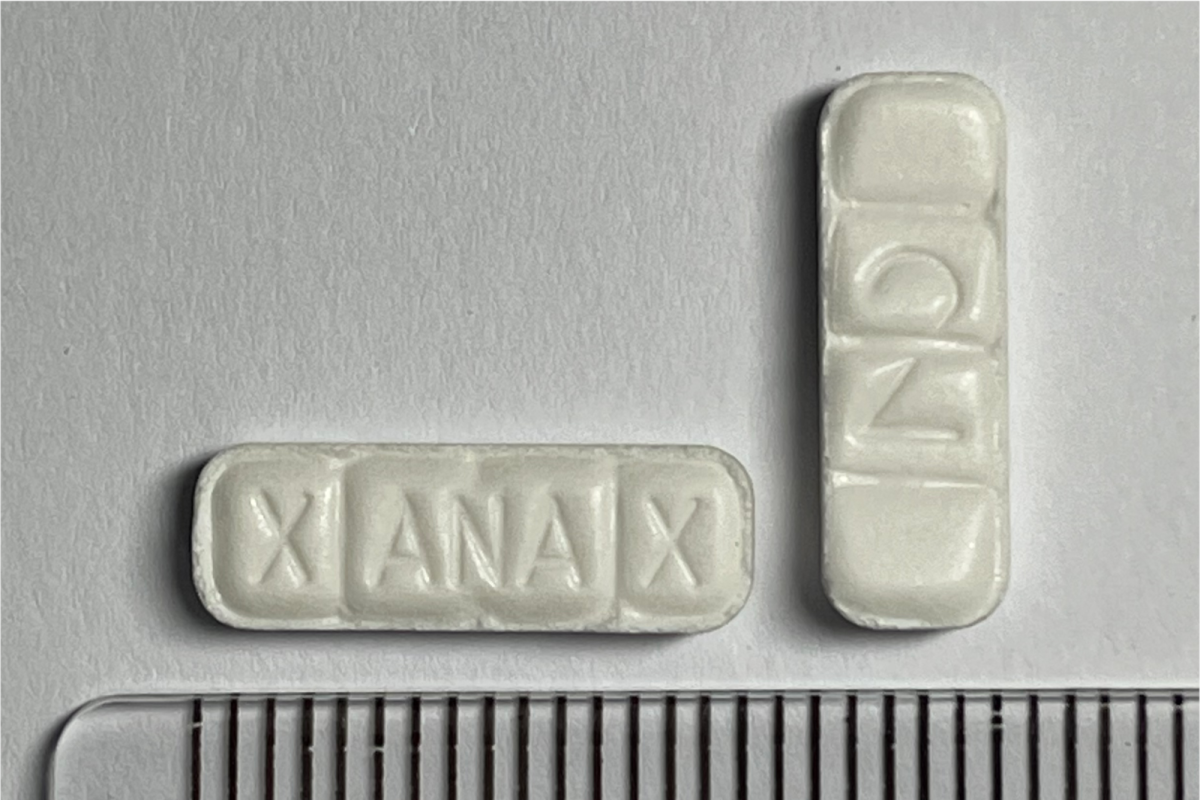
The compound was first detected in Canada in November 2024 and surfaced in the UK two months later. Since then, it has also turned up in Germany, Sweden, Norway, Australia, New Zealand, and the United States. It almost always appears where people least expect it: pressed into counterfeit pills sold as diazepam, alprazolam, or clonazepam, without buyers knowing they contain another drug—a pattern we already reported when examining designer benzodiazepines circulating in Europe.
What testing data reveals
The ACMD report that informed the government’s decision cited 439 samples identified by WEDINOS between January 2025 and January 2026, alongside 65 detections by Eurofins Forensic Services and 15 by SOCOTEC UK in 2025 alone. Forensic laboratory LGC found the compound in 46 post-mortem toxicology analyses between January 2025 and February 2026, and the Office for Health Improvement and Disparities (OHID) reported 19 cases, potentially overlapping with the LGC records, starting in January 2025. In Northern Ireland, two pill seizures were linked to sudden deaths in 2025. The ACMD emphasized that these figures do not prove ethylbromazolam directly caused the fatalities—a common ambiguity when it appears alongside opioids or other depressants—but they do confirm that it is circulating consistently across the unregulated market.
What this means
For people who use these substances, the most critical takeaway is not its legal status, but the study’s limited finding: three of six ethylbromazolam samples tested negative with BTNX Rapid Response strips; the positives contained other benzodiazepines, and no pure standard was tested. Identification requires validated analytical methods, and a negative screening result does not rule out its presence, underscoring the value of specialized harm reduction drug-checking services over basic home test strips. As with any unregulated benzodiazepine, the greatest danger comes from mixing it with opioids or alcohol due to the severe risk of respiratory depression: avoiding these combinations reduces one risk factor, but a small dose of a pill with unknown contents does not guarantee safety.
Source
- Advisory Council on the Misuse of Drugs (ACMD) / Home Office. Ethylbromazolam: a review of the evidence on its use and harms. GOV.UK, updated July 9, 2026.
Educational content written from a harm reduction perspective and with respect for individual freedom. It is not a substitute for advice from a healthcare professional and is not intended to encourage or condemn any drug use.

