

In brief
- A study brings together 4,563 qualitative and 1,224 quantitative results from residue samples collected in 17 U.S. states between January 2024 and June 2026.
- In the samples studied, adulterants varied by region and time period: an alert needs local context.
- The results do not describe the Spanish market or demonstrate contamination of LSD, DMT, or other psychedelics.
The composition of a substance sold on the unregulated market can change before its name does. A study by the U.S. National Institute of Standards and Technology (NIST), published on October 7 in Drug Testing & Analysis, documents that variability in fentanyl-related samples. Its contribution to harm reduction is specific: having recent analytical information grounded in local context makes it possible to communicate risks more precisely.
A market that changes during observation
The team studied residues through the RaDAR program, which works with health agencies, forensic laboratories, and other services. Qualitative screening used DART-MS; quantitative analysis used liquid chromatography coupled with tandem mass spectrometry (LC-MS/MS). NIST’s own release, published on October 8 and updated on October 16, describes differences between the eastern and western United States and changes over the two and a half years observed.
The findings include the replacement of xylazine with medetomidine in part of the supply studied. BTMPS, a compound used in plastics manufacturing, also appears. The NIST release also notes increasingly complex mixtures: compared with one or two common additives at the beginning of the period, six or more compounds are found more frequently. Detecting a substance, however, does not in itself amount to measuring the harm it caused an individual.
What it means
For people working in drug checking, the message is to maintain monitoring and share results quickly. For someone reading an alert, it matters to ask where the samples were collected, when, and with what method. A laboratory result provides information about the material analyzed; it does not automatically certify other batches or eliminate all risks.
These findings must be read with their limitations in mind. These samples do not constitute a map of the entire U.S. market. Nor do they allow the findings to be extended to Spain, these adulterants to be attributed to psychedelics, or an individual’s likelihood of poisoning to be calculated. The study is not a clinical trial and does not demonstrate that a specific intervention reduces deaths.
From a cognitive liberty perspective, access to understandable data helps people make their own decisions without turning uncertainty into stigma. Our guide to harm reduction and responsible use offers general context. Up-to-date local information remains essential: a news report from abroad does not replace a local alert.
Source
- NIST: study on changes in fentanyl adulterants, October 8, 2026. Research: Edward Sisco and colleagues, Trends in Fentanyl Adulteration From Rapid Drug Analysis and Research (RaDAR) Drug Checking Samples, January 2024 to June 2026. Drug Testing & Analysis, October 7, 2026.
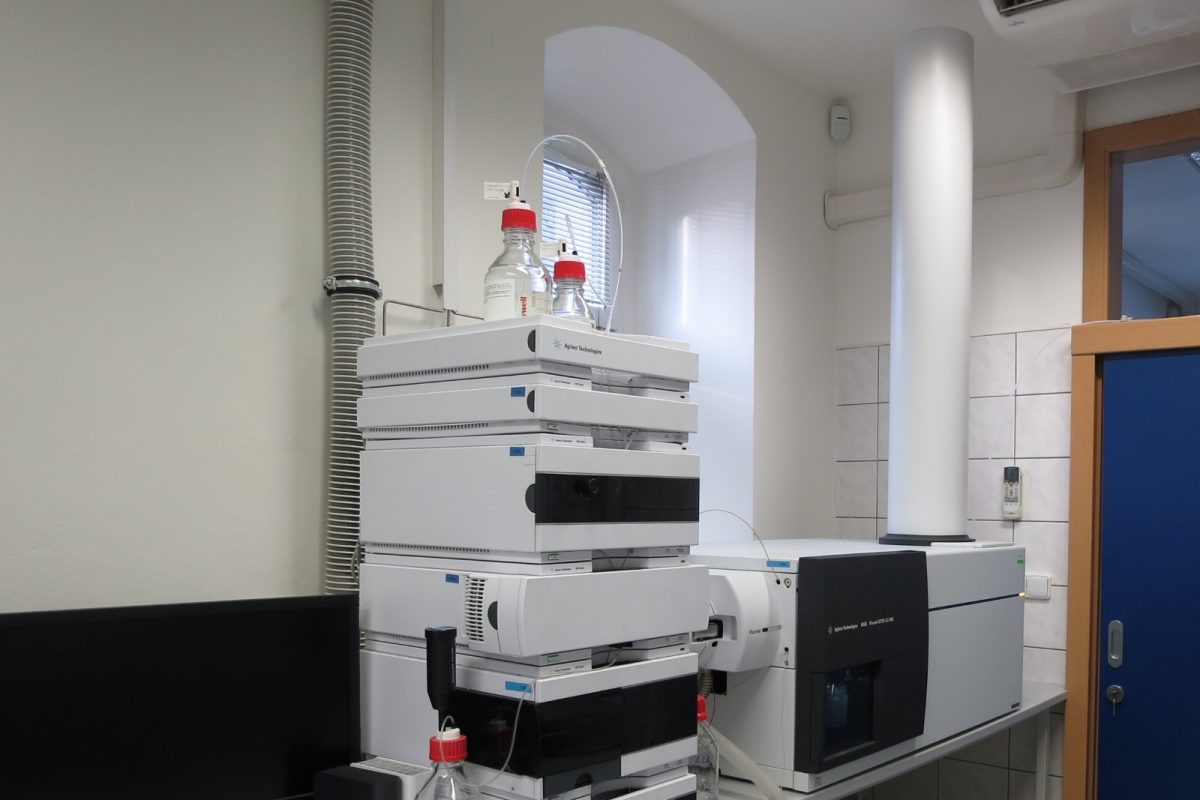
Mass spectrometer in a laboratory, illustrative image. Photo: Sarka Na kopci / Wikimedia Commons (CC BY-SA 4.0). Cropped from the original image.
Educational content written from a harm reduction perspective and with respect for individual freedom. It is not a substitute for advice from a healthcare professional and is not intended to encourage or condemn any drug use.