

Who was speaking, and why it matters
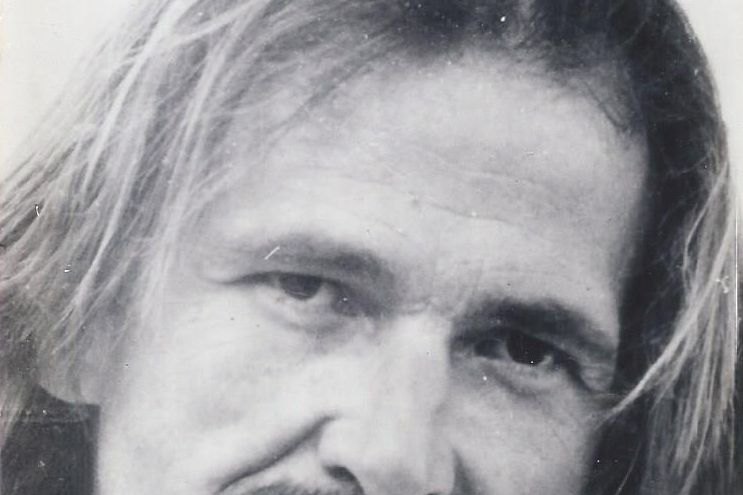
Antonio Escohotado (Madrid, 1941–Ibiza, 2021) served as the gateway to a secular view of psychoactive substances for several generations of Spanish-speaking readers. His General History of Drugs transformed a subject almost always treated as a police or health problem into an object of cultural history and philosophy. That popularity came at a cost: he was labeled an apostle of drugs, a role he tirelessly rejected.
The conversation that serves as the basis for this text took place on December 6, 2009, recorded by essayist J. C. Ruiz Franco, with the participation of sociologist Carlos Moya and Javier Muns. We are not reproducing the full interview; instead, we have reordered and commented on its core themes so that the reader is left with the ideas, not just the anecdotes.
The cannabis he remembered: memory, not nostalgia
Escohotado placed his first contact with cannabis in the autumn of 1964. He described a landscape of scarce, poor-quality product until well into the seventies, with one exception he remembered with affection: a splendid Afghan hashish that, according to him, disappeared around 1975. His interest in cultivation also dated back to those years, long before grow shops existed.
One detail of his discourse is worth highlighting: he claimed that Moroccan hashish—resin or pollen—”is not THC, but basically CBD,” closer to Valium than to a psychedelic experience. It is a debatable generalization typical of his era; we revisit this in the critical reading.
Use and abuse: his most solid contribution
If there was one thing Escohotado claimed as his own, it was his insistence on distinguishing between use and abuse. His thesis was simple yet demanding: abuse deprives one of exactly what was being sought. After a pleasure that does not incorporate knowledge or a certain elegance—what he called “sober intoxication”—the destination, he said, can only be pain.
Hence his distance from two opposing figures. On one hand, the “gurus”: he found it “very ill-mannered to play the seer and savior,” and attributed much of the phenomenon to a public looking for someone to think for them. On the other, what he called the “junkie mentality,” which he identified with the abandonment of self-control. He also observed a generational shift in consumption: from the self-destructiveness of the sixties to a pattern linked to the weekend, just as reckless in dosage but, according to him, with less self-destructive drive.
The scapegoat and the “mothers of addicts”
A large part of his cultural critique revolved around a mechanism: when someone overindulges and then blames the drug or society, they are resorting—he said—to the “projective scheme,” the old institution of the scapegoat. He linked it to Manichaeism, that reduction of the world into two sides, which he considered a mark of barbarism. The task of balanced thought, he maintained, is to resist those two crutches and accept that reality is analog and evolutionary, not dualistic.
Commerce, communism, and the idea of freedom
In 2009, he was focused on The Enemies of Commerce, his history of communism understood as a drive for security against the uncertainty of freedom. It should be read as what it is: a personal, strongly ideological thesis, not a historiographical consensus. Within that framework fit one of his most cited distinctions: cannabis as a “revolutionary” substance, because it opens horizons and forces one to look at oneself without complacency, as opposed to alcohol and tranquilizers as substances “of conformity.”
Carlos Moya noted during the talk that everything depends on the context, the person, and the moment—an observation more prudent than any closed classification. Escohotado added a curious historical note: there was a time when being on the left was synonymous with being anti-prohibitionist, and he attributed a decisive role to the American counterculture in bringing the debate out of the closet.
Cultivation and prohibition: what he said and what we omit
He had been cultivating since the mid-seventies and boasted of having refined the craft over the years, including harvests he remembered with pride around 1990. For editorial consistency, we do not reproduce his practical cultivation tips here: this is an educational text, not an agronomic guide.
Regarding the future of prohibition, he was ambivalent. He maintained that the “war” was largely lost by the crusaders—who had achieved more users and an immense black market, the exact opposite of their goal—and that only legal “tolls” remained, such as the Corcuera Law. But he did not rule out a repressive return, fueled by the success of campaigns against other substances. His conclusion, very much his own: “freedom has never been a gift.”
Critical reading
Several of Escohotado’s assertions required nuance even in 2009, and even more so today:
Moroccan hashish “is CBD.” This is a simplification. The cannabinoid profile of hashish depends on genetics and processing, and reducing all Moroccan hashish to CBD ignores the enormous real-world variability. Taking this as a fixed fact leads to error.
The “revolutionary” vs. “conformity” binary. This is a suggestive cultural metaphor, not a pharmacological property. The effects depend on the substance, the person, the dose, and the environment—the classic set and setting—as Moya himself pointed out in the talk.
The praise of “sober intoxication” and self-control. It is valuable as a personal ethic, but it runs the risk of placing all responsibility on the individual and minimizing factors that do carry weight: vulnerability, mental health, social context, and, above all, the lack of reliable information that prohibition itself fosters.
Harm reduction, in a nutshell. No substance is harmless. Where consumption exists, the sensible approach is to get informed from reliable sources, avoid mixing, pay attention to mental health, and remember that cannabis is not free of risks, especially for young people or those with a psychiatric predisposition.
Read with that caution, the most enduring aspect of Escohotado is not his tastes or his classifications, but his commitment to taking the debate out of moralism and returning it to history, pharmacology, and individual responsibility.


