

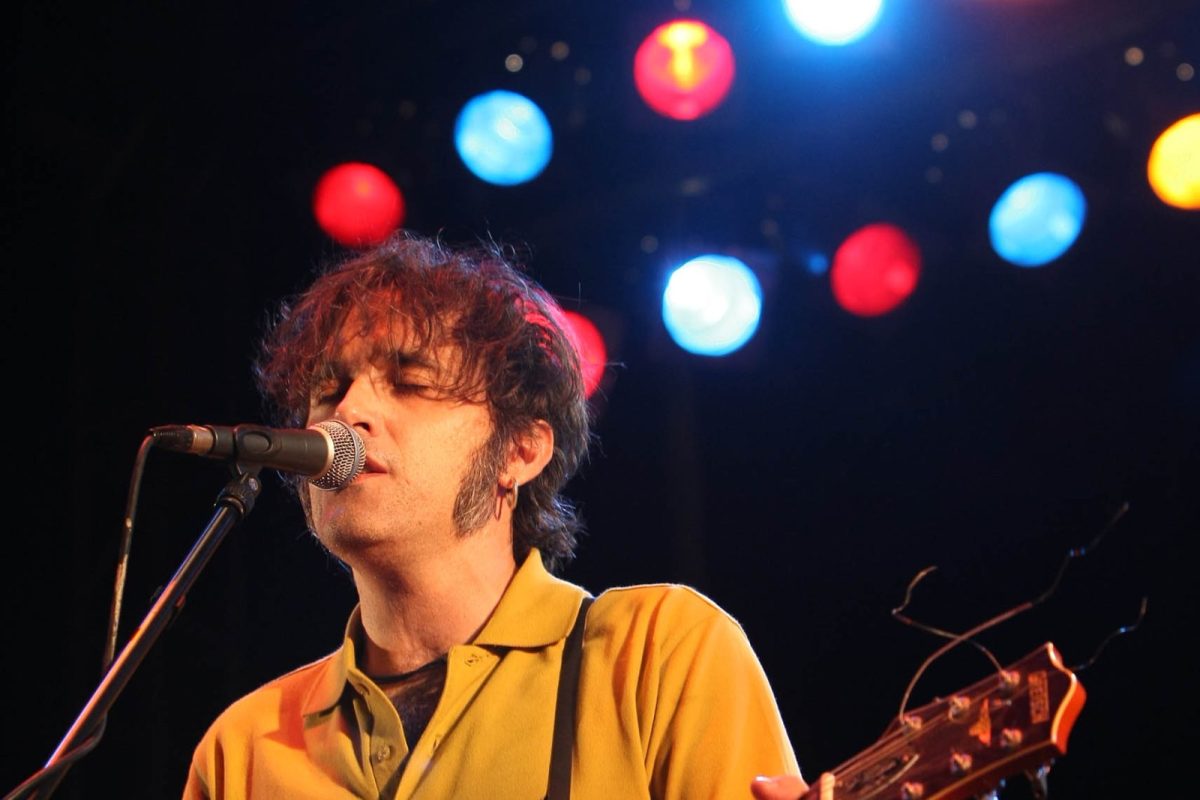
Who Is Gecko Turner
Behind the pseudonym Gecko Turner is Fernando Gabriel Echave Peláez, born in Badajoz in 1966. A songwriter, producer, and performer, he has built a career that has garnered greater recognition outside of Spain than within it, crafting a sound so distinct it defies easy categorization: he and music critics dubbed it “afromeño” or “afromeño soul”—a hybrid of jazz, blues, soul, funk, samba, and reggae laced with electronics and alternative grooves. World music in the truest sense of the term.
His musical journey runs deep. Throughout the nineties, he played in bands such as Animal Crackers, The Reverendos, and Perroflauta, releasing more than a dozen albums of original material, alongside production credits for Luis Pastor and Inlavables. In 2003, he released his debut solo album, Guapapasea!, followed in 2006 by Chandalismo ilustrado, which the British magazine Swell ranked among the top twenty albums of the year. Several of his tracks have landed on dozens of compilations, commercials, and soundtracks.
Manipulando: Letting Others Remix
The starting point for this interview was Manipulando, a compilation released by Madrid-based label Lovemonk Records bringing together eleven remixes of tracks from his first two albums—many previously available only on vinyl. The roster of producers is formidable: Quantic, Seiji, Dublex Inc., Mexican Institute of Sound, Afrodisiac Soundsystem, and Phillip Owusu of Owusu & Hannibal.
Gecko saw this less as surrendering control and more as an honor. He was especially thrilled to be remixed by Afrodisiac Soundsystem—an LA-based collective that had previously only worked with material by Fela and Femi Kuti—and by Owusu himself. The title, he noted, wasn’t his idea but the label’s, and it struck him as fitting precisely because it describes what takes place: a “manipulation” of his songs in someone else’s hands. Far from making him uneasy, the idea of letting go and watching what others did with his work aligned naturally with how he views his craft.
A Prophet Abroad
Despite international acclaim, he received virtually no airplay on Spanish commercial radio. When asked about this paradox, Gecko pointed to two factors: the audience’s musical education and the dominance of commercial radio formats—a system where, in his view, well-funded record labels pay to ensure their tracks play on loop. “It’s an industry driven by that: business taking precedence over any musical consideration,” he summarized. When it came to his creative process, he was far less reverent: Un limón en la cabeza, one of his most popular tracks, grew out of a few rhymes he liked and kept developing, “pretty much how all songs come together.”
Cannabis and Creativity: What He Said, and What Deserves Scrutiny
In the original conversation, Gecko described himself as a regular cannabis user, assuming its influence on his creative process “must be undeniable.” It is an honest response and a very common one among musicians, which is precisely why it warrants closer inspection: it captures a widespread trope that demands critical reading.
The narrative of the artist who creates “thanks to” a substance is a powerful cultural script, but the subjective feeling of creative flow does not equate to a measurable improvement in output. The available scientific evidence on cannabis and creativity is ambiguous: much of what is perceived as inspiration actually stems from a more relaxed, disinhibited mood, rather than an enhanced ability to generate superior ideas. Furthermore, regular use can impair working memory, sustained motivation, and discipline—the exact qualities required to carry any musical endeavor through over the medium and long term. In other words: sudden flashes of inspiration and sustained groundwork do not always go hand in hand.
A Critical Perspective
It pays to be skeptical of easy cause-and-effect assumptions. The fact that a great record coincided with drug use does not prove that one caused the other; most musicians we admire produce their finest work through a mix of raw talent, long hours, and disciplined craft, whether substances are involved or not. Romanticizing the link between drugs and art tends to obscure the real costs—dependence, health complications, derailed lives—incurred by those who didn’t fare as well in that same equation.
From a harm reduction perspective, the sensible approach is to decouple admiration for the music from judgment about substance use: neither demonizing it nor elevating it into a prerequisite for genius. Everyone makes their own choices, and transparent, evidence-based information regarding frequency, set and setting, and potential long-term effects matters far more than any creative mythology. This is an archival interview reflecting the moment it took place; the interviewee’s statements represent his personal views, not a recommendation.
The Quickfire Questionnaire
To conclude, here are the most personal highlights from that rapid-fire Q&A. Five adjectives to describe his music: soulful, bluesy, funky, jazzy, and natural—though he admitted the compliment he enjoyed reading most about himself was effortless. The album that shaped his life: Erykah Badu’s Mama’s Gun. The last record he had bought at the time: a Louis Jordan compilation; his latest book: Ventanas de Manhattan by Antonio Muñoz Molina. A guilty pleasure? Watching soccer on TV. A pet peeve? All-white cats, which he went out of his way to avoid crossing paths with. And his favorite moment of the day, disarming in its simplicity: “when you’re really hungry and sit down to eat.”