

A Chemist Remembered for a Single Discovery
Albert Hofmann (1906–2008) is almost universally linked to LSD, and with good reason: few molecules left such a profound cultural imprint on the twentieth century. Yet reducing his life’s work to that 1943 breakthrough overlooks much of his broader output. While several of his popular books are widely known—LSD: My Problem Child (originally LSD – mein Sorgenkind), Insight/Outlook, the dialogue collection The Acid God, and his collaborative works The Road to Eleusis and Plants of the Gods—the bulk of his scientific contributions remained scattered across academic journals and largely untranslated.
That scientific body of work is what we explore here, with two caveats. First, rather than wading through dense technical chemistry, we focus on passages that retain historical and educational value. Second, our aim is not to romanticize the substance or advocate its use, but to understand what Hofmann accomplished and how he articulated it in his own words. We begin not with a paper, but with the short address he gave in Basel in January 2006 at the closing of the symposium held for his one-hundredth birthday—delivered just two years before his death.
“My Problem Child”: The Centennial Address
The tone is that of an elder speaking off the cuff, moved by deep emotion. It is best read for what it is—a personal testimony rather than a scientific claim—and with healthy critical distance from his quasi-religious framing of the molecule:
“I want to find the right words to thank you all. I hardly know where to begin; perhaps it is best to start with God, then my parents and teachers, and then my godfather, who made it possible for me to study chemistry when my parents had no money and I was expected to earn a living. He funded my education. Let me continue with my thanks, or I will start saying everything that comes to mind. I thank the organizers of this marvelous symposium; Lucius Werthmüller and Dieter Hagenbach, dear old friends who made this possible. And I thank everyone who has helped spread the message of LSD around the world.
Finally, I thank LSD itself, which arrived so quietly and mysteriously. I believe that had I followed every standard rule of laboratory hygiene back then, it never would have revealed itself. It entered my body somehow and made its presence known. Because I was a researcher, it asked me to trace its origin. That first trip was unintended; it was an extraordinary experience, and I felt compelled to uncover its cause. Without that little mishap—which was, of course, no accident at all, for it was surely my destiny to discover this compound—and without both my chemical training and my momentary carelessness in handling it, the discovery would never have occurred. Thank you all for being here to honor my ‘problem child,’ who, through this gathering, has become a wonder child.”
The nickname—Sorgenkind, “problem child”—is the very phrase that titled his memoir. It captures the ambivalence Hofmann felt regarding LSD’s cultural trajectory: immense scientific pride in the discovery tempered by persistent unease over the uncontrolled recreational explosion that followed.
From Mexican Mushrooms to White Crystals in Basel
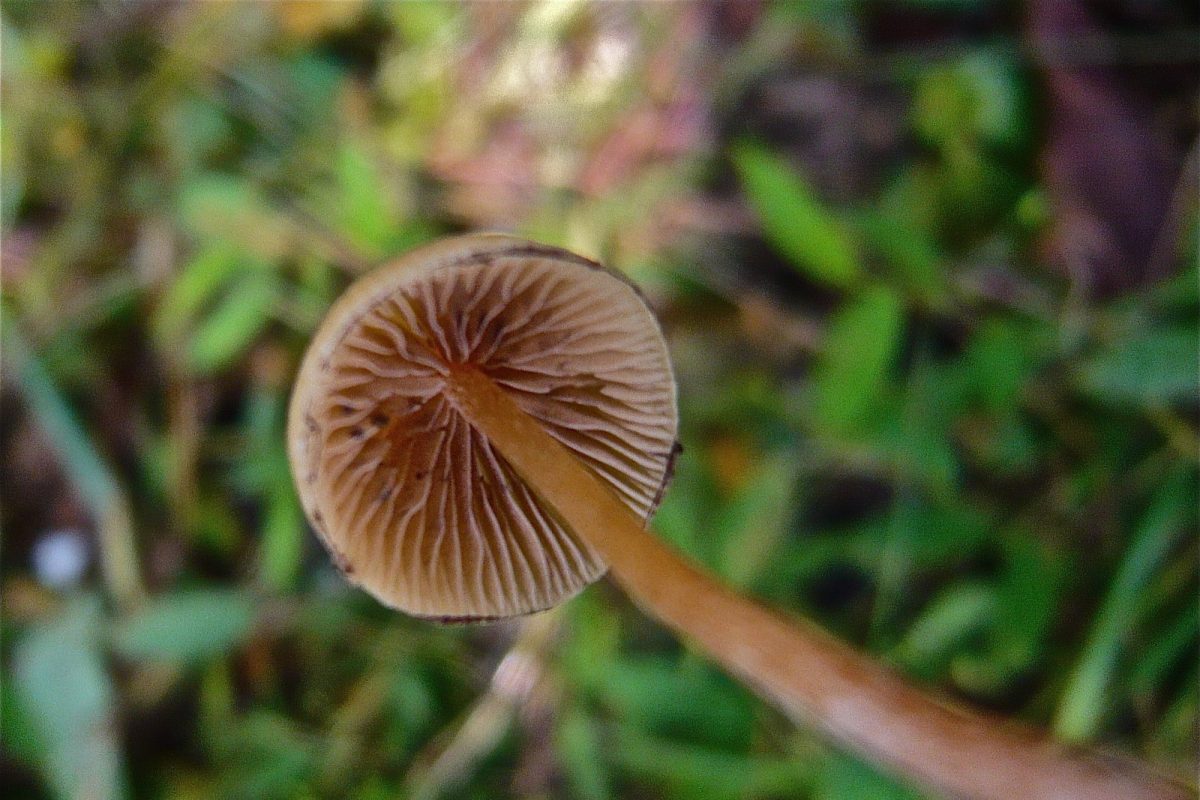
Less widely known is that Hofmann also isolated the active principles of Mexican magic mushrooms. The trail begins far from the laboratory bench. Since pre-Columbian times, Indigenous peoples across Mexico incorporated ritual mushroom ingestion into sacred ceremonies; traditional healers used them to “attain clairvoyance.” Between 1953 and 1955, American ethnomycologist R. Gordon Wasson and his wife Valentina led expeditions into remote mountainous regions to document these practices, culminating in their landmark work Mushrooms, Russia and History (1957).
In the summer of 1956, French mycologist Roger Heim—director of the National Museum of Natural History in Paris—accompanied Wasson to Mazatec, Chatino, and neighboring territories, classifying the species as basidiomycete fungi within the Strophariaceae family. Working with R. Cailleux, Heim succeeded in cultivating several of these species in his Paris laboratory. Material from one species in particular, Psilocybe mexicana, was subsequently shipped to the Sandoz laboratories in Basel, where Hofmann was stationed.
In the spring of 1958, Hofmann’s team isolated the psychoactive principle in crystalline form and named it psilocybin; shortly thereafter, they identified psilocin. The compound was present throughout various parts of the mushroom, and Sandoz mycologists A. Brack and H. Kobel devised submerged mycelial culture techniques, enabling the production of several grams needed for the first chemical, pharmacological, and clinical evaluations.
What Psilocybin Is, Chemically Speaking
Here, Hofmann the popularizer yields to Hofmann the chemist. Setting aside dense benchwork details, his core structural insights remain illuminating. Psilocybin forms white crystals readily soluble in water and is amphoteric (reacting with both acids and bases). Structural analysis confirmed it as an indole derivative; hydrolysis breaks it down into 4-hydroxy-dimethyltryptamine and phosphoric acid. The molecular structure was subsequently confirmed via total synthesis, matching the natural compound in every physical and chemical parameter.
What intrigued Hofmann most was the molecular kinship. Psilocybin belongs to the same structural family as serotonin (5-hydroxytryptamine), bufotenine, and other hydroxytryptamines. He found its resemblance to bufothionine—isolated from toad skins—particularly “remarkable,” as both represent esters of a hydroxy-dimethyltryptamine derivative (one paired with phosphoric acid, the other with sulfuric acid). Crucially, psilocybin shares a rare structural trait with LSD: both are indole derivatives substituted at the 4-position. For Hofmann, this overlap was no mere coincidence; it offered a compelling biochemical clue as to why two distinct molecules induce remarkably comparable psychological effects.
A Critical Perspective
These historical records warrant a measured reading. The Basel address is an emotional reflection by a centenarian, not a scientific assessment; his depiction of LSD as an entity that “spoke to him” and asked to be discovered reflects poetic metaphor, not pharmacology. Origin myths should never be mistaken for clinical reality.
His psilocybin text, meanwhile, reflects late-1950s structural chemistry: it describes what the molecule is and how it relates to neighboring compounds, offering no guide to extraction or human use. That a compound possesses “natural,” ritual, or historical roots implies nothing about its safety profile. Mushrooms of the genus Psilocybe can easily be misidentified with deadly toxic lookalikes, their potency fluctuates widely, and their ingestion can provoke acute anxiety crises or destabilize underlying psychiatric conditions. The value of these archival materials lies in historical education; understanding altered states of consciousness demands rigorous pharmacology and harm reduction principles, not uncritical devotion.
Regarding sources: this text synthesizes the content of Hofmann’s centennial address alongside his paper “Chemical aspects of psilocybin,” presented at the first International Congress of Neuro-Psychopharmacology in Rome, 1958. We omit his original bibliographic apparatus—primarily mid-century references that are difficult to locate today; readers interested in further study should consult Hofmann’s published volumes and the historical literature surrounding Wasson and Heim.


