

In brief
- A clinical case published in Frontiers in Neuroscience describes transient functional improvements in an octogenarian woman with advanced Alzheimer’s after receiving high doses of psilocybin mushrooms.
- After years of monosyllabic speech, incontinence, and near-total dependency, the patient regained spontaneous speech, bladder control, and autonomous mobility for several weeks.
- The authors themselves emphasize that this is a single case, without a control group or neuroimaging tests, and present it as a hypothesis for study, not as evidence that psilocybin reverses Alzheimer’s.
In late May, a medical team from the Associação Cruz de Ankh in São Paulo published a case in the scientific journal Frontiers in Neuroscience involving a Japanese-American woman over eighty years old with a clinical diagnosis of Alzheimer’s spanning a decade. After receiving high doses of psilocybin mushrooms, the patient experienced a transient functional recovery that surprised her care team: she began speaking spontaneously again, regained urinary continence after more than five years, and started moving and dressing herself independently.
How the case unfolded
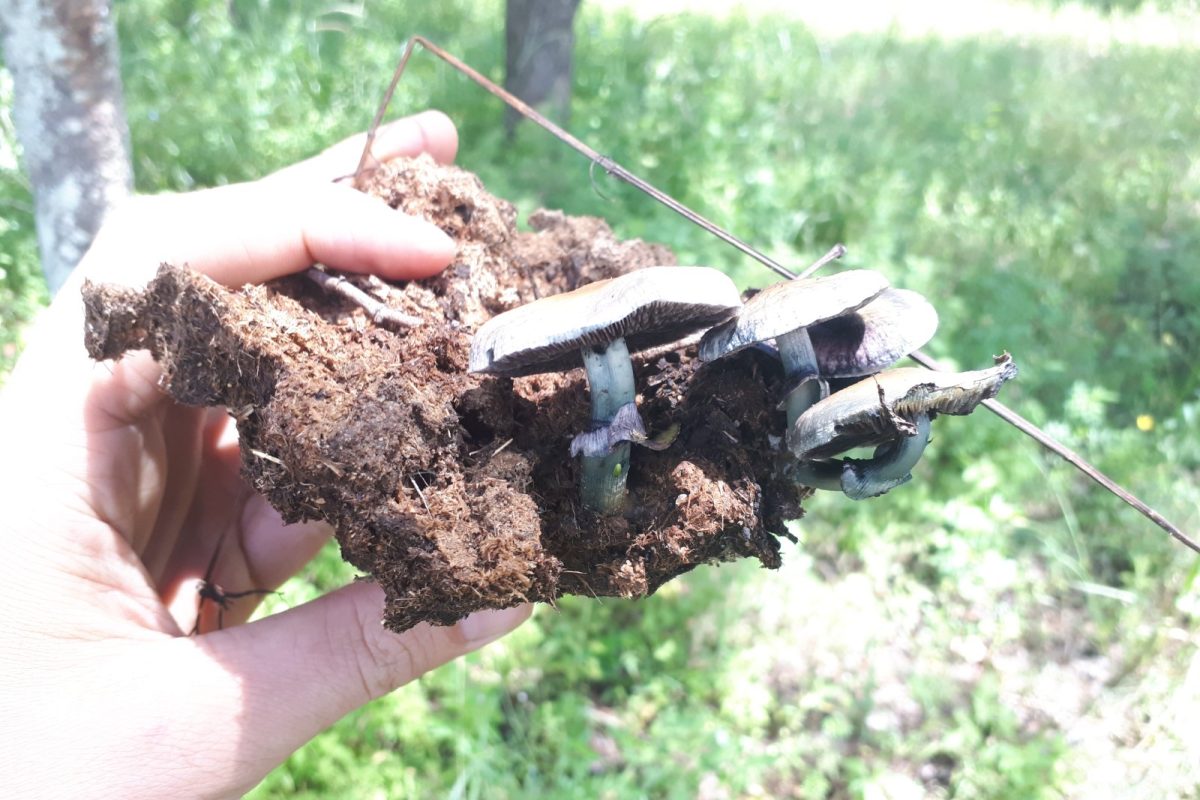
According to the report, the woman had been in an advanced stage of decline for five years: she barely uttered monosyllables, had difficulty swallowing, suffered from chronic incontinence, and required assistance for virtually everything. Her family and caregivers, within the framework of documented medical monitoring, administered five grams of the mushroom variety known as Enigma. During the first twelve hours, an episode of intense sweating and deep sleep was recorded; by the nineteenth hour, she began to speak autobiographically, stringing sentences together for several hours. In the following days, she regained independent walking, dressed herself, showed greater emotional connection, and even spontaneously said, “It is nice to come here.” A month later, observing that the improvements were maintained, the team administered a second dose of three grams, after which the woman showed even greater verbal fluency, humor, and agility. Those who wish to learn more about how these psilocybin mushroom experiences are managed can consult our Psychedelics Guide.
What the authors say—and don’t say
Marcos Lago, Mariana Cerveira, and Joe Xavier Simonet, the signatories of the article, are explicit about the limitations of their observations: this is a single case, without a comparison group, without neuroimaging tests or biomarkers to confirm the original Alzheimer’s diagnosis beyond clinical assessment, and without standardized cognitive scales applied systematically. The researchers themselves warn that their findings “should not be interpreted as a reversal of Alzheimer’s pathology” and present them, in their own words, as “a detailed observational description intended to generate hypotheses for future controlled research.” In short: a striking and well-documented data point, but one that does not allow for conclusions regarding efficacy or mechanisms on its own.
What it implies
The interest in this case lies not in it proving anything conclusively—it does not, and the authors are the first to say so—but in the fact that it raises a rarely explored question: whether latent functional capacity can remain in advanced neurological decline that, under certain neuromodulatory conditions, becomes momentarily accessible. This is a field still to be explored with controlled trials, something already underway with psilocybin in other contexts related to cognitive aging. As with any single-patient report, it is advisable to keep expectations in check: there is no validated therapy here, but rather a careful clinical observation that may guide future research. For those interested in these substances from a perspective of informed autonomy and harm reduction, we always recommend starting with our harm reduction guide rather than isolated cases, however promising they may seem.
Source
- Lago M., Cerveira M., Simonet J.X. Transient multidomain functional improvement in advanced Alzheimer’s disease following high-dose psilocybin-containing mushroom administration: a case report. Frontiers in Neuroscience, May 28, 2026.
Educational content written from a harm reduction perspective and with respect for individual freedom. It is not a substitute for advice from a healthcare professional and is not intended to encourage or condemn any drug use.


