
In brief
- Iboga (Tabernanthe iboga) is a shrub native to Central Africa; its root bark contains ibogaine, its primary psychoactive alkaloid.
- Research is investigating its potential to interrupt addiction and alleviate trauma. Evidence remains preliminary, and no regulatory body—such as the EMA or AEMPS—has approved it for medical use.
- Its most critical effect is cardiac (it prolongs the QT interval and can trigger arrhythmias); therefore, screening and medical supervision are key to reducing risk.
Iboga is an African plant surrounded by equal parts fascination and intense lore. From its root, we extract ibogaine, an alkaloid that has been studied for decades as a potential aid in treating addiction. It is worth carefully distinguishing what we know today from what remains a promise yet to be confirmed, without exaggerating in either direction.
A Sacred Plant of Central Africa
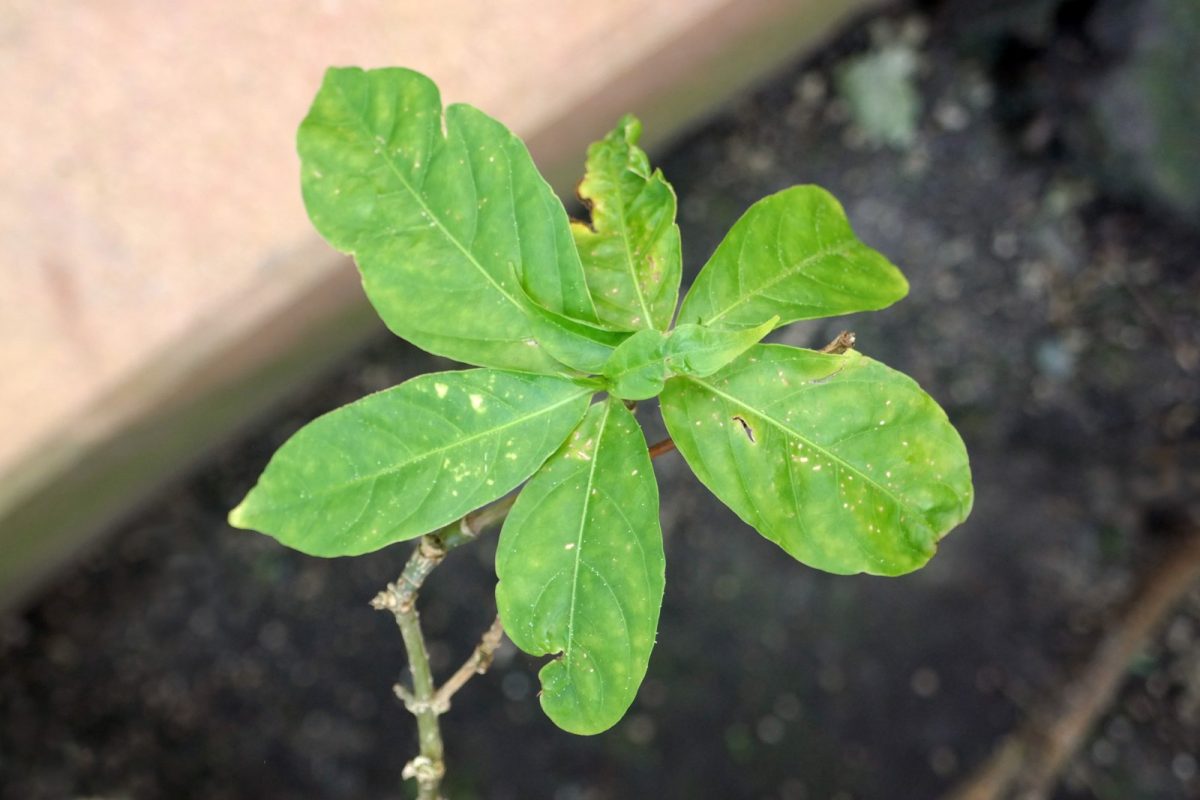
Tabernanthe iboga is a shrub in the Apocynaceae family native to the rainforests of Central Africa, particularly Gabon. The bark of its root contains ibogaine alongside a dozen other alkaloids. In Gabon, it holds a central place in Bwiti, a collection of spiritual traditions practiced by dozens of communities, where it is used in initiation and healing rites guided by local experts called ngangas. European explorers described its use beginning in the 19th century, and in the 1930s, it arrived in France, marketed as a stimulant tonic under the name Lambarène.
Ibogaine: From Ritual to Research
Ibogaine is the most abundant and studied alkaloid in iboga; within the body, it is transformed into noribogaine, an active metabolite with a longer half-life. Western interest in its potential anti-addictive effects took off in the mid-20th century, when some individuals reported that a single dose reduced cravings and opioid withdrawal symptoms. Unlike other classic psychedelics, it acts on multiple brain targets, including nicotinic receptors and the opioid and serotonergic systems, making it difficult to explain its mechanism with a single theory.
What Science Says Today
The available evidence comes primarily from observational studies and case series, not large-scale controlled trials. It suggests that ibogaine may reduce cravings and withdrawal in people dependent on opioids or cocaine, although these data are preliminary. The most discussed work in recent years, published in Nature Medicine by a team from Stanford University, followed 30 U.S. Special Operations veterans with traumatic brain injuries who traveled to a clinic in Mexico. They received ibogaine along with magnesium (to protect the heart), and one month later, the authors reported average reductions of 88% in PTSD symptoms, 87% in depression, and 81% in anxiety, with no serious cardiac effects.
These are striking results, but they should be read with the caution their design requires: the sample size is very small, there was no placebo group, and the team itself insists that rigorous trials are needed before any approval can be considered. To date, no regulatory body—neither the U.S. FDA, the European EMA, nor the Spanish AEMPS—has authorized ibogaine as a medication for any indication.
Harm Reduction
The effect requiring the most attention is cardiac. Ibogaine blocks certain potassium channels (hERG) in the heart, slows the pulse, and prolongs the QT interval, which can facilitate serious arrhythmias such as torsade de pointes. Case reviews have documented several dozen deaths associated with its use since 1990, mostly outside of supervised settings; this fact speaks volumes about the importance of context. There are also interactions to keep in mind: numerous drugs and substances that share the CYP2D6 metabolic pathway—and even grapefruit or quinine—can intensify its effects on the heart.
With this information on the table, anyone who decides to approach iboga can significantly lower the risk by carefully managing the context. Prior cardiac screening, including an electrocardiogram and blood work, helps determine if the heart is in good condition; it makes sense to rule it out in the presence of heart disease or certain psychiatric conditions like schizophrenia, and to avoid combining it with other drugs or medications. The presence of someone with medical training and not being alone makes a real difference compared to improvised use. Legally, ibogaine is not scheduled under the 1971 UN Convention, so it is not a controlled substance in most countries, although about a dozen prohibit it—including the United States, where it has been on Schedule I since 1970, and some European countries like France, Belgium, or Switzerland. Its status varies from place to place, and it is worth knowing the regulations in effect in each location. For those facing addiction, it may also be useful to know that there are other professional treatment paths to evaluate and choose from.
Sources
- Cherian, K. N., Williams, N. R. et al. Magnesium–ibogaine therapy in veterans with traumatic brain injuries. Nature Medicine, 2024.
- Stanford Medicine. Psychoactive drug ibogaine effectively treats traumatic brain injury in special ops military vets. Stanford Medicine News, January 2024.
- ICEERS. Iboga: basic information (botany, risks, and legal status). ICEERS, accessed in 2026.
Educational content written from a harm reduction perspective and with respect for individual freedom. It is not a substitute for advice from a healthcare professional and is not intended to encourage or condemn any drug use.