

In brief
- A team at the Hebrew University of Jerusalem compared DMT and 5-MeO-DMT in mice, separating head-twitch and marble-burying responses, without demonstrating separation of subjective experience from human clinical benefit.
- Blocking 5-HT2A or 5-HT1D receptors, or stimulating 5-HT1A, reduces the signal that predicts the hallucinogenic effect in rodents without nullifying the behavioral effect.
- The role of the 5-HT1D receptor is a novel finding. This is a non-peer-reviewed preprint, and all research was conducted on animals.
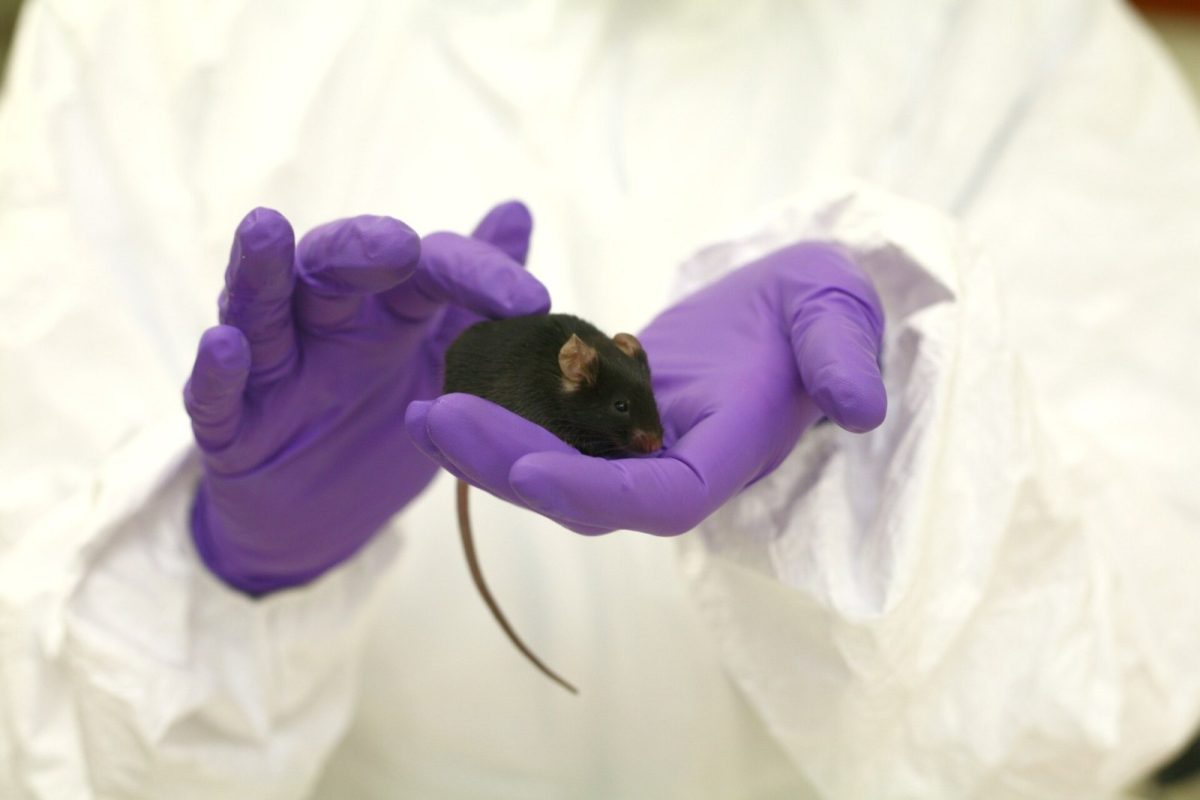
The question has been circulating for years at conferences and dinner tables: Is it possible to retain the therapeutic benefits of a psychedelic while skipping the trip? A laboratory at the Hebrew University of Jerusalem has uploaded preclinical data to bioRxiv that, at least in mice, separates two laboratory responses without demonstrating human therapeutic benefit or absence of subjective experience.
Two sister tryptamines, two distinct curves
The study, authored by Orr Shahar and nine colleagues under the direction of Bernard Lerer at the Hadassah BrainLabs Center for Psychedelic Research, systematically compares DMT and 5-MeO-DMT using the same battery of tests. The primary tool is the head-twitch response, the most widely used laboratory indicator for estimating a compound’s hallucinogenic potential in rodents.
This is where the first difference emerges. DMT follows a bell-shaped curve: the effect rises, reaches a peak, and then declines even as the dose continues to increase. 5-MeO-DMT, by contrast, rises continuously. These two related molecules, both present in the world of ayahuasca and tryptamines, behave differently within the serotonergic system.
Lowering the peak without turning off the background
The core of the study follows. The researchers administered 5-HT2A and 5-HT1D receptor antagonists, as well as a 5-HT1A agonist, alongside each tryptamine. They measured two response types in assays using different strains and ages: the head-twitch response and marble burying, a standard test for detecting compounds that act on obsessive-compulsive behavior. All three modulations significantly reduced the head-twitch response without eliminating the reduction in marble burying. In other words, the marker for the “trip” was turned off, but the behavioral effect remained.
The most novel finding involves the 5-HT1D receptor, which until now had not appeared in psychedelic literature as a potential brake on the hallucinogenic response. At the molecular level, both substances acutely activated the TrkB receptor—the gateway for the neurotrophin BDNF—in several brain regions, with DMT showing broader involvement. Twelve days after a single dose, both had increased synaptic proteins associated with plasticity, such as PSD-95 and synaptophysin. However, DMT did something unexpected: it lowered BDNF in the hippocampus and reorganized energy and glutathione metabolism in the frontal cortex.
What this implies
It is important to keep this in perspective. These are mice, this is a non-peer-reviewed preprint, and a reduction in head-twitching does not guarantee that the subjective experience would disappear in humans. The authors themselves present this as a starting point for designing more tolerable and scalable treatments, not as a proven substitute for anything. The distance to human trials is measured in years, as we noted when discussing DMT and neural stem cells.
It is worth adding that the very goal of separating clinical effects from the experience divides the psychedelic research community. For one part of the field, this is the path to treating more people with fewer hours of supervision per session. For others, the subjective experience is not a side effect to be polished away, but the mechanism of change itself. Furthermore, the reduced BDNF data suggests that less of a “trip” does not automatically equate to less risk: markers alone do not define safety. Moreover, combining 5-MeO-DMT with the 5-HT1B agonist CP94253 caused mortality in ICR mice in the marble-burying assay; human combination safety is not established.
Source
- Shahar O, Botvinnik A, Chaykin M, et al. Preclinical Comparison of DMT and 5-MeO-DMT Reveals Behavioral Dissociation, Distinct TrkB Activation and Differential Plasticity Profiles. bioRxiv (preprint), August 12, 2026.
Educational content written from a harm reduction perspective and with respect for individual freedom. It is not a substitute for advice from a healthcare professional and is not intended to encourage or condemn any drug use.

