

In brief
- A team from Johns Hopkins, the Colorado School of Public Health, and Brigham and Women’s Hospital reviewed ten years of US insurance records and found no clear difference in suicide attempts between those receiving esketamine and those who do not.
- The central figure remains at a tie (1.017) with a margin ranging from 0.670 to 1.544: this range allows for both a potential benefit and a potential harm.
- This is not a clinical trial, but an observational study based on healthcare billing data, which carries inherent blind spots.
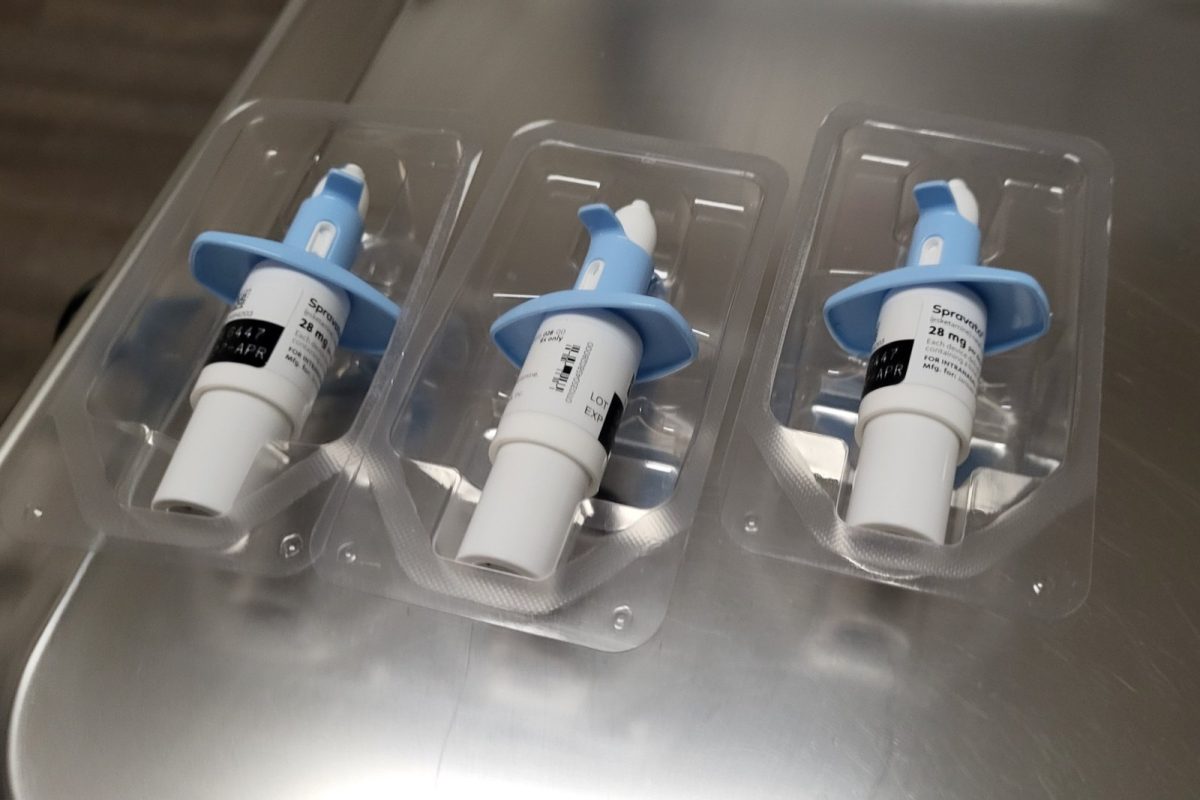
Esketamine nasal spray has been used since 2019 for depression that does not respond to other medications, and part of its reputation rests on the idea that it abruptly halts suicidal ideation. A team from Johns Hopkins University, the Colorado School of Public Health, and Brigham and Women’s Hospital, affiliated with Harvard Medical School, sought to verify whether that promise holds up in the real world. Their answer, published on September 2 in the journal Drug Safety, is that they detected no statistically distinguishable difference in recorded behaviors; the interval permits benefit and harm.
Ten years of records
The authors worked with a national database of administrative claims from various US insurers covering January 2015 to June 2025. Out of 1,574,657 adults eligible for the analysis, they identified those who began esketamine treatment after meeting criteria for treatment-resistant depression and matched them with up to three individuals with an equivalent profile who did not receive it. The matching was performed using propensity scores calculated at the exact moment each patient became at risk, a technique intended to balance measured factors, without guaranteeing equality in unmeasured factors or eliminating all confounding.
The outcome they tracked was very specific: non-fatal suicide attempts or intentional self-harm that received medical attention and were coded in the system. The follow-up lasted up to eighteen months.
The numbers
The final sample consisted of 23,140 people—5,785 treated and 17,355 in the control group—totaling 295,137 months of follow-up. Being in active treatment with esketamine was associated with a hazard ratio of 1.017, with a 95% confidence interval ranging from 0.670 to 1.544. In plain English: the central value shows no difference, and the margin of error is wide enough to accommodate either a one-third reduction in risk or an increase of a little over 50%.
A second analysis was conducted, restricted to the treated patients themselves, comparing their periods with and without exposure. In that case, the ratio dropped to 0.718 (0.456–1.130), a favorable trend that also failed to reach statistical significance. Measuring the effect per cumulative month of treatment, the value was 1.039 (0.999–1.081). The authors summarize it without sugarcoating: the interval remains compatible with both a clinically relevant benefit and potential harm.
What this implies
We must place this finding in context. This is not a randomized controlled trial, but an observational study built on billing data, which only captures what was coded during a consultation or in the emergency room. Attempts that never reach the healthcare system do not appear, and completed suicides were not included in the count. This same method of reviewing records had previously been applied to this family of drugs from another angle: an analysis using real-world data found no liver damage associated with ketamine or esketamine. Nor does it refute the trials that led to the drug’s approval; those measured depressive symptoms and suicidal thoughts in the short term, not recorded behaviors over a year and a half.
What it does provide is realism. It is one thing for a treatment to improve scores on a scale and another for that improvement to translate into fewer serious episodes when applied to thousands of people outside the laboratory. Studies like this, funded by the Arnold Ventures foundation rather than the industry selling the product, allow us to calibrate expectations and make informed decisions. Anyone considering this path, or any other, gains more from reading the full data than the headlines, and here it is useful to keep the harm reduction approach in mind: knowing what is known, what is not, and the limits of the evidence.
Source
- Wang Y, Storaci AS, Alexander GC, Gibbons JB. Esketamine Use and Attempted Suicide or Intentional Self-Harm Among Individuals with Treatment-Resistant Depression: A Retrospective Cohort Study. Drug Safety, September 2, 2026.
Educational content written from a harm reduction perspective and with respect for individual freedom. It is not a substitute for advice from a healthcare professional and is not intended to encourage or condemn any drug use.

