

In brief
- Three patients admitted in Algiers tested positive for MDMA on a rapid urine screen despite no consumption; laboratory analysis found neither MDMA nor MDA.
- The culprit is a metabolite of mebeverine, a common therapeutic drug, rather than the parent compound itself.
- A single 200 mg dose resulted in a positive test strip across all four urine samples collected between 4 and 13 hours post-ingestion.
A toxicology team at the Mohamed Lamine Debaghine University Hospital in Algiers has documented that mebeverine can trigger false-positive MDMA results on rapid urine tests. Their findings, published in Acta Clinica Belgica, are based on three clinical cases and a small controlled-dose experiment.
Three false positives
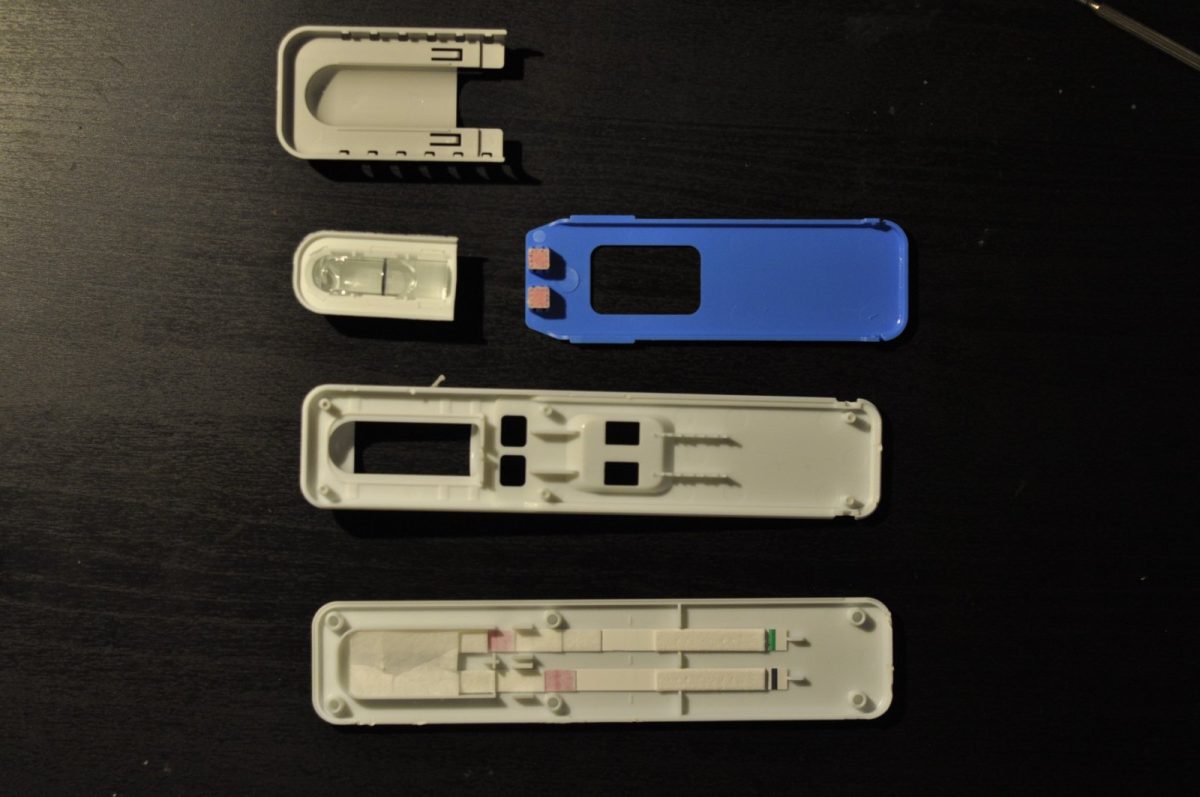
The authors describe three consecutive patients admitted to emergency and intensive care who were screened using a 12-panel immunochromatographic test strip. The threshold for MDMA on the strip is 500 ng/mL. In all three cases, the result was “presumptively positive.”
Confirmation via gas chromatography-mass spectrometry (GC-MS)—the gold standard technique—told a different story. Neither MDMA nor its primary metabolite, MDA, was present. The only compound consistently detected was a derivative of mebeverine: O-desmethyl-mebeverine alcohol. All three patients were taking mebeverine under medical supervision.
Identifying the culprit
To determine whether the parent drug or its metabolites were responsible, the team conducted two tests. First, they added certified mebeverine hydrochloride to a sample at 3,000 ng/mL; the test strip remained negative. The original molecule, therefore, does not trigger the reaction.
Next, they administered a single 200 mg oral dose of mebeverine and collected four urine samples between 4 and 13 hours later. All samples tested positive for MDMA on the strip. GC-MS again identified the same metabolite as the only mebeverine-derived compound present. Based on this, the authors point to this metabolite as the cause of the cross-reactivity, though they note that while the evidence is strong, the molecular mechanism remains to be fully demonstrated.
Implications
Immunochromatographic test strips are frontline tools—fast and inexpensive—but they lack specificity; they recognize families of similar molecules rather than a single substance. This study adds another entry to the list of potential interferences. The authors’ recommendation is clear: when an MDMA-positive result occurs in a patient taking mebeverine, clinicians must confirm the finding with GC-MS or LC-MS/MS before drawing conclusions. They also urge test manufacturers to include mebeverine and its metabolites in their cross-reactivity documentation.
From a harm reduction perspective, the lesson is practical. A presumptive result is not a diagnosis, and a false positive can have real-world consequences if interpreted without confirmation. It is helpful to be aware of this possibility and, if you are taking this medication, to mention it when providing a urine sample for analysis.
The data has inherent limitations. The study involves only three clinical cases and four experimental samples, without a larger volunteer pool or comparisons between different test brands, and the published summary does not specify which manufacturer’s test was used. It is a well-documented alert, not an estimate of how frequently this occurs.
Learn more about the substance, its effects, and how it is studied in our MDMA and empathogens guide. If you are interested in the composition of substances in circulation, we review pill analysis by Energy Control.
Source
- Moncef B, Tassadit MR, Cheima B, Salima EE, Salma K. Urinary false-positive ecstasy screening by Mebeverine Metabolite: a confirmatory study and controlled administration. Acta Clinica Belgica (PMID 42704114, DOI 10.1080/17843286.2026.2724290), September 7, 2026.
Educational content written from a harm reduction perspective and with respect for individual freedom. It is not a substitute for advice from a healthcare professional and is not intended to encourage or condemn any drug use.