

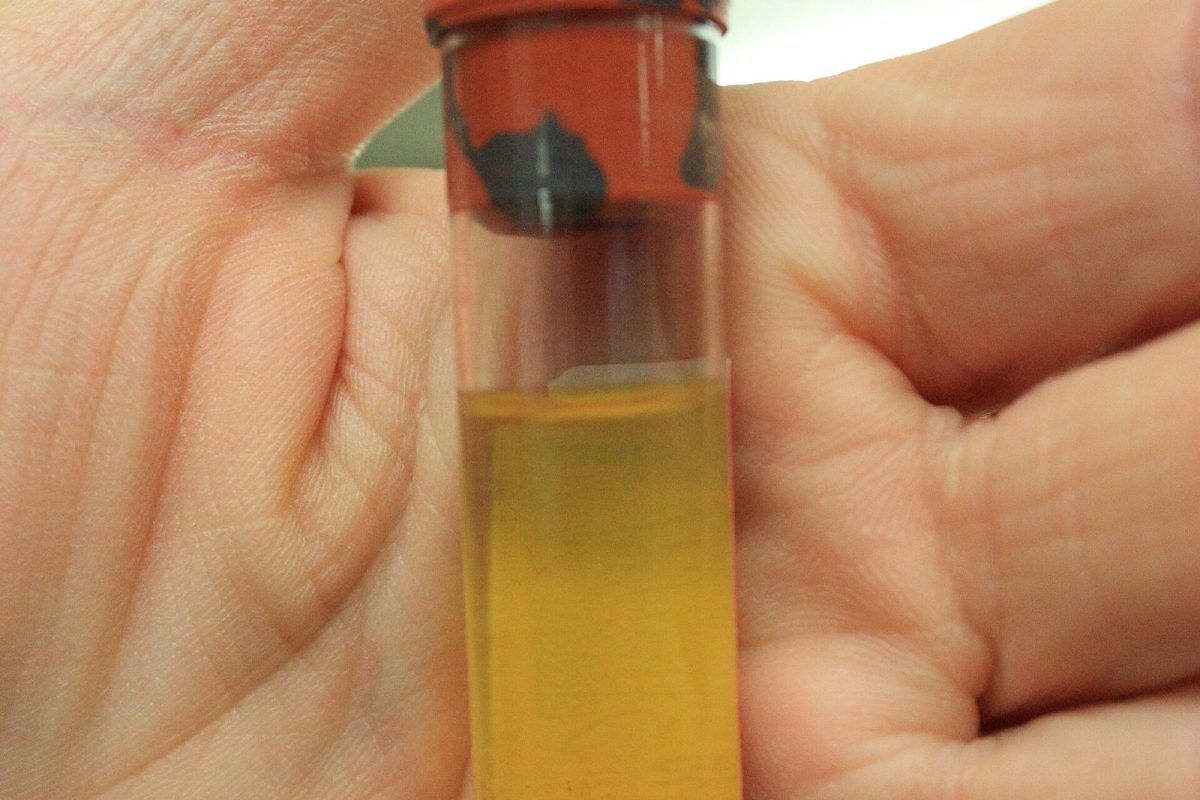
A Real Biochemical Compound Trapped in Myth
Adrenochrome truly exists: it is an oxidation product of adrenaline (epinephrine), documented and studied by biochemists for decades. None of that biological reality, however, explains why in the spring of 2020 its name dominated endless forum threads, viral video essays, and social media feeds. What went viral was not the actual molecule, but an elaborate myth constructed around it: an alleged substance harvested from humans for the rejuvenation of a clandestine global elite. It is essential from the outset to separate the chemistry from the folklore, as almost all public chatter belongs entirely to the latter.
Cultural fascination with this compound is hardly new. Much of its mystique traces back to countercultural literature—notably its exaggerated appearance in the writings of Hunter S. Thompson, where it served as a surreal narrative device rather than reliable pharmacology. From fiction it drifted into the folklore of forbidden lore, a realm where a pharmacological substance ceases to be an object of empirical inquiry and becomes a dark cultural totem.
QAnon and the Notion of the “Deep State”
To grasp this modern phenomenon, one must revisit QAnon, an online conspiracy movement originating within the American political fringe. Its foundational premise posits the existence of a “deep state”—a purported covert syndicate operating behind the facade of elected governance—composed of politicians, high-ranking bureaucrats, and Hollywood figures engaged in horrific crimes, whom Donald Trump was supposedly fighting in secret.
The term “deep state” possesses a legitimate usage in political science to describe entrenched bureaucratic inertia or corporate lobbying influencing public policy. QAnon, however, converted it into an omnipresent, unfalsifiable, apocalyptic narrative. That is the critical distinction: an analytical sociological concept was transformed into an all-encompassing mythology that no contradictory evidence could ever refute, because any refutation was immediately reinterpreted as proof of the cover-up.
The Precedent: Pizzagate
QAnon did not materialize out of thin air. Its direct antecedent was Pizzagate, a disinformation campaign circulated during the 2016 US presidential election. Parsing leaked political emails, online commentators claimed they contained coded messages connecting several commercial establishments—most prominently a Washington, DC pizzeria—to an alleged trafficking ring. The theory was repeatedly debunked by multiple law enforcement agencies, including local police.
The incident did not stay confined to the internet. An armed man entered the restaurant to “self-investigate,” firing rifle shots inside the building; staff and owners faced severe harassment and death threats. It serves as an alarming reminder that delusional online folklore produces tangible, physical consequences. Adrenochrome was later incorporated as another fantastical element in this expanding mythology.
The “Black Eye Club” and Further Offshoots
As conspiracy theories evolve, they grow through cumulative storytelling. One prominent offshoot was the so-called “Black Eye Club,” an alleged brotherhood of public figures identified by facial bruising attributed, without a shred of evidence, to secret consumption rituals. The conspiratorial formula is always identical: an incidental photograph, a routine sports injury, or a minor cosmetic bruise is reinterpreted as an esoteric sign. When one assumes the existence of the conspiracy a priori, every mundane detail becomes confirming evidence.
The COVID-19 pandemic acted as a massive accelerant. Prolonged lockdowns, pervasive existential uncertainty, and an avalanche of conflicting news provided fertile ground for stories promising secret explanations behind the chaos. Adrenochrome offered precisely that: an intelligible narrative with identifiable villains at a moment when the true adversary—an invisible, novel respiratory pathogen—felt elusive and frightening.
Critical Reading
Beyond the absurdity of the claims, this episode offers a case study in how modern disinformation takes root and flourishes. Several analytical principles should guide our evaluation:
- Distinguish the molecule from the myth. The biochemical existence of an organic compound does not validate the fantastical narratives attached to it. The physiological reality of adrenochrome provides zero backing for conspiracy claims.
- Beware of unfalsifiable theories. When a belief system interprets every piece of counter-evidence as further proof of a conspiracy, it ceases to be an empirical hypothesis and becomes a closed dogma.
- Acknowledge real-world harm. These fabrications are not harmless diversions: they foster targeted harassment, death threats, and physical violence against innocent individuals, while eroding trust in validated public health guidance.
- Mind the amplification trap. Sharing a conspiracy theory merely to mock it still expands its algorithmic visibility. Sarcastic reposting does not neutralize online reach.
At Psiconáutica, our interest in psychoactive culture includes critically examining how specific chemical substances become mythologized. The adrenochrome frenzy of 2020 reveals far more about human myth-making during societal crises than it does about pharmacology. And that insight is the lasting lesson worth remembering.


