

Archive note: This article reconstructs a landscape from the late 2000s. Market data, websites, and prices from that era are now obsolete and have been deliberately omitted; what remains of interest is the regulatory contradiction it described and the underlying debate regarding the coca leaf.
Two stimulant plants, two standards
In January 2008, Dutch authorities ordered the withdrawal of ephedra stems and any product containing ephedrine, a natural stimulant related to amphetamines, from sale. The move was striking: ephedra tea has accompanied traditional Chinese medicine for centuries without being attributed the problems caused by concentrated ephedrine in capsules.
The paradox is that, in parallel, coca leaf began to appear in Europe in the form of tea and flour, despite being listed in Schedule I of the 1961 Single Convention on Narcotic Drugs. An ancient plant, associated with massive cultural use in the Andes, remained under the same legal umbrella as cocaine and heroin, while another stimulant plant quietly left the market. The regulations did not respond to a logic of harm, but rather to inertia and political pressure.
Coca leaf is not cocaine
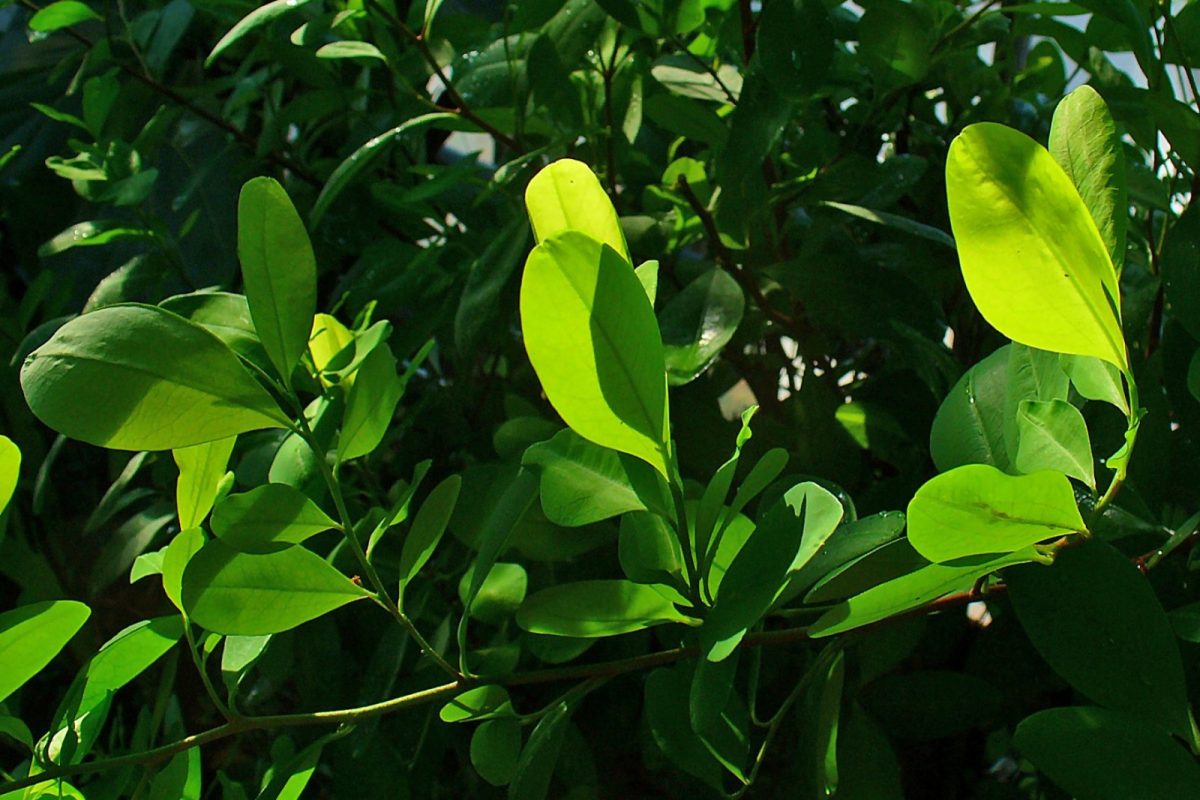
The inclusion of the coca leaf in the 1961 Schedule I has had a lasting cultural effect: confusing the raw material with the isolated chemical product. It is an equivalence as deceptive as confusing grapes with brandy, or wheat with distilled alcohol. The leaf contains cocaine in a minimal proportion, distributed among other alkaloids, and its traditional consumption—chewed or as an infusion—produces a mild stimulation that has little to do with the refined substance.
The prohibitionist argument—”the leaf is controlled because it is the source of cocaine”—loses strength when compared to ephedra, also a natural precursor to synthetic stimulants and, yet, legal in much of the world. The asymmetry reveals that geopolitics of drug trafficking weigh more heavily behind the classification than a serious health assessment.
Andean uses and nutritional value
In the Andes, acullico or chewing coca fulfills therapeutic, ritual, and social functions that date back long before the European arrival. The leaf is traditionally attributed with digestive properties, efficacy against altitude sickness, and support during long periods of physical exertion. A manual of medicinal plants edited by the World Health Organization in 1985 already described it as a plant with analgesic, astringent, digestive, and respiratory stimulant properties.
On a nutritional level, classic analyses—including those by botanist James A. Duke at Harvard (1975)—highlighted its content of calcium, phosphorus, iron, vitamins, and proteins. Hence the idea, repeated in popular literature, that coca leaf flour could be of interest as a food supplement. It is worth clarifying: just because a leaf is rich in minerals does not make it a superfood or a medicine, and many of these benefits have been communicated in activist contexts rather than in controlled clinical trials.
What the evidence says—and what it doesn’t
The study most cited by defenders of the leaf is the research the WHO conducted between 1991 and 1995, which suggested that traditional use did not produce appreciable harmful effects. That work was never formally published, according to reports by the Transnational Institute (TNI), due to pressure from the United States. Its non-publication is, in itself, a relevant political fact; but it also means that the most solid evidentiary basis remained without the scrutiny provided by a full scientific review.
It is reasonable to state that traditional coca chewing is far from the risk profile of cocaine, and that no deaths have been documented attributable to chewing the leaf or drinking its infusion. At the same time, intellectual honesty requires remembering that “absence of recorded deaths” is not equivalent to “proven safety at any dose or context,” and that extrapolating Andean use to decontextualized urban consumption has its limits.
The harm reduction debate
Part of the activist movement—from figures like Jonathan Ott to Andean platforms—has proposed the coca leaf as a lower-harm alternative to street cocaine, which is heavily adulterated and contaminated with solvent residues. The logic is understandable: in regions where traditional use is widespread, problems associated with adulterated cocaine tend to be lower.
From a harm reduction perspective, the most sensible starting point remains not to consume; and if someone is already consuming cocaine, the priority is to be informed of its real risks—cardiovascular, adulteration, and dependency—and to seek professional support. This text does not describe methods of preparation or use: the interest of the debate is regulatory and public health-related, not practical. Mechanically transferring an Andean cultural pattern to another environment, presenting it as a “solution,” is precisely the type of simplification that should be avoided.
MamaCoca and the food pathway
In the second half of the 2000s, initiatives emerged to defend the coca leaf as a legal food, grouped around the MamaCoca platform and harm reduction collectives. The proposal was to decriminalize non-narcotic uses—infusions, flour, bakery products—and open fair trade channels that would take Andean farmers out of the black market. Bolivia, with Evo Morales as a coca grower turned president, took that demand to international forums, and figures like Hugo Chávez publicly supported it.
More than fifteen years later, the balance is uneven: Bolivia achieved a reservation to the 1961 Convention in 2013 for traditional chewing within its territory, but the free circulation of the leaf through Europe remains legally marginal. The paradox described in the original article has not been resolved; it has become more complex.
Critical reading
The text from which this rewrite originates was an activist piece, written to defend the coca leaf, and it is worth keeping that in mind when reading its more definitive claims. Some observations to weigh it with distance:
- A good portion of the benefits attributed to the leaf come from activist sources or old, unreplicated studies; treat them as hypotheses, not settled facts.
- The criticism of the 1961 prohibition is solid in historical and political terms, but it does not imply that any use of the leaf is safe or recommended.
- Comparisons with adulterated cocaine are useful for understanding the debate, not as a guide for consumption.
- The sources cited in good faith at the time—the WHO, botanist James A. Duke, sociologist Silvia Rivera Cusicanqui (Las fronteras de la coca), or the Transnational Institute—can be consulted today in their official repositories to cross-reference what is summarized here.


