

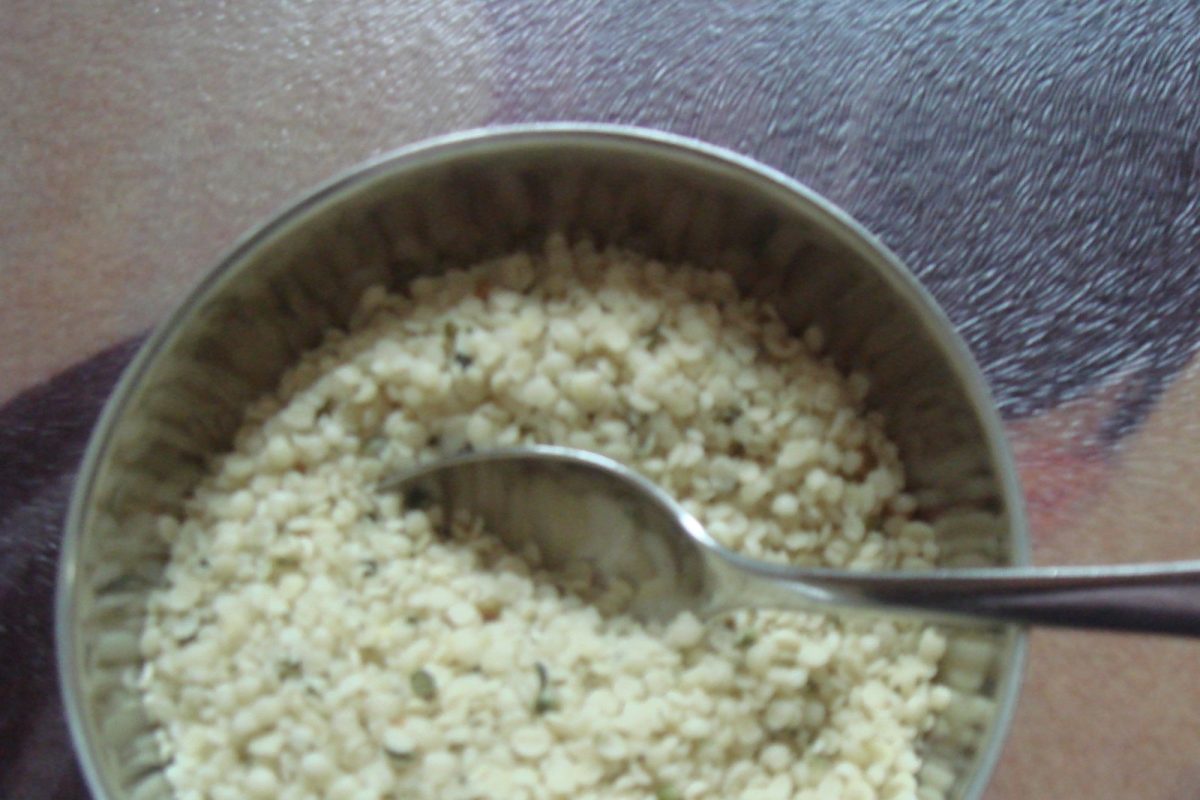
A seed with a long history
Long before hemp was associated almost exclusively with its psychoactive relative, its seeds were a staple grain in much of the world. In China, they were consumed over 5,000 years ago alongside barley, millet, and soybeans—crushed, toasted whole, or boiled into porridge. In medieval Europe, they appeared in the peasant diet in bread, gruel, and a type of hemp butter. In 1545, Philip II ordered the expansion of its cultivation throughout the empire for both its textile and food value. During 19th-century famines, its use as a subsistence resource was well documented.
It is important to separate data from narrative. Just because a food is ancient and associated with the working classes does not make it miraculous, nor does it explain any health benefits on its own; that is historical context, not a nutritional credential.
What is actually inside a hemp seed
The composition of the seed is reasonably well-characterized: about 30% oil, around 25% protein, and the rest fiber, vitamins, and minerals. The THC content is residual, so hemp seeds do not get you “high.” This is why the food industry has incorporated them into flours, oils, plant-based drinks, bars, and tofu-like derivatives.
The oil obtained by pressing the seed is greenish and concentrates most of its fatty acids. The meal or cake left over after pressing retains high-quality protein and is used in baking and pastry. So far, this is solid ground.
Omega-3 and omega-6: the strongest argument
The strong point of hemp is its fat profile. The seeds are rich in polyunsaturated fatty acids: linoleic acid (omega-6) and alpha-linolenic acid (omega-3), in a ratio close to 3:1, which is often cited as favorable for the human diet. These fatty acids are essential—the body does not produce them—and they are involved in cell membrane functions, inflammatory processes, and cardiovascular health.
However, it is worth qualifying the more enthusiastic descriptions circulating in popular literature. Claims that “fatty acids carry oxygen to cells and form a barrier against viruses and bacteria” or that “essential fats are slippery and therefore do not clog arteries” are simplifications that do not hold up biochemically. The value of hemp does not need such hyperbole: a good lipid profile is, in itself, a valid nutritional argument.
Edestin and the protein question
A large part of the protein in hemp seeds is edestin, a globulin whose name comes from the Greek edestós, meaning “edible.” Along with albumin, it provides a spectrum of essential amino acids that makes hemp one of the most complete and digestible plant proteins, comparable in value to soy for those following vegetarian diets.
It is common to read that edestin has “a composition identical to human blood.” This idea comes from popular texts and should be taken as a metaphor, not a fact: edestin is a storage protein for the seed, and its similarity to human plasma globulins is partial, not identical. It serves as a quality protein; it does not “transform” into antibodies or blood.
Culinary uses
In the kitchen, hemp seeds are versatile: when ground, they resemble a mild peanut butter; they work well in breads, doughs, and energy bars; their sprouts are used in salads like any other seed; and they are used to make plant-based drinks—a “hemp milk”—for preparing desserts. Compared to other omega-3 sources like oily fish or flaxseed oil, hemp is often highlighted for its more pleasant flavor. As with any food, the reasonable approach is to integrate it into a varied diet rather than treating it as a remedy.
Birdseed: true fact, inflated conclusion
It is true that hemp seeds were a star ingredient in birdseed mixes for decades and that many birds prefer them to other seeds. From there, however, activist literature—especially the work of Jack Herer—makes a leap that is difficult to support: that wild birds would live “10 to 20% longer,” have more offspring, and have brighter plumage thanks to hemp, or that the eradication of wild cannabis would have broken a key link in the food chain. These are claims without support in verifiable studies, and they should be read as activist rhetoric, not documented ecology.
Medical applications: time to hit the brakes
The slipperiest terrain is that of therapeutic promises. In the original text that inspired this article, hemp fats are attributed a role in the treatment of “terminal” cancer, cardiovascular disease, or immunodeficiencies, relying on figures like biochemist Johanna Budwig. We must be clear: the so-called “Budwig protocol” has no backing from clinical trials, and health and oncology agencies do not recognize it as a cancer treatment. Similarly, the historical use of the seed against malnutrition associated with tuberculosis speaks to its caloric-protein value in contexts of deficiency, not a curative action against the disease.
Just because a food has an interesting nutritional profile does not mean it cures serious ailments. Attributing anticancer properties or “immune boosters” against HIV to it is a field where popular enthusiasm turns into misinformation with real-world consequences.
Critical reading
Much of the data and anecdotes circulating about food-grade hemp come from The Emperor Wears No Clothes by Jack Herer, a fundamental text for cannabis activism that nonetheless mixes solid data with unverified claims. It is useful as a historical and cultural document, not as a medical source. The reasonable approach is to stick to what is verifiable—a good fat profile and quality plant protein—and to take extraordinary promises with a grain of salt. If you are interested in incorporating hemp into your diet for specific health reasons, it is sensible to consult with a nutrition or medical professional rather than relying on the “superfood” hype.


