

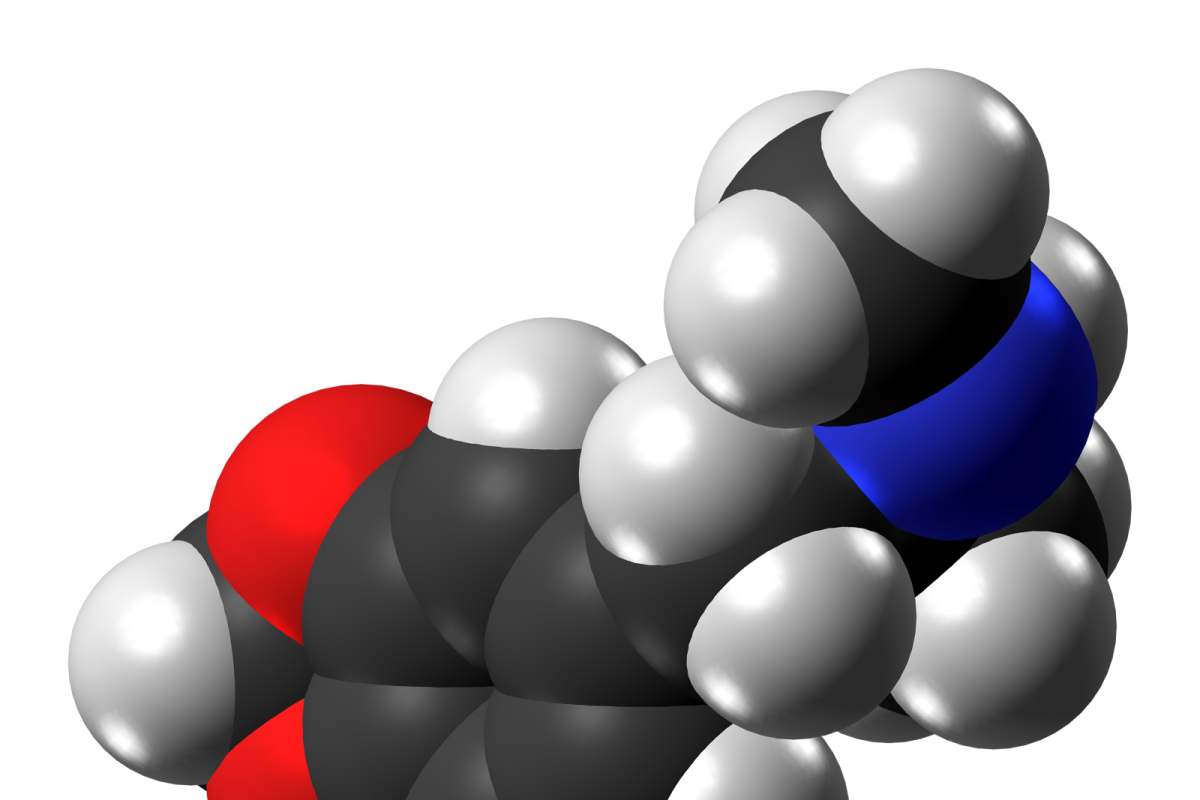
From an evolutionary perspective, the human capacity to recognize the emotions of others is not merely a cognitive exercise; it is the bedrock of our survival as a species. Our brains have developed complex neural architectures precisely to navigate social groups, interpret signals of cooperation, and avoid unnecessary conflict. Within this framework, fundamental questions arise regarding how certain psychoactive substances interact with these ancestral biological mechanisms. Specifically, how does 3,4-methylenedioxymethamphetamine (MDMA) affect our emotional perception and social behaviors? Current scientific evidence points toward a specific modulation: it is not a generalized empathic effect on everyone, but rather a selective sensitivity that prioritizes meaningful human connections.
In brief
- Socially selective effect: MDMA enhances emotional responses to positive social stimuli while attenuating reactions to non-social or negative images.
- Closeness is key: The increase in prosocial behaviors like generosity depends fundamentally on the pre-existing emotional proximity between individuals.
- Cognitive modulation: Under its influence, the recognition of positive emotional expressions improves, while negative ones become more difficult to interpret.
- Risk of detachment: The decrease in response to non-social stimuli can generate a subjective feeling of disconnection from the immediate physical environment.
- Clinical perspective: These findings open pathways for therapies that seek to repair broken bonds, always under strict professional and legal supervision.
The importance of social context in human evolution
Social isolation represents an existential threat to human beings. Historically, banishment was considered a punishment more severe than any physical deprivation or bodily pain. This reality underscores our species’ intrinsic dependence on social groups. The complexity of our brain seems directly linked to this need: diplomatic interactions, status management, and the recognition of cooperative signals have driven neurological development in social mammals.
This evolutionary predisposition manifests even in the face of threats. Studies show that humans react with greater physiological intensity—brain activation, increased heart rate—to the image of a threatening human than to a natural predator. This confirms that our biological priority is to protect the group and maintain social cohesion. Collective rituals, from the most ancient to contemporary celebrations, fulfill this ancestral function: reinforcing the sense of belonging.
The prosocial potential of psychoactive substances
Until recently, drug research focused almost exclusively on individual effects and addictive potential. However, a paradigm shift has led neuroscientists to explore the “prosocial potential” of various substances, both legal and illegal. The current hypothesis suggests that the risk of abuse might correlate with the intensity of the positive social effect: the more pleasant and connective a group experience is, the greater the motivation to repeat it.
This approach has relevant clinical implications. If many psychiatric pathologies originate or are exacerbated by social isolation (such as depression or post-traumatic stress disorder), then substances capable of temporarily restoring these bonds could have therapeutic utility. MDMA has been the subject of numerous studies in this regard, seeking to understand how it can facilitate emotional healing processes.
Recognition of emotional expressions: a selective effect
Scientific literature indicates that MDMA alters the visual perception of emotions. Under its effects, subjects tend to identify facial expressions associated with positive states (joy, cordiality) more easily and quickly, while the processing of negative emotions (sadness, anger) is hindered.
It is crucial to distinguish between a cognitive deficit and an emotional experience. Recognizing a smile is not the same as feeling empathy or compassion for the person smiling. MDMA appears to amplify the emotional charge of pleasant social images, making the user feel more connected to them. Conversely, it reduces the response to neutral or negative stimuli without social content.
Recent study on effects in social contexts
A relevant study analyzed these dynamics by presenting participants with photographs of social and non-social scenes with different emotional valences. The results confirmed a clear pattern: MDMA increased positive responses to pleasant social images (people walking together, etc.), but reduced the positive response to pleasant images without social content (for example, food or landscapes).
This phenomenon is described as a “socially selective” effect. The substance does not create universal empathy; instead, it filters and prioritizes meaningful human connections. Furthermore, participants correctly identified the subjective experience of MDMA as stimulating, consistent with its expected cardiovascular effects.
Generosity and altruism: the role of emotional closeness
Beyond facial recognition, prosocial behaviors include concrete decisions about how to distribute resources. Generosity is not an abstract act; it varies according to the social distance between the decision-maker and the recipient. One study used a task called the “Welfare Trade-Off Task” (WT), where participants had to decide what amount of hypothetical money to allocate to themselves versus other people.
The findings were precise: under the influence of MDMA, subjects showed a significant increase in their generosity toward close friends. However, this effect did not automatically extend to strangers or distant acquaintances at the same doses. Only with low, specific doses was a slight improvement observed in the willingness to help strangers.
This reinforces the idea that MDMA acts as an enhancer of existing bonds, not as a magical creator of universal love. Its prosocial capacity is intrinsically linked to the prior quality of the interpersonal relationship.
Critical reading and harm reduction
It is imperative to approach these findings with caution and context. MDMA is not a magic potion that resolves conflicts or generates instant harmony in any group. On the contrary, its selective effect can have undesirable consequences if used without judgment.
Risk of disconnection: By decreasing the emotional response to non-social stimuli (such as the immediate physical environment or people who are not part of the inner circle), a user could feel isolated in their own home or ignore external danger signals. This underscores the importance of always consuming in safe environments and with trusted people.
Context dependence: The generosity induced by the substance is real but limited to close relationships. Attempting to use it to “connect” with strangers or resolve complex social conflicts can be counterproductive if there is no prior foundation of trust.
Evidence vs. Promise: Although the studies are promising, most are conducted in controlled and legal clinical settings. Extracting these substances outside of that framework carries risks of unknown purity, incorrect dosing, and dangerous pharmacological interactions.
Editorial closing
Research into the prosocial effects of MDMA invites us to reflect on the nature of our social connection. We are not looking for a drug that makes us love everyone equally, but rather seeking to understand how certain substances can temporarily modulate our neural circuits to facilitate understanding and cooperation in meaningful relationships.
At Psiconáutica, we address these issues from a public health and harm reduction approach. Recognizing one’s own emotions and those of others is vital to our mental integrity. While MDMA offers a fascinating window into human emotional plasticity, its use must always be guided by scientific knowledge, current legality, and, above all, individual responsibility.
True “psychonautics” involves navigating these chemical seas with a critical compass: valuing potential benefits without ignoring inherent risks, always prioritizing the well-being of the individual and their community.