

What Calling a Substance “Smart” Meant
Today we associate the label “smart drug” with pharmaceuticals formulated to enhance cognitive performance. But the concept is far older than modern pharmacology. Prior to the late nineteenth century, before pure active principles were isolated, the substance enjoying that reputation was opium poppy juice. People did not seek contemporary-style stimulation from it, but rather the opposite: a serene calm that, according to its defenders, quieted a person’s instinctive nature and left the intellect unobstructed.
Antonio Escohotado categorized opium among the so-called “drugs of peace” and emphasized a distinction worth noting: unlike alcohol, it supposedly did not compromise judgment, but instead allowed one to gain perspective on internal and external conflicts. It is an appealing proposition, and an equally debatable one. It should be read for what it is—the cultural testimony of an era that romanticized the substance—rather than an objective pharmacological description. Below we dismantle that idealized image.
The Plant and Its Alkaloids
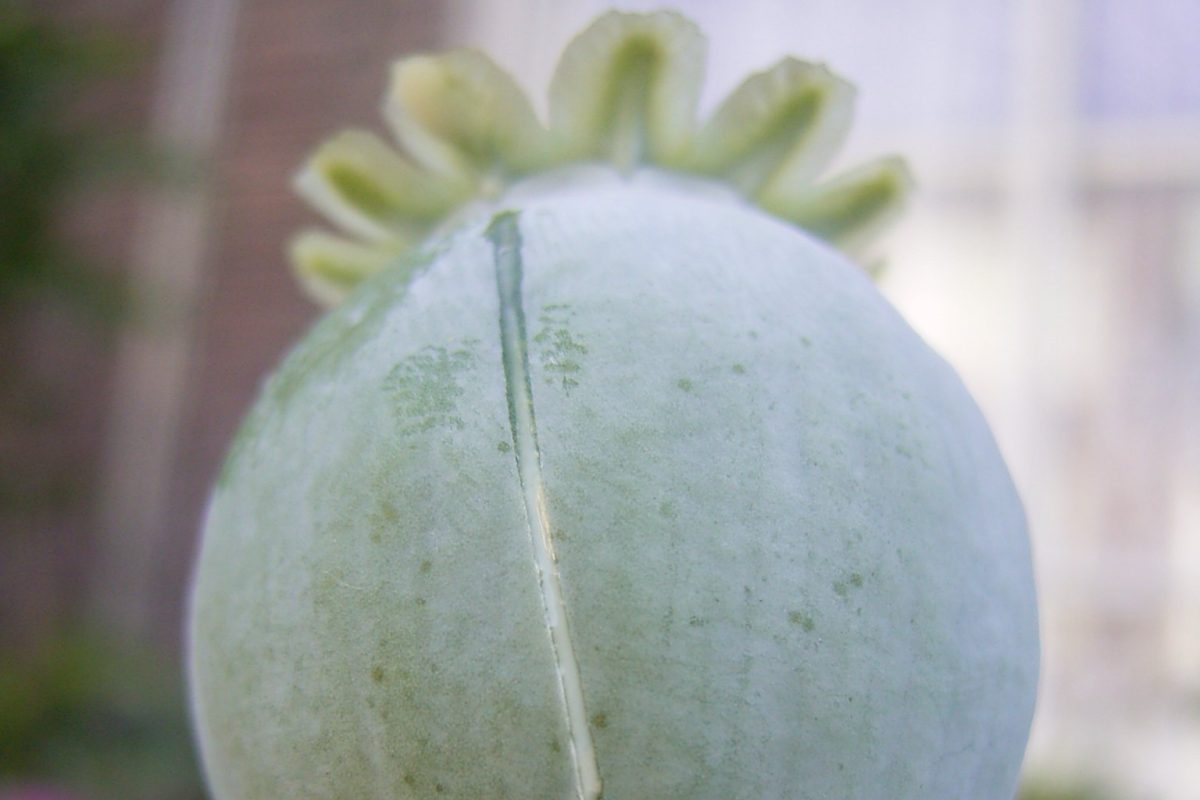
Opium is gathered from the milky latex secreted by the seed capsule of the poppy after its petals drop; once dried, it turns into a brownish resin. Historically produced in regions such as Afghanistan, India, Southeast Asia, and China, it is also cultivated in several European countries—including Spain—under strict regulation for the pharmaceutical industry.
Its therapeutic utility stems from a complex cocktail of alkaloids. Botanist Pío Font Quer, in his modernized edition of Dioscorides, noted that the latex contains nearly two dozen alkaloids, with morphine being the predominant one alongside codeine, papaverine, and noscapine (narcotine). From these compounds arose the applications medicine recognized for centuries: easing pain, suppressing coughs, curbing diarrhea, and inducing restful sleep.
That very pharmacy explains much of its subsequent history. When chemists learned to isolate morphine during the nineteenth century and later synthesize heroin, crude opium was rapidly superseded by its more potent and manageable derivatives. The “smart drug” gave way to targeted molecules, bringing along a challenge—opioid dependency—that romantic accounts had hardly anticipated.
From Mesopotamia to the Classical Mediterranean
Evidence of poppy use in the Middle East dates back to around 2000 BCE: ancient Babylonian cylinder seals depict poppy capsules, and Egyptian medicine employed the plant as an analgesic and sedative. In the Greco-Roman sphere, its integration was substantial. The Mediterranean climate favored its growth, and it became a state-regulated commodity to prevent speculation and supply shortages.
Dioscorides, writing in the first century CE in De materia medica—the monumental pharmacological treatise of antiquity—detailed its effects on pain, insomnia, coughs, and gastrointestinal distress. Escohotado highlighted an intriguing point: ancient texts do not refer to opium “addicts”; rather, consuming it was treated like other customary daily habits. This observation has often been cited to argue that prohibition, rather than the substance itself, creates addiction. It carries weight, yet also clear limitations: the absence of a modern diagnostic term does not prove the absence of the phenomenon, and surviving ancient sources reflect elite viewpoints. It is best approached as an intriguing hypothesis rather than an established conclusion.
From Medieval Aversion to Romantic Fascination
With the rise of Christianity and the Middle Ages, much of the pagan pharmacopeia fell into disuse across Europe, while alcohol cemented its place as the socially sanctioned psychoactive substance. In contrast, Arabic medicine preserved and expanded classical knowledge of opium, which its physicians understood intimately; Islamic Spain (al-Andalus) served as a key conduit for that tradition.
The Renaissance revived classical texts and alongside them, ancient remedies. Paracelsus (1493–1541) popularized laudanum, an opium tincture that circulated for centuries through medical practices and domestic medicine chests. From that point forward, its use spread among the wealthy and educated classes until nineteenth-century Romanticism turned it into something beyond medicine: a vehicle for artistic inspiration and inner exploration. That recreational trend was precisely what later prompted the ensuing medical and moral backlash.
De Quincey: The Testimony That Cemented the Myth
No author shaped the literary myth of opium more decisively than Thomas De Quincey (1785–1859). His Confessions of an English Opium-Eater portrayed both its ecstatic delights and its relentless subjugation. In his most famous passages, he contrasted opium with wine: while wine “steals man’s self-command,” opium, he asserted, strengthened it, introducing “order, legislation, and harmony” into the faculties. He went so far as to claim that no quantity of opium intoxicates as alcohol does.
Such claims must be weighed with caution. They are literature, not pharmacology, and De Quincey’s own life directly contradicted them: what began as casual indulgence descended into daily consumption, a perpetual haze where dreams and waking life blurred, and a harrowing withdrawal chronicled in the book’s final section. That he eventually managed to taper off after years of heavy dependence does not make his account an endorsement; it makes it an ambivalent human document that Romantic readers chose to appreciate only for its glowing opening pages. The laudatory initial section circulated widely long before the final chapter on suffering appeared.
Other notable figures populate this history: Hector Berlioz, who sought to capture the intoxication of opium in music; Jean Cocteau, who recorded in Opium how excruciatingly difficult it is to break free; and a long ledger of writers and artists whom popular anthologies—such as Erowid—routinely associate with its use. These rosters of illustrious consumers function primarily as cultural lore rather than clinical evidence, and deserve equivalent skepticism.
A Critical Perspective
The depiction of opium as a cognitive clarifier arises largely from literary recollections and an era that heavily romanticized the drug experience. Against that narrative, several realities must be underscored. First, opioids target pain and reward pathways, carrying a thoroughly documented addiction risk: tolerance and withdrawal symptoms are not incidental side effects, but the fundamental danger. Second, De Quincey himself, frequently invoked as evidence of the drug’s virtues, simultaneously provides a definitive chronicle of its entrapment. Third, combining opioids with alcohol or other central nervous system depressants dramatically multiplies the hazard of respiratory depression, the primary cause of fatal overdoses.
This article provides historical context, not a consumption manual. It does not describe methods for sourcing, preparing, or using opium, and should under no circumstances be taken as an endorsement. For anyone struggling with opioid dependence—prescribed or otherwise—public health agencies, harm reduction services, and addiction support hotlines provide vital assistance; in many regions, emergency access to naloxone, the opioid reversal medication, is widely available. The “smart drug” of the Romantics was simultaneously one of the most clearly recorded dependencies of modern history: both realities belong to the very same flower.


