

A Low-Key Chemist Who Stumbled onto a New World
It is difficult to find a figure in the history of psychopharmacology as long-lived, serene, and unintentionally revolutionary as Albert Hofmann. He passed away on April 29, 2008, at the age of 102, just days after the sixty-fifth anniversary of that April 19, 1943 bicycle ride—widely recognized as the first deliberate LSD trip in history. He liked to invert the usual formula: it was not so much that he had discovered LSD, he would say, as that LSD had used him to show itself to the world.
Beyond this origin story, what sets Hofmann apart is his intellectual consistency. What might appear to be a sheer stroke of luck—synthesizing a molecule, shelving it for five years, and revisiting it almost by accident—was actually the culmination of a lifelong pursuit driven by a single question: what, exactly, is reality made of?
Baden, 1906: From the Humanities to Matter
Hofmann was born on January 11, 1906, in Baden, a small spa town in the Swiss canton of Aargau, roughly 15 miles northwest of Zurich. He came from a modest family; during his centennial tribute, he acknowledged that he was only able to study chemistry thanks to his godfather, who financed his education because his family had no money and expected him to enter a trade.
His choice of chemistry was not vocational in a technical sense, he explained, but almost philosophical. As an adolescent, he was drawn to literature and history, but he grew frustrated that everything in the humanities was open to endless debate. The material world, by contrast, is right in front of us and does not budge no matter how much we argue about it. That stubbornness of the real was what drew him to the laboratory: if he wanted to understand the essence of things, he would have to do so through physical matter.
His doctoral thesis was directed by Paul Karrer (1889–1971), a monumental figure in 20th-century organic chemistry: a pioneer in the study of vitamins A, B2, and C, the first to synthesize alpha-tocopherol (vitamin E), and winner of the 1937 Nobel Prize in Chemistry. Under Karrer’s guidance, the young Hofmann investigated the enzymatic degradation of chitin using snail gastric juice—chitin, first isolated in 1830, is the structural substance of shells, wings, and claws, chemically related to plant cellulose. It was an understated project that already revealed his core instinct: seeking out the chemical logic of living systems.
Sandoz: An Alliance with a Difficult Fungus
In the spring of 1929, freshly graduated with top honors, Hofmann joined the pharmaceutical-chemical research department at Sandoz in Basel. He chose the firm deliberately: he turned down offers involving “cold” industrial chemical synthesis because Sandoz offered the chance to investigate natural substances, aligning with his desire to bridge the essence of life and the material world. The pharmaceutical department was headed by Arthur Stoll, whose goal was to isolate the active principles of medicinal plants to obtain pure compounds and, with them, reliable, controllable dosing—a remarkably forward-thinking concept at the time.
Hofmann spent his early years studying Mediterranean squill, wrapping up that project in 1935. Looking for fresh territory, he requested permission to resume work on the alkaloids of rye ergot, a research line Stoll had launched in 1917 and later abandoned. Ergotamine was already valued as a hemostatic agent in obstetrics and as a migraine treatment, but the rest of the fungus remained thorny terrain. Stoll cautioned him about what lay ahead: ergot alkaloids are delicate, unstable, and notoriously easy to degrade. Hofmann later summed it up in words that sound like a fulfilled prophecy: “Thus was sealed the fate and main theme of my entire professional career.”
One Fungus, Two Chemical Offspring: LSD and Hydergine
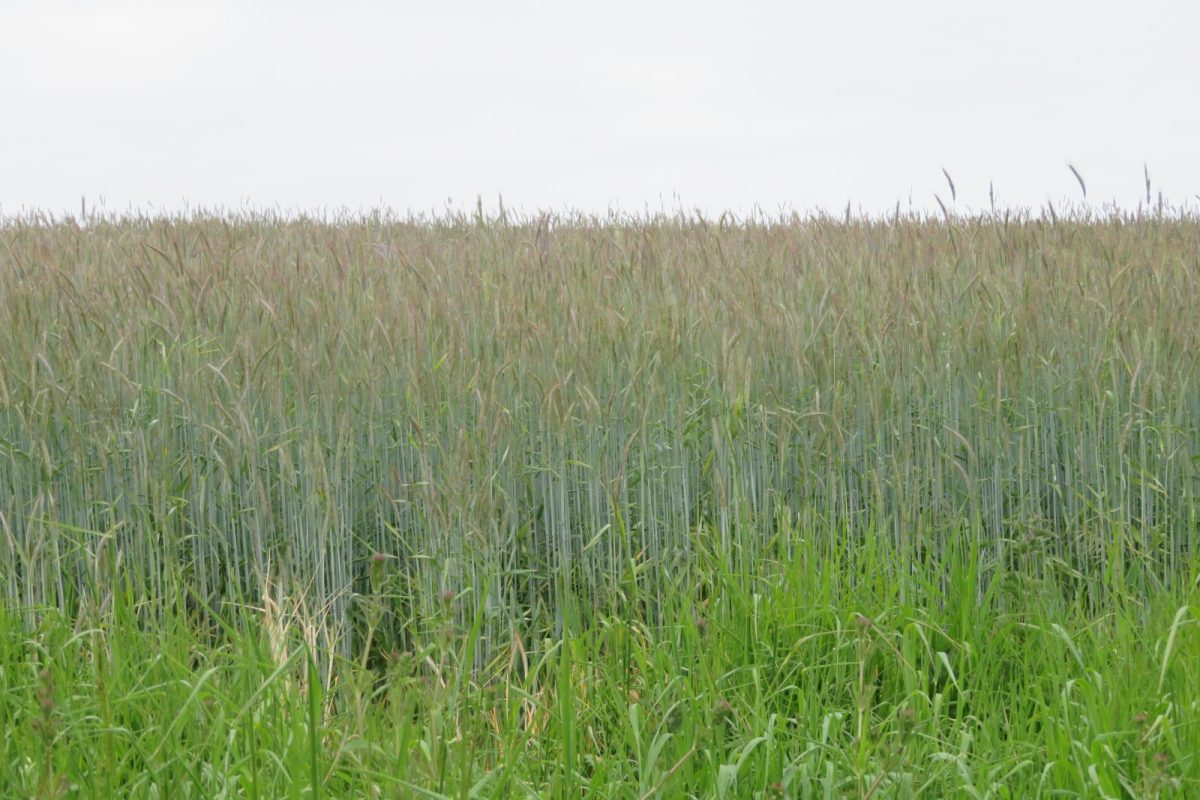
Rye ergot is Claviceps purpurea, an ascomycete fungus that parasitizes cereal grains. From its intricate chemistry came the two molecules that would define Hofmann’s legacy. One is the famous lysergic acid diethylamide (LSD-25). The other, far less widely known and developed during the exploration of ergot’s therapeutic properties, is Hydergine—a compound with vasodilating effects and supposed cerebral “oxygenating” properties that was used for decades as a geriatric nootropic. In a sense, they are close cousins: born from the same fungus, through related synthetic routes, but destined for radically different clinical fates.
To this dual chemical parenthood, Hofmann would later add a third decisive milestone: isolating psilocybin and psilocin from visionary Mexican mushrooms, cementing his place at the center of the history of modern entheogens.
From the Laboratory to Eleusis: Where Chemistry Meets Ancient History
Ergot is not merely a chapter in Sandoz’s corporate ledger; it casts a long historical shadow. Spanish botanist Pío Font Quer pointed out that its composition is exceptionally complex—ergotoxine, ergonovine, ergotamine, ergosine, ergocristine, ergocryptine, ergocornine, ergobasine, and more—with lysergic acid serving as the core scaffold among the pharmacologically active components. Hofmann himself presented aspects of this work during a lecture series in Madrid in 1953.
Here, an intriguing historical debate arises. Font Quer argued that the ancient Greeks could not have known the properties of ergot, noting that rye fields were scarce in Greece and that classical treatises—Hippocrates, Dioscorides, Galen—make no mention of them. Yet ergot also infects wheat and other cereals, which forms the basis of the hypothesis advanced by Hofmann, R. Gordon Wasson, and Carl Ruck in The Road to Eleusis: that the kykeon, the sacred potion consumed in the Eleusinian Mysteries, contained active alkaloids derived from this fungus.
Spanish philosopher Antonio Escohotado, in his General History of Drugs, supported this view: ergot grew abundantly on the plains of Eleusis, and apparently in a strain with a more visionary and less toxic profile. Because ergot’s effects depend strictly on the specific ratio of its alkaloids, not all ergot is poison, nor is all ergot visionary. The fact that figures like Plato, Aristotle, Aeschylus, and Cicero—as well as Roman emperors like Hadrian and Marcus Aurelius—underwent initiation without recording disappointment or revulsion aligns with a sacred secret punishable by death and an intensely powerful experience. It remains a compelling thesis, best approached as a reasoned hypothesis rather than established historical fact.
The End: A Long Life and a Final Loss
Hofmann reached the century mark with a sharp clarity of mind that astonished everyone who met him. What ultimately broke him was not old age, but grief: the passing of his wife in December 2007, after nearly seventy-five years together, left him without the will to go on. His 102nd birthday in January 2008 held little meaning for him, and his failing health prevented him from attending the World Psychedelic Forum in Basel that March. He passed away a few weeks later, leaving behind a legacy that continues to challenge our understanding of consciousness.
A Critical Perspective
It is worth separating three distinct levels of certainty that popular accounts often blur together. What is well established: that Hofmann synthesized LSD-25, isolated psilocybin and psilocin, and developed ergot derivatives such as Hydergine. What requires nuance: Hydergine’s reputation as a nootropic far outstripped its clinical evidence, which today is viewed as modest at best. What is plausible but unproven: the Eleusinian ergot hypothesis, which is conceptually elegant and thoroughly argued, but still lacks definitive archeochemical proof.
And a note of caution that romantic narratives often obscure: ergot is, first and foremost, a dangerous historical toxin. Ergotism—historically known as “St. Anthony’s fire”—caused devastating epidemics throughout medieval Europe, bringing gangrene, seizures, and delirium. That a tool for investigating consciousness emerged from this very chemistry does not make the underlying substance harmless; rather, it reminds us that only dose and chemical composition separate a medicine, a poison, and a vision. This text is historical analysis, not a guide for use.


