

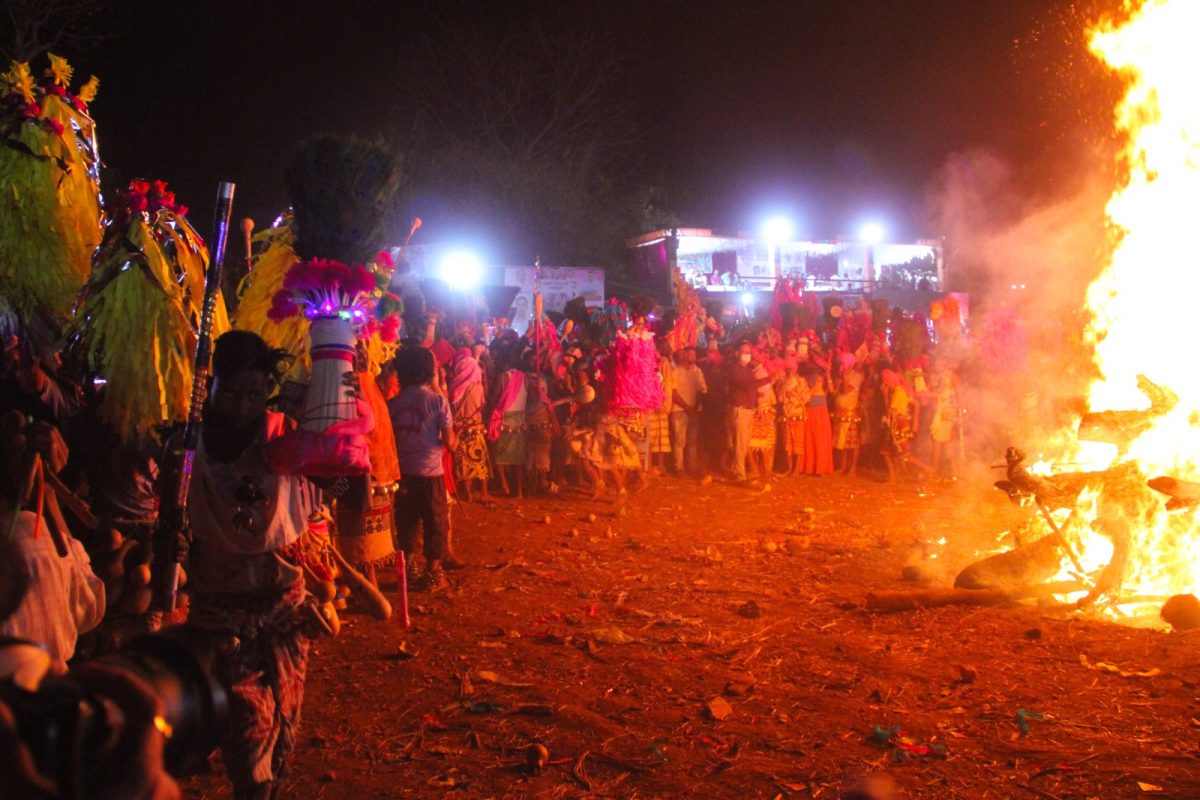
There is a deeply rooted belief, in academic circles and in popular culture alike, about the use of psychedelic substances: that these compounds are sacred tools reserved exclusively for highly structured rituals with spiritual or deeply therapeutic aims. According to this idealized dogma, using them outside a transcendent context would be frivolous or irresponsible. Yet when we set this romantic view against the anthropological and sociological evidence, it turns out to be an oversimplification. Reality is far more complex: the use of these substances has historically been tied to everyday, social, and even conflictive activities.
In brief
- Busting myths: Psychedelic use in the Amazon is not limited to sacred rituals; it includes daily practices, hunting, and conflict resolution.
- Collective effervescence: Sociology shows that rituals produce physiological and emotional synchronization that strengthens the social fabric.
- Music and dance as therapy: Taking part in music and dance events significantly improves subjective well-being, perceived health, and interpersonal relationships.
- Hybrid rituals: Indigenous cultures today are adopting new substances or forms of ritual without losing their communal or ethical essence.
- Social mental health: Healing is not just an intrapsychic process; it happens fundamentally within the group and the community.
Ethnographic Examples: When the Sacred Mixes With the Everyday
To understand the true nature of these rituals, we have to look beyond Western projections. In the Amazon, the use of epená (a hallucinogenic snuff) by the Yanomamo people offers a clear example that challenges absolute sacralization. Although their worldview revolves around spiritual visions, the men of this tribe use it with notable frequency for a variety of purposes.
According to anthropological records, use can reach several times a day. Curiously, there is a cultural distinction: while its use by shamans keeps a specific ritual character, the general population takes advantage of its effects to temporarily dissociate from individual responsibility. This has led, regrettably, to situations in which acts of violence or domestic aggression are excused on the pretext of being “under the influence.”
The Case of the Cofán Yagé
Another revealing account comes from the Cofán communities in Colombia. Wade Davis, a well-known ethnographer, tells how a local shaman, asked how often they drink yagé (ayahuasca), answered that the question was irrelevant. For them, the ritual was not triggered by a constant spiritual need but by specific events: illness, deaths, adversity, or life milestones such as puberty.
A young man might drink yagé at home to perfect his hunting techniques or to demonstrate physical skill before the group. The underlying answer was clear: they drank whenever they felt like it, as long as there was a socially justified occasion. This dismantles the idea that use must be strictly ceremonial and sporadic.
The Reality of Amazonian Shamanism
It is also crucial to correct the idealized image of the shaman as a purely benevolent figure. In many Amazonian cultures, practicing this profession carries extreme risks. The anthropologist Josep Maria Fericgla documented that in Shuar culture, one in four shamans died from violence related to their practices, often provoked by rival colleagues.
Besides therapeutic or spiritual use, these substances have historically been used for warfare or in the context of sorcery. The Western perception that automatically links psychedelics with healing and peace is therefore an incomplete cultural construction that does not fit the complexity of local realities.
Social Evolution: From the Ancestral Drum to the Modern Festival
Throughout human history, every culture has developed ritual spaces for rhythmic music, dance, and song, often accompanied by psychoactive drugs. The primary goal was not always abstract spiritual transcendence but strengthening community bonds through shared altered states of consciousness.
In ancient societies, there was no sharp separation between healing, recreation, and spirituality. The community acted as the container where all these expressions converged to integrate its most vulnerable members. The happenings of the sixties, the raves of the nineties, or today’s festivals such as Boom in Portugal are the contemporary evolution of this human need: to transcend the individual’s intrinsic loneliness and feel a sense of belonging to something larger.
The Science of the Party
The sociologist Émile Durkheim described this phenomenon as “collective effervescence.” It refers to a gathering in which a current of excitement pulses among the participants. This dynamic is not exclusive to traditional religions; it can be seen in the heart-rate synchronization of Muslim worshippers, Buddhist monks, or Christian congregations.
In secular society, this effervescence has been transmuted. Recent research shows that when groups dance together, their heart rates synchronize, something that does not happen with passive observers. This biological coordination increases the sense of union and dissolves the barriers between strangers.
The Therapeutic Impact of Music and Dance
Today we are witnessing a global expansion of ceremonies in which substances such as ayahuasca are used in groups. Traditionally, plants such as khat have been chewed communally after work or at social gatherings, much as we meet today for a coffee or a drink.
It is hard to find drugs that are used effectively alone outside contexts of dependence. People prefer a social setting. Even classical psychotherapy, born in an individualistic medical context where two strangers discuss problems in exchange for money, has evolved toward group therapies.
This return to social roots seeks to demedicalize human suffering. Mental health does not reside solely in the individual’s mind (the solipsism of the couch); it is a group problem that is resolved in a social context.
Eusocial Nature and Trance Rituals
Human beings are a eusocial species, operating at the individual and group levels at once. Biologists suggest that trance rituals may have evolved as a mechanism to strengthen cooperation among non-relatives.
Dance: The Origin of Social Language
Neuroscience posits that dance was key in the evolution of complex social skills and of language itself. The brain areas involved in choreography (premotor areas) lie close to those responsible for language and house mirror neurons.
These neurons make it possible to understand and share nonverbal messages. When we experience trance in a group, we share a feeling of unity that dispels individual anxiety. Healing is set off by the group through an “ancient language” of the body that communicates acceptance.
Continuity and Transformation: Contemporary Rituals
Human beings create contexts in which ecstatic rituals take place. Recent examples in the Amazon show how Indigenous groups with no ayahuasca tradition have taken up the plant following its global spread. Some did so through “ayahuasca churches,” closing a historical circle.
Are these new rituals less pure? Not necessarily. They are expressions of the same human impulse to reproduce collective effervescence, adapting to the modern context without losing their social function of integration and meaning.
The Evidence on Musical Well-Being
Recent studies back up these benefits. A study published in Psychology of Music, based on Australian data, analyzed the relationship between musical participation and subjective well-being.
The results showed that dancing or attending music events was associated with greater life satisfaction, better perceived health, and stronger relationships. The key was not just the sound but the interpersonal interaction during the musical experience.
A Critical Reading: Toward a Harm Reduction Culture
If we want these spaces to work as true catalysts for transformation, they must be socially sanctioned and regulated. It is essential to:
- Foster safe environments: Create places where people can express themselves freely without judgment.
- Chemical transparency: Ensure that participants know the precise composition of the materials used, to avoid intoxications or dangerous interactions.
- Professional support: Have trained staff on hand to help anyone who may struggle during the ritual, ensuring proper support.
The point is not to ban or demonize, but to integrate these practices into a framework of safety that respects individual autonomy and protects public health.