

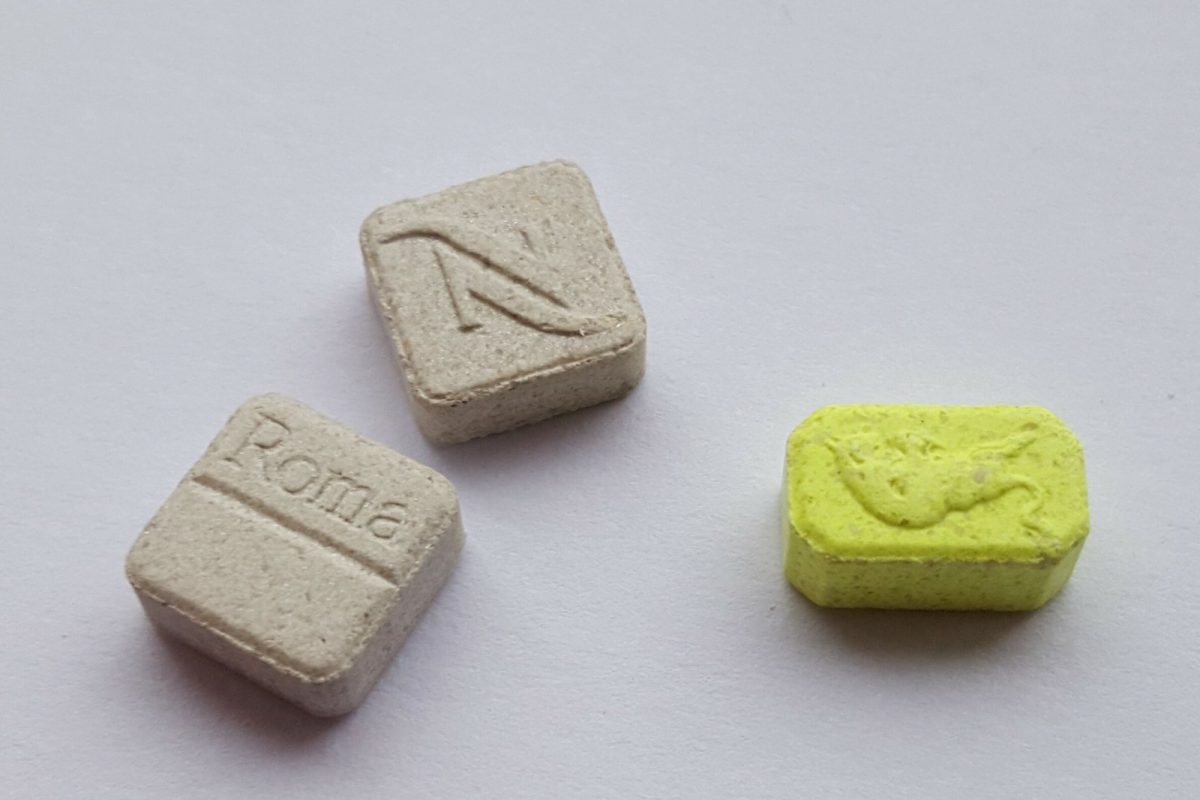
A molecule that took a century to find its place
It is best to start by clearing up a widespread misconception: MDMA (3,4-methylenedioxymethamphetamine) was not born as a recreational drug or a medicine. It appears in a patent by the pharmaceutical company Merck dated December 24, 1912, attributed to the work of chemist Anton Köllisch, where it is listed simply as an intermediate compound in the synthesis of other substances. It had no trade name, no indication, and no intended human use. It was, literally, a step in someone else’s synthesis.
For decades, the molecule lay dormant. There were toxicity studies on animals conducted by the U.S. military in the 1950s, but interest in its psychological effects did not emerge until much later, within the experimental chemistry and alternative psychotherapy circuits of the 1970s.
From the underground lab to the therapist’s office
The name that defines this second life is Alexander Shulgin, a chemist who re-explored the substance and was impressed by its effects. Through him, MDMA reached the hands of therapists who were already working—discreetly—with altered states of consciousness. The most cited is psychiatrist Leo Zeff, nicknamed “the secret chief,” who dedicated his final active years to training other professionals in its use.
From that period come the figures that are so often repeated without nuance: it is estimated that, before the prohibition, hundreds of thousands of doses were administered in therapeutic and personal growth circles. It is a suggestive figure, but one that should be read with caution: we are talking about informal clinical practice, without control groups, without random assignment, and without systematic follow-up. It serves to describe a cultural phenomenon, not to demonstrate efficacy.
In that same vein are the first published reports, such as those by psychiatrist George Greer and nurse Requa Tolbert regarding several dozen patients treated in the 1980s, or the conclusions of a meeting of therapists at the Esalen Institute that highlighted the substance’s ability to “improve communication.” These are valuable testimonies as starting hypotheses—especially regarding victims of abuse—but methodologically, they fall far short of the standard required for a pharmaceutical drug.
Prohibition and legal loopholes
International scheduling arrived in 1986, with MDMA finally included in the most restrictive list of international conventions. There were curious episodes—a few months of legal limbo in the late 1980s due to procedural defects—and national exceptions: Switzerland authorized a group of psychiatrists to use MDMA, LSD, mescaline, and ibogaine between 1988 and 1993. A follow-up of those patients described improvements in a majority, but the permit was interrupted after the death of a person during an ibogaine treatment performed without the precautions that substance requires.
The result is important for understanding the rest of the story: by 1993, there was a practically global ban on the medical use of MDMA and, at the same time, no controlled clinical trials that had seriously tested its efficacy. The public conversation had gotten ahead of the data.
In Spain, the first attempt to formally investigate that hypothesis was led by psychologist José Carlos Bouso starting in 1999, with a study approved to treat chronic PTSD in female victims of sexual assault, funded by the U.S. association MAPS. The media coverage triggered a political reaction that paralyzed the trial when only the first few patients had been treated. It did not allow for conclusions on efficacy to be drawn; its value was historical and, modestly, of preliminary safety.
What is PTSD and why is it so hard to treat?
Post-traumatic stress disorder has a conceptual particularity: rather than an anomaly of the brain or personality, it is usually described as a “normal” reaction to an abnormal event. It appears after experiencing—or witnessing—an event that has endangered physical or psychological integrity: assaults, terrorist attacks, violence, armed conflicts. Furthermore, it is more likely when the harm is deliberately caused by another person, because it breaks the basic trust in others.
Its characteristic symptoms are the involuntary re-experiencing of the trauma, the avoidance of anything that reminds one of it, and a state of hypervigilance that keeps the person in a permanent state of alert, often accompanied by depression and low self-esteem. That same distrust causes many people not to seek help, which encourages the condition to become chronic.
Psychotherapy has proven, on the whole, more effective than pharmacology—there is no specific medication, and antidepressants alleviate some symptoms but rarely the re-experiencing. The problem is that almost all psychotherapeutic approaches involve revisiting the trauma in a controlled way, and that is where its two limits lie: the risk of re-traumatization and very high dropout rates, because for many patients, the process itself is unbearable.
The hypothesis: Why MDMA was considered
The clinical argument for combining MDMA and psychotherapy is consistent with that bottleneck. The substance tends to induce a sense of trust and emotional closeness, which in theory strengthens the therapeutic alliance and allows for approaching traumatic material without the usual avalanche of anguish. At a neurobiological level, a reduction in the activity of the amygdala—involved in fear processing—has been described, along with greater involvement of prefrontal regions associated with emotional regulation.
In research protocols, the idea is not to “medicate” in isolation, but to intersperse a small number of sessions with the substance, always accompanied by a team, with long sessions of preparation and verbal integration before and after. The drug, in this model, does not cure by itself: it opens a window in which psychotherapeutic work can advance. It is a crucial distinction that media enthusiasm often erases.
What the evidence really says
The study that gave global visibility to the approach was that of Michael Mithoefer’s team, funded by MAPS and published in 2010: about twenty patients with chronic PTSD resistant to previous treatments, randomly assigned to MDMA or placebo within a psychotherapeutic framework, with an independent, blinded evaluator. The results were striking—clinically and statistically significant reductions in symptoms, with no serious adverse reactions—and the placebo group was able to access the substance afterward with similar improvements.
It is an important result, but small, and it should be framed accordingly: small sample sizes, an almost insurmountable difficulty in maintaining the “blind” (participants usually know if they have received MDMA), and intensive therapeutic support that also explains part of the effect. Other subsequent trials, such as one conducted in Switzerland, offered more modest results. The signal was promising; the definitive proof, not yet.
Critical reading
The text that inspired this article was written in a celebratory tone for the molecule’s centenary. A long decade later, the story has become instructively complicated. Advanced-phase trials were carried out with positive results, but also a regulatory review that in the United States ended, in 2024, with the rejection of the application for approval of MDMA-assisted therapy: design problems, doubts about masking, potential biases, and behavioral incidents in some trials were pointed out. The lesson is not that “it doesn’t work,” but that the bar for clinical evidence is high and that the enthusiastic narrative runs ahead of the data.
Three cautions should be kept in mind. First: what is being investigated is an intervention—drug plus psychotherapy with a trained team—not the substance on its own; extrapolating from a trial to the street is a huge leap. Second: the MDMA on the illicit market is not a drug of controlled purity and dosage, and the recreational context has nothing to do with the clinical one (heat, dehydration, mixtures, and hyponatremia are among its real risks). Third: in people with trauma, opening painful material without an adequate framework can do harm, not good. Disseminating these lines of research with honesty requires maintaining both hope and skepticism.


