

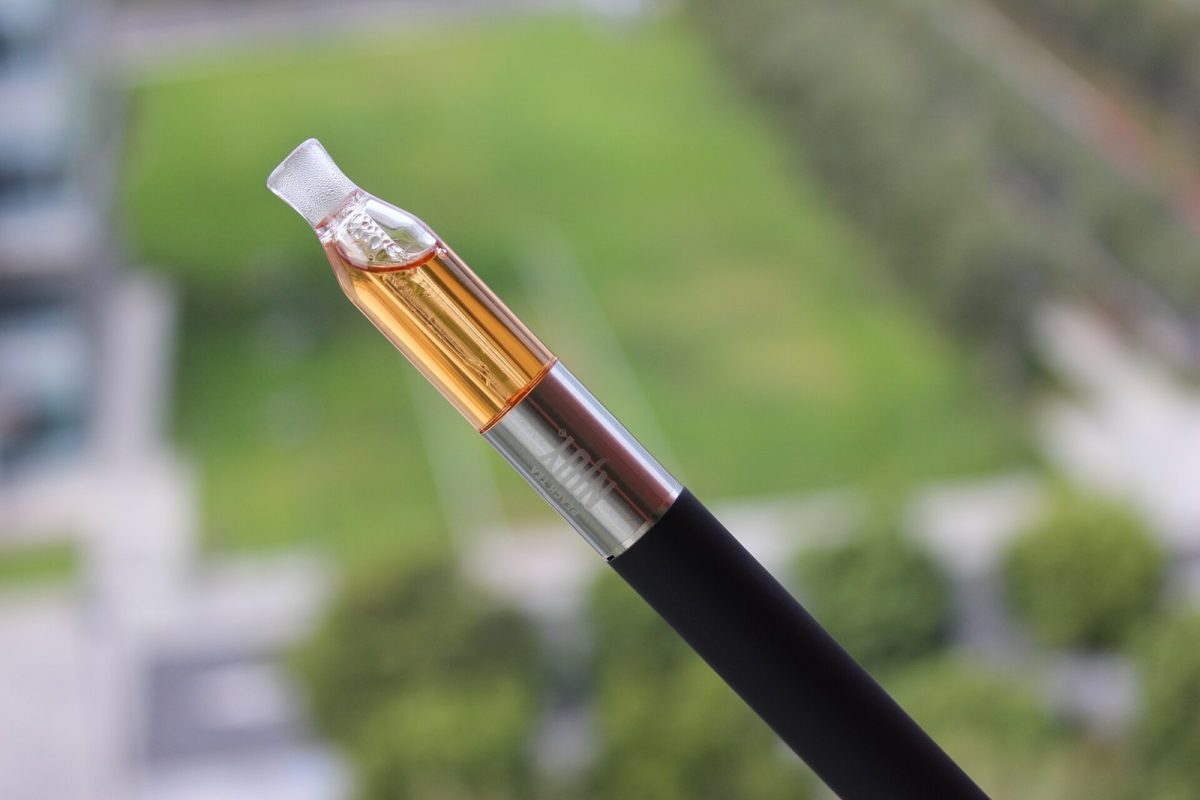
Technological evolution has radically transformed how we interact with psychoactive substances. Among these innovations, the electronic cigarette stands out—a device initially designed for nicotine that has opened new administration routes for other chemical compounds. In particular, its application with cannabis extracts raises fascinating questions regarding efficiency, discretion, and therapeutic potential. This article examines the science behind the phenomenon known as “cannavaping,” contrasting anecdotal reports with rigorous laboratory data.
In brief
- Advanced technology: Modern devices allow for vaporization temperature control between 60 and 180 ºC (140–356 ºF), which is crucial for preserving heat-sensitive compounds.
- Harm reduction advantages: Vapor produced at low temperatures is significantly less toxic than the smoke generated by traditional combustion.
- Chemical barriers: The low solubility of cannabinoids in standard liquids currently limits the therapeutic concentration achievable with commercial devices.
- Complex legal status: In Spain, the consumption and possession of cannabis remain a serious infraction, which adds a personal safety component to usage decisions.
- Promising future: Recent research suggests that improved formulas could facilitate therapeutic access for patients with specific pathologies.
Device evolution and thermal control
The first electronic cigarette models, which emerged at the beginning of the last decade, offered limited functionality: vaporizing nicotine at fixed temperatures. However, advances in engineering have allowed for the development of sophisticated devices that give the user precise control over the process variables.
Between 2011 and 2012, models appeared capable of adjusting the temperature between 60 and 180 degrees Celsius (140–356 ºF). This capability is fundamental, as different compounds require specific thermal ranges to transition into a gaseous state without degrading. While substances like nicotine vaporize at lower temperatures, cannabinoids generally require a range between 140 and 180 ºC (284–356 ºF). Controlling this variable allows for the avoidance of combustion of the plant material or extracts, minimizing the inhalation of solid particles and toxic byproducts associated with fire.
The chemical reality: solubility and emulsions
Although interest in vaporizing cannabis via these devices is not new, technical viability does not always match initial expectations. Cannabinoids are lipophilic substances, meaning they dissolve better in fats than in water or aqueous liquids. Conversely, the common excipients in commercial e-liquids, such as glycerol and propylene glycol, are highly hydrophilic.
This chemical incompatibility presents a significant challenge: how do you vaporize a substance that does not dissolve well in the device’s liquid? Scientific research has shown that it is possible to create stable emulsions. Propylene glycol acts as a good emulsifier, allowing cannabis extracts (such as those obtained with butane or BHO) to be mixed with the liquid base. However, this mixture has limits.
Studies conducted by multidisciplinary teams in Switzerland have revealed that, using standard commercial liquids, optimal concentrations hover around 10%. Exceeding this threshold causes the appearance of solid residues that hinder homogenization and can damage the device’s atomizers. To reach therapeutic doses with these technical limitations, a user might need to take up to one hundred deep inhalations in a single session, which is impractical for both recreational and medical purposes.
Harm reduction and legal context
From a public health perspective, the shift toward low-temperature vaporization offers clear advantages over conventional smoking. By avoiding combustion, tobacco toxins and carcinogens generated by fire are eliminated. Furthermore, for those users who opt for pure concentrates, involuntary exposure to nicotine is removed.
However, it is imperative to address the sociopolitical context in Spain. Possession of cannabis constitutes a serious infraction of the Citizen Security Law, punishable by fines ranging from 600 to 30,000 euros. More than 300,000 citizens have been reported for this reason in recent years. Given this restrictive legal reality, the use of discreet devices is not just an aesthetic choice or a matter of personal preference, but a basic protective measure against a legal framework that severely punishes possession and consumption.
The device’s discretion thus becomes a tool for civil safety. In countries with more permissive legislation like Canada or Germany, the debate revolves around pharmacological effects; here, the priority is to avoid administrative sanctions that can seriously affect a citizen’s professional and social status.
Scientific research: from skepticism to “cannavaping”
The scientific community has evolved from initial alarmism toward a more pragmatic approach. Swiss researchers published results in the International Journal of Environmental Research and Public Health, debunking myths and validating methods based on physical-chemical principles.
Subsequent studies, published even in high-impact journals such as the Nature group, have introduced the term “cannavaping” to refer to therapeutic dispensing via this technology. These works evaluated efficiency using commercial devices and BHO extracts.
The findings are nuanced: although it is possible to vaporize cannabinoids, current concentrations with commercial liquids do not reach optimal levels to replace other forms of administration in advanced medical treatments. However, research is advancing. More soluble formulas are being developed, and preliminary studies in animals have been presented that open the door to future clinical trials in humans.
Conclusion: caution and hope
The electronic cigarette for cannabis is neither a panacea nor a magic product. It is a technological tool with current chemical limitations that must be overcome through innovation in the formulation of liquids and extracts. Its potential lies more in reducing the risks associated with traditional smoking and offering a discreet alternative route than in immediately revolutionizing the therapeutic landscape.
For Psiconáutica.org, it is essential to distinguish between consolidated scientific evidence, emerging hypotheses, and anecdotal uses. While the scientific community works to optimize the solubility of cannabinoids in compatible liquid media, users should maintain a critical and cautious attitude. The future of “cannavaping” seems promising, but it requires patience, scientific rigor, and an approach always centered on the patient’s holistic health.
Awareness of how we consume psychoactive substances is the first step toward responsible use. Whether for therapeutic or recreational reasons, understanding the underlying physical and chemical mechanisms allows us to make informed decisions, moving away from myths and closer to scientific reality.


