

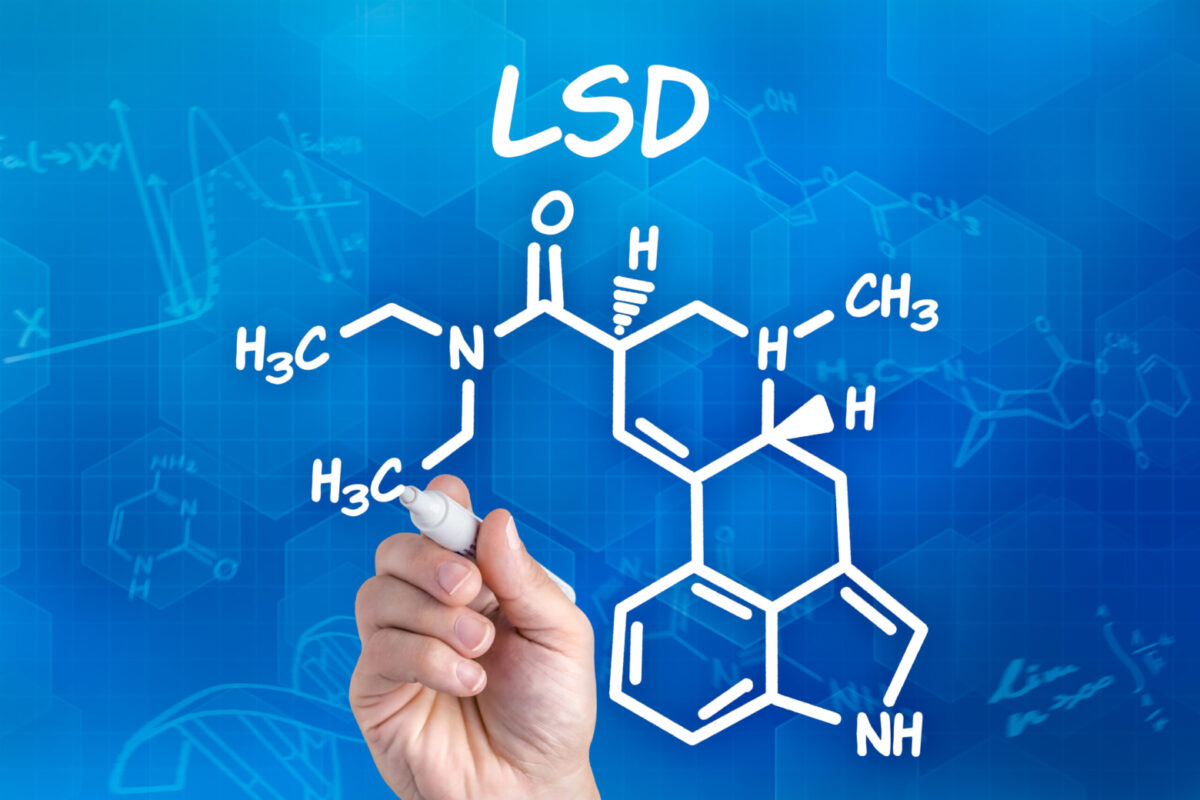
Indole entheogens: chemical structure and mechanism of action
Psychotropic substances include drugs or psychedelic agents characterized by their entheogenic potency. Professor Lehman divides them into four classes:
1. Catecholamine derivatives (mescaline, with a basic structure similar to amphetamine and its derivatives).
2. Indole derivatives (LSD, psilocybin, etc.).
3. Anticholinergics similar to Ditran.
4. Delta-9-tetrahydrocannabinol.
Since the field of entheogens is vast and varied, we will focus on indole derivatives.
The chemical structure of a large portion of entheogenic substances contains a core consisting of an indole ring. This is a heterocyclic substance formed by the fusion of benzene and pyrrole. Along with skatole (beta-methylindole), it is one of the products of protein putrefaction and is present in animal excrement. Its name, indole, comes from the fact that it is found in the dye indigo. Due to the two nitrogen atoms also present in the side chain, the chemical structure of these indole entheogens corresponds to the fundamental structure of tryptamine.
Regarding tryptamine, not all indoles are entheogenic. Some are necessary elements in our diet, such as tryptophan. Discovered, as its name suggests, in the tryptic digestion of albuminoids, it is based on the heterocyclic structure of indole. Many derivatives of tryptophan are known. The most important is serotonin, or 5-hydroxytryptamine. As is well known, serotonin is a normal and necessary chemical transmitter of nerve impulses across synapses.
The chemical structural configuration of tryptamine may be only a partial condition for psychotropic action. To manifest as such, and especially to exhibit entheogenic action, it requires a complement with specific substitutions. Thus, while tryptamine itself does not produce any entheogenic effect, this begins to manifest in diethyltryptamine (T-9) and, especially, in dimethyltryptamine (DMT), which is notable for its use as a substitute for LSD, as it produces a similar, very intense, but short-lived entheogenic symptomatology.
Jacob has synthesized the three possible chemical operations on tryptamine and serotonin:
1. Methylation
If the terminal amide function of the non-entheogenic tryptamine is methylated, we obtain dimethyltryptamine. Conversely, if the terminal amide function of 5-oxytryptamine (serotonin) is methylated, we obtain 5-oxydimethyltryptamine, or bufotenine, which is found in toad venom and is the active product of the cohoba bean (Cohoba sp.). Such methylation exerts entheogenic effects in humans, in addition to the fact that tertiary amines cross the blood-brain barrier more effectively, acting directly on the central nervous system.
2. Hydroxylation
In the benzene ring, substitution with an OH group at the 4-position produces the most potent entheogens. In this regard, lysergic acid amide and lysergamide can be considered as a tryptamine substituted at the 4-position. LSD-25 is a synthetic product, but it is found in a natural state in the seeds of ololiuqui (morning glory). LSD-25 gradually loses its entheogenic effects as its ethyl groups are removed; conversely, it is interesting to observe the gradual increase in the clouding of consciousness. Psilocybin is the phosphoric ester of psilocin.
3. Oxymethylation at the 5-position on 5-hydroxytryptamine
A hydroxyindole-methyl-transferase has been found in the brain capable of fixing CH3 in vitro onto the OH at the 5-position, thus leading us back to 5-methoxytryptamine (methylserotonin), which has been obtained from the urine of rheumatic patients. This substance, although weakly entheogenic, is the basis for some entheogens.
In the alkaloids of other magical plants, we would find new indole entheogens. In the chemical composition of ibogaine, an alkaloid of Tabernanthe iboga, we again find the indole core and, with a bit of effort, the side chain with 2 carbons and a terminal amide function of tryptamine, as well as an OCH3 substitution at the 5-position. This same substitution, but now at the 6-position, characterizes the alkaloids known as harmine-yageine and harmaline.