

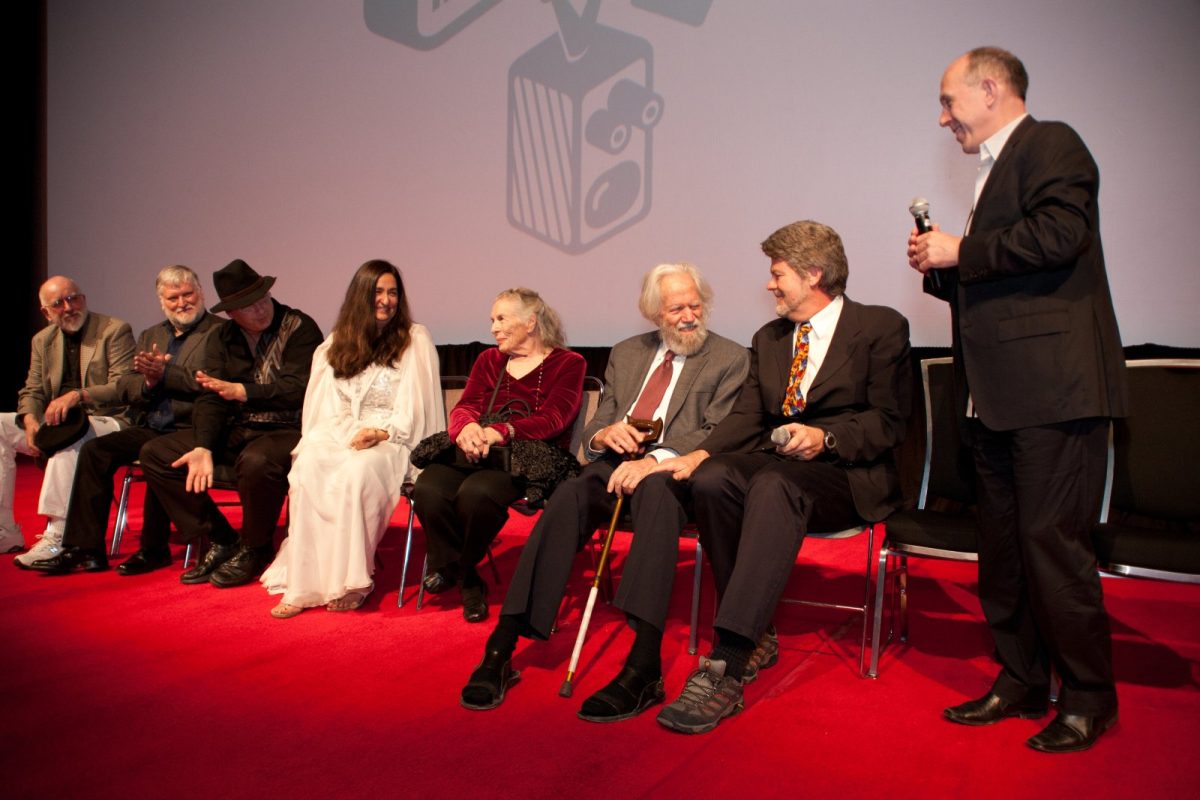
A chemist who took himself seriously as a subject
After leaving Dow Chemical in 1966 to work independently, Shulgin made a decision that defined his entire trajectory: rather than relying solely on animal models, he decided to describe the effects of each compound based on his own experience and that of a small circle of associates. The procedure he followed was obsessively methodical: he always started with prudent amounts and only increased the dose cautiously when no effects were observed, noting any physical or mental changes with clinical detachment.
From this, his famous intensity scale was born—a shorthand language that psychonauts recognize immediately. It should be read for what it is: a personal descriptive system, not a safety protocol or a guarantee of harmlessness.
The “+/−” scale: a vocabulary, not a manual
Shulgin summarized the potency of each substance with a simple notation:
- −: No appreciable effect; the state is identical to the baseline.
- ±: Something is moving, but there is no certainty that the cause is the substance rather than suggestion or placebo.
- +: There is a real and measurable effect in duration, though without a defined character; physical discomforts (nausea, dizziness, restlessness) may appear, which tend to subside quickly.
- ++: The effect is undeniable and its nature can be described, with cognitive faculties still intact.
- +++: Maximum intensity; the phases of onset, plateau, and comedown are distinguishable, and cognition is markedly altered.
- ++++: A category apart, not quantitative but qualitative: what Maslow called a “peak experience,” a mystical episode that the subject experiences as transformative.
Shulgin claimed that neither he nor his group—half a dozen people at first, a dozen in his later years—suffered lasting physical or mental harm, only passing discomfort. This testimony is valuable as a historical chronicle, but it does not constitute evidence of safety: it involves a tiny, self-selected group guided by an expert under highly controlled conditions. Generalizing from that to any consumption would be a leap that the method itself does not authorize.
MDMA before Shulgin: a century of footnotes
The most repeated story about MDMA—that Merck was looking for an appetite suppressant—is false. The most reliable documentary reconstruction, by Freudenmann and colleagues, debunks this myth. The misunderstanding likely stems from MDA, an analogous compound that was indeed studied as a potential antidepressant and anorectic in the mid-20th century, combined with the tendency of certain media to associate every psychoactive substance with something illicit.
In reality, around 1912, Merck was pursuing hemostatic (coagulant) substances similar to hydrastinine, the patent for which was held by a competitor. In that context, the molecule we now call MDMA appeared merely as an intermediate product within a broader patent, without a relevant name of its own and without anyone noting its effects on the mind. In internal records, it was listed as “methylsafrylamine.”
From there, the substance passed through decades of indifference. In 1927, it was examined for its structural similarity to adrenaline; in 1952, it reappeared in a minor toxicological study. Between 1953 and 1954, at the height of the Cold War, U.S. military and intelligence programs included it—under the code “EA 1475”—in animal testing to find agents useful for interrogations. There were a few more trials at the end of the decade, and in 1960, two Polish chemists described its synthesis, again as a simple intermediate step. No one had yet considered what it did in a human being.
1965: the rediscovery
Shulgin synthesized it on his own in 1965, unaware that anyone had tested it on themselves before. A casual comment from a student reignited his interest in 1967, but for years he limited himself to exploring it privately before collecting impressions from others. Curiously, by 1970, street use was already being detected in areas of Illinois and Chicago, long before any serious scientific literature on the molecule existed.
The fruits of those years led to his first public presentations: a conference on the psychopharmacology of hallucinogens in 1976 and, in 1978, a paper co-authored with David Nichols that characterized its emotional and sensory effects, tentatively comparing it to other known substances. In 1985, before the California Toxicology Association, Shulgin described it as “psychedelic” in a peculiar sense: without the visual distortions or loss of control typical of mescaline or LSD, with a profile he considered unique.
The therapeutic window and its closure
The appeal of MDMA for Shulgin and the therapists who used it in those years was not in visions or ecstasy, but in the opposite: a brief interval of emotional openness and decreased fear that, as they described, made it easier for the patient to talk about intimate matters without becoming defensive. In his own accounts in PiHKAL, Shulgin insists that “nothing spectacular happened,” and yet, something changed: an unusual clarity, a certain serenity, the feeling of being able to analyze one’s own life without the usual armor.
He also documented its limits. Tolerance trials showed that repeated daily use quickly exhausted the effects—leaving little more than dilated pupils—and that a break of several days was needed to recover them. This is a relevant fact: MDMA is not a substance where “more is better,” and its acute and exhaustible nature distances it from frequent use. Shulgin himself lamented that its inclusion in the list of prohibited substances (Schedule I in the United States) closed the door to continuing to investigate it with rigor, just when it was beginning to be understood.
On a more personal level, PiHKAL also includes the voice of Ann Shulgin, who learned of the substance from Sasha—including the warning that it could be difficult for those who did not want to take it—and described her first shared experience as revealing. It is the human face of a story that subsequent sensationalism would flatten.
Why we avoid the word “ecstasy”
Throughout this series, we have deliberately avoided that label. Not out of modesty, but for precision: “ecstasy” is a commercial and media name that has little to do with what Shulgin described. He, who was its godfather—not its father, as he did not create it—would have preferred the term “empathy.” The difference is not cosmetic: naming a substance correctly is the first step toward thinking about it without hysteria or propaganda, which is exactly the opposite of what almost all popular accounts of it have done.
Critical reading and harm reduction
This history should be read with three caveats. First: Shulgin’s testimonies are autobiographical chronicles of great cultural value, not clinical trials; they describe experiences, they do not demonstrate safety or efficacy. Second: what was explored in the seventies and eighties in careful, supported contexts bears little resemblance to current recreational consumption, where the purity of what circulates under the name “MDMA” is often unknown and where heat, dehydration, mixing with other substances, or pre-existing heart conditions account for much of the real risk. Third: this article is historical education; it contains—deliberately—no instructions for synthesis, dosages, or usage guidelines.
For those who want to delve into the original sources, serious documentary references exist and can be consulted by name: the historical reconstruction work of Roland Freudenmann and colleagues in the journal Addiction, Shulgin’s own texts on MDMA, his paper with David Nichols on new psychotomimetics, and, above all, PiHKAL by Alexander and Ann Shulgin. In the next installment, we will address the therapeutic applications and the debate they reopened decades later in more detail.


