

Before the arrival of the Castilians, the inhabitants of the Canary Islands had no vineyards, tobacco, or opium poppies. What they did possess was a sophisticated knowledge of their local flora: they knew how to turn mocan berries into a medicinal syrup, ferment palm sap, and treat ailments with resins, latex, and aromatic smokes. This article reviews what the chronicles tell us, what recent archaeobotany has confirmed, and what, for now, remains merely a hypothesis.
In brief
- The ancient Canary Islanders, of North African Amazigh origin according to genetics, arrived in the islands around the first centuries of our era with an agricultural toolkit based primarily on barley.
- Chronicles from the 16th and 17th centuries describe chacerquén, a syrup made from mocan fruit used for medicinal purposes, as well as low-alcohol fermented beverages made from palm sap and wild fruits consumed on occasion.
- Their pharmacopeia included mastic, dragon’s blood, tabaiba, cardon, and aromatic smokes, but there is no evidence they used potent psychoactive substances.
- Some claims that circulate, such as the use of “visionary” cornical or wormwood containing thujone, do not hold up when reviewing the botany.
Who they were and what they ate: what science says today
By custom, all ancient Canary Islanders are called “Guanches,” although strictly speaking, the name only applies to those from Tenerife. Each island had its own people, with distinct names and customs. What they share is their origin. In 2017, a team led by Stockholm University sequenced ancient DNA from remains in Gran Canaria and Tenerife and concluded that their closest relatives are the current Berber populations of Northwest Africa. They also found a small portion of ancestry linked to the first European Neolithic farmers. Today’s Canary Islanders retain an appreciable portion of that genetic heritage.
Archaeobotany has allowed us to know with great precision what they cultivated. A study coordinated by Jacob Morales (University of Las Palmas de Gran Canaria) and published in 2023 in Vegetation History and Archaeobotany places the arrival of agriculture about 1,800 years ago. Barley appears in all archaeological sites, and durum wheat in all islands except Lanzarote. Lentils, fava beans, and peas have only been found on some islands, and the fig tree is limited to Gran Canaria, where fig remains have even been found in dental cavities. From the 10th-11th centuries onward, crop diversity decreased across almost the entire archipelago, and the gathering of wild plants increased. In Tenerife, for the second millennium, the team has only found barley and mocan.
This last piece of data is important for our topic, because the mocan is at the center of almost everything known about indigenous ferments.
An island apothecary: resins, latex, and smokes
The chronicles written after the conquest record a medicinal repertoire consistent with what the environment offered. It is worth remembering that these texts were written after the events, that their authors were European, and that they often copied from one another. Even so, they agree on several remedies:
- Mastic (Pistacia atlantica): its aromatic resin was used for mouth and tooth problems, a use reminiscent of Mediterranean mastic.
- Dragon’s blood (Dracaena draco): the red latex that the dragon tree exudes when cut was applied to wounds to stop bleeding and aid healing. It is one of the remedies most cited by Enlightenment authors, starting with Viera y Clavijo.
- Tabaibas: the sweet tabaiba (Euphorbia balsamifera), which has a mild latex, was chewed. The bitter tabaiba (E. lamarckii) and the cardon (E. canariensis) have caustic latex, and for this reason, they were used—with great care—against warts, corns, and other skin conditions. Canary Island peasants preserved antidotes for burns from this latex, such as the juice of the cornical, until recently.
- Aromatic smokes: Leonardo Torriani, an Italian engineer who traveled the islands in the late 16th century, says that the islanders valued the smoke of a very fragrant wood he calls “ligno aloe,” and that they considered it medicinal and effective against poisons. We do not know what species it was. Some local resinous wood, such as savin or Canary Island cedar, has been proposed, but this is a conjecture.
Some of these remedies influenced perception without being psychoactive in a pharmacological sense. An irritating latex on the skin causes an intense stinging that masks other pains, the same principle behind rubefacient ointments. Sources also mention bloodletting with obsidian flakes followed by hot goat butter. It has been suggested that the lightheadedness following blood loss was part of the relief, but that is a modern interpretation and not something the chroniclers stated.
Mocan and its “honey”: chacerquén
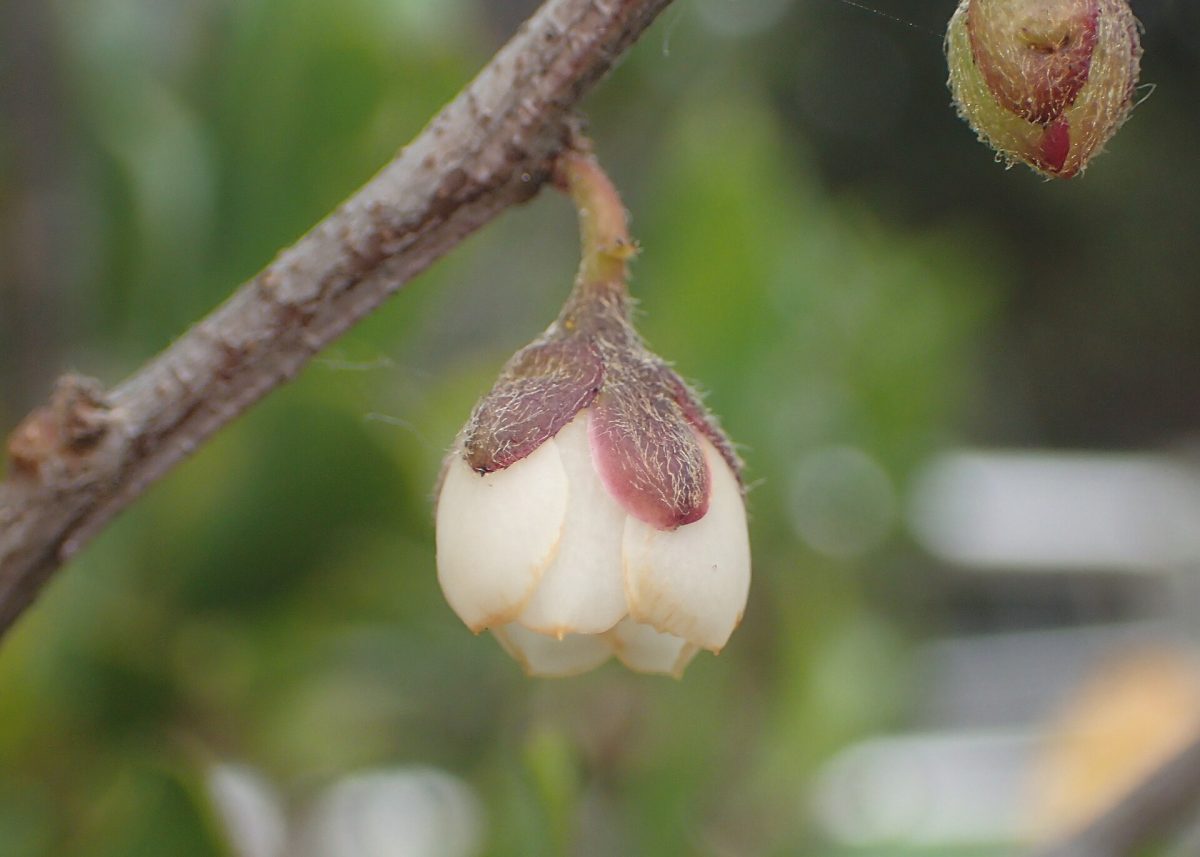
The mocan (Visnea mocanera) is an evergreen tree that lives in the Canary Islands and Madeira. It usually measures between four and eight meters (13 to 26 feet) and grows on the drier edges of the laurel forest. Its fruits, called yoyas, are berries that turn from red to an almost black color when ripe. Crows and pigeons of the laurel forest disperse its seeds, and the ancient Canary Islanders made full use of them.
Several chroniclers, including Alonso de Espinosa for Tenerife, Abreu Galindo for La Palma, and later Núñez de la Peña, describe a preparation called chacerquén. In the texts, the name appears written in many ways (tacerquen, chacergüen, teser quen…), a sign of how difficult it was for the Castilians to transcribe the indigenous language. The recipe is simple: the very ripe fruits were left in the sun for several days, crushed, boiled in water until the liquid was reduced to a thick syrup, and strained. The result was stored and taken primarily as medicine against diarrhea, which was frequent on the islands, and against “side pain,” which was likely pleurisy or pneumonia. It was also mixed with gofio.
Mocan also had a funerary use. Because of its astringent power, it was used in the preparation of bodies during mummification, a practice well-documented especially in Tenerife.
Did the ancient Canary Islanders drink alcohol?
Water was the daily beverage, along with goat milk, which played a massive role in their diet. Without grapes, there could be no wine as Europeans knew it. However, there are clear indications that they fermented other raw materials:
- Palm wine. Chronicles of Gran Canaria repeatedly state that in areas like Arguineguín and Tirajana, “wine, honey, and vinegar” were made from palm trees. It is the same technique found in many palm-growing cultures: the crown is tapped, the sweet sap (guarapo) is collected and left to ferment, or boiled to obtain a syrup. In La Gomera, palm honey is still produced today, though as a boiled product rather than a fermented one.
- Mocán wine. Tomás Marín de Cubas, at the end of the 17th century, speaks of a “beer or wine” he calls tacerquen, stating that boiled mocán juice was used to produce syrup, wine, and vinegar. If both wine and vinegar were derived from the same juice, it suggests fermentation was known and perhaps intentional. There is also an anecdote attributed to the chronicle of Pedro Gómez Escudero: some Canarian chiefs, after tasting Castilian wine, reportedly said it did not equal their own palm and mocán wine, stored in goatskin bags. It is frequently cited, but we have not been able to locate it in an accessible edition, so it should be taken with caution.
- Wild fruits. Viera y Clavijo lists arbutus berries, blackberries, palm dates, yoyas, and other berries among the fruits they gathered, and Abreu Galindo adds that they made some wine from them, “though little.” The arbutus is a known case: its very ripe fruits ferment on the plant itself and can cause mild intoxication.
- Honey and mead. Sources mention honey and wax from wild beehives. The Canarian black bee belongs to an African genetic lineage with an Atlantic distribution, though no study has dated its arrival. It is possible they made mead, as it would only require leaving diluted honey in a container, but no text documents this.
The picture is one of mild ferments, scarce production, and occasional use, far from a culture of intoxication. Europeans insisted on the sobriety of the islanders, although that portrait of the “noble savage” also had an ideological component. The drunken episodes reported in the chronicles usually involved peninsular wine, to which the indigenous people were unaccustomed.
Were there visionary plants? What doesn’t hold up
This is the question that sparks the most interest and has the fewest answers. We know that religious figures existed, such as the harimaguadas of Gran Canaria, and community festivals like the Beñesmer in Tenerife, linked to the harvest. These involved singing, dancing, and milk offerings. All of this can alter consciousness on its own, without any plants. But no source describes a trance induced by vegetation.
Some candidates have been proposed, and it is worth examining them closely:
- The “cornical” as a visionary plant. Some popular science texts identify the cornical with the bitter tabaiba and attribute visions to it in minimal doses. This is a confusion. The cornical is Periploca laevigata, a climber of the Apocynaceae family present on all the islands, and its traditional use is topical and purifying: for inflammation, burns, healing wounds, and alleviating lesions caused by the latex of the cardón. The bitter tabaiba has a latex that is irritating and toxic if ingested. There is no record of it being used to induce visions.
- Canarian mugwort (Artemisia thuscula, also known as incense or “laughter herb”). It is often assumed to contain thujone, like wormwood. Analyses of its essential oil show otherwise: davanone predominates in Tenerife and camphor in El Hierro, with thujone appearing only as a minor component. In the laboratory, the oil has a spasmolytic effect, which fits its popular use for stomach ailments, but it does not make it a notable psychoactive. Its use in incense is plausible due to the aroma, although it is not documented for the pre-Hispanic era.
- White henbane (Hyoscyamus albus). In this case, the plant is indeed native to Macaronesia and grows in the Canary Islands. It contains hyoscyamine, atropine, and scopolamine—tropane alkaloids with a very narrow margin between the dose that produces delirium and the toxic dose. That the ancient Canary Islanders knew it is plausible. That they used it for ritual purposes has, as of today, no archaeological or documentary support.
Archaeology has not found pipes, specialized burners, or substance residues in containers either. What does appear at sites are cereal seeds, remains of figs and wild fruits, and plants associated with burials. Organic residue analysis in ceramics, increasingly used in archaeology, could one day clarify what was fermented in those vessels. In the meantime, aboriginal visionary plants remain an open hypothesis, not a fact.
The topic remains alive on the islands. In November 2025, anthropologist Fernando Hernández and journalist José Gregorio González dedicated a segment to it on Crónicas de San Borondón (Radio Canaria), focusing on whether aboriginal plants and practices for altering consciousness can be identified and whether that knowledge survived.
A legacy more medicinal than ecstatic
Compared to Mesoamerica or the Andes, pre-Hispanic Canary Islands appear to be a culture almost devoid of psychoactives. It had nothing like teonanácatl, coca, or the great master plants of the American continent. But that does not make it any less interesting for ethnobotany. With very few resources, those settlers derived drinks for celebrations and remedies for illness from the palm, the mocán, and wild fruits. Furthermore, they turned resins, latex, and smoke into a pharmacopoeia that partially survived in Canarian folk medicine. If you want to see how other cultures mixed the sacred and the curative, you can read our review of sacred plants in ethnomedicine, from kava to iboga. Regarding kava, another beverage that occupies a social place similar to wine, we have the article Kava: The Sedative Root of the Pacific. And for a good example of how a Canarian endemic plant can accumulate borrowed stories, we recommend the true story of the Canarian retamón.
Separating the documented from the imagined does not diminish the charm of the subject. On the contrary, it is the only way to respect those who lived on these islands and could not leave their own story in writing.
References
- Socorro L. An archaeobotanical investigation confirms that North Africans brought agriculture to the Canary Islands 1,800 years ago (on Morales J. et al., Vegetation History and Archaeobotany, 2023). Canarias Ahora / elDiario.es, 2023.
- Liverpool John Moores University. DNA study shows the Guanches originated from North Africa (on Rodríguez-Varela R. et al., Current Biology, 2017). LJMU, 2017.
- Perfumi M, Paparelli F, Cingolani ML. Spasmolytic activity of essential oil of Artemisia thuscula Cav. from the Canary Islands. Journal of Essential Oil Research, 1995.
- Government of the Canary Islands (Medusa). Cornical (Periploca laevigata). Educational Wiki of the Government of the Canary Islands.
- Visnea mocanera (mocán): description, distribution, and aboriginal uses. Spanish Wikipedia (with references to Espinosa, Morales Padrón, and Viera y Clavijo).
- RTVC. “CSB” analyzes the presence of psychoactive substances in aboriginal culture. Radio Televisión Canaria, 2025.
This article updates and rewrites a text by Raúl del Pino originally published in Cannabis Magazine.
Educational content written from a harm reduction perspective and with respect for individual freedom. It is not a substitute for advice from a healthcare professional and is not intended to encourage or condemn any drug use.