

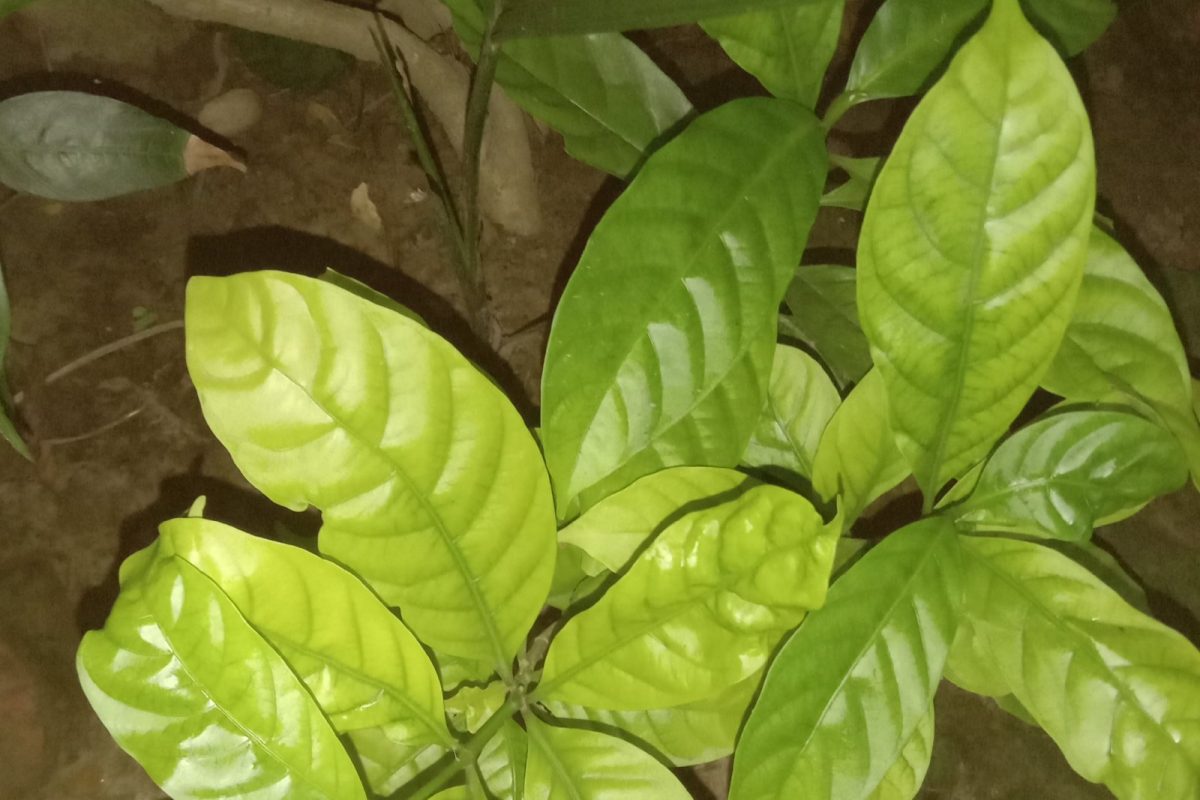
An hour of nothing and ill-timed dizziness
The plan was simple on paper: with the logistical support of a companion, Hidalgo traveled to Mas d’en Carles, a shelter with cave paintings in the Prades Mountains, ready to “meet his Stone Age ancestors.” The method consisted of doing what the plant’s proponents recommend: setting aside beliefs and convictions, letting go, and allowing the ayahuasca to speak and guide.
The problem was that, for the first hour, absolutely nothing happened. Dose taken, eyes closed, mummy-like immobility, and an inner silence as persistent as it was disappointing. While his companion was already orbiting distant spheres, he wrote the experience off as a failure and retreated to eat in an adjacent shelter. It was right then, with the last bite, that the famous dizziness arrived. The “mareación” (dizziness) appeared late and without warning, which has its own interpretation: in the subjective experience of a psychedelic, expectations and the timing of the onset of effects weigh as much as the substance itself.
The green tunnel and the question of who is at the controls
The vision, when it finally appeared, was modest: a pulsating tunnel of green tones through which he moved, turning from one side to the other. Nothing spectacular. The interesting part was not the image, but what he was discovering within it. First, that the tunnel was not a fixed path, but a malleable space that folded according to his will. Later, a more unsettling sensation: that he was losing control of the trajectory, that “something or someone” was taking the controls. The conclusion the state itself suggested to him was that the plant was in charge.
Here, Hidalgo introduces his critical distance. He recognizes the classic script of neo-shamanism—the Master Plant that presents itself “with affection and delicacy,” that advances “slowly” so as not to destabilize the novice, that asks to be recognized as real—and treats it with irony. When the experience seemed to ask him for a leap—to change his way of understanding life—he hit the brakes. He regained control and reoriented the trip toward what he had come looking for.
The meaning of life, seen from a cave in the rain
Leaning against the shelter wall as it began to rain, Hidalgo left the tunnel and began to imagine the daily life of those who inhabited those caves thousands of years ago. A day like that one: tanning hides, tending the fire, preparing food, painting scribbles for posterity, surviving, killing time, waiting for death. And, in the midst of that, children laughing and playing in the rain, oblivious to artistic or professional alibis. From there he drew his conclusion: that this offspring was “the only thing that gave meaning to all of that.”
The tone of the account oscillates between the harsh and the amusing. Thinking about the meaning of life for the bushes across the way—living beings that strive to extend a branch or grow a little more, for what?—made him laugh. The experience, he summarizes, was “absurd, fucked up, and funny. Life itself.” A light experience in form and, at the same time, dangerous in substance, because it opened an abyss of possibilities that did not convince him.
Why the plant “speaks to you”: the mechanism of suggestion
Here is the core of the article, and it is worth reading slowly. Hidalgo starts from a basic conviction: plants do not speak, one does not converse with a vegetable, and certainly a plant cannot be a spiritual guide. But those who defend ayahuasca ask for exactly the opposite: let the plant speak, let yourself be guided. And one, in an altered state of consciousness and with skyrocketed suggestibility, does so. And it works: the plant “speaks.” Of course it speaks, he suggests. You started by deactivating your conviction that it couldn’t.
From that first step, it is predictable that the chain will continue. If you have already accepted the most improbable, what stops you from accepting whatever comes next from the shaman or the neo-shamanic environment? Hidalgo draws a direct parallel with the functioning of religions: one begins by accepting something that contradicts a basic conviction—a virgin who gives birth, a pregnancy without contact—and, once the first implausible statement is swallowed, the rest enters on its own. Not because it is true, but because critical defenses are already deactivated and a tabula rasa remains at the disposal of whoever wants to mold it.
The argument extends to delicate territory: the more vulnerable the person—emotional, psychological, or social problems, desperation, fear of reality without makeup—the more effective the mechanism becomes. The plant, he notes ironically, is such a “Master” that it is also polyglot: it speaks to you in your mother tongue, whatever it may be. And he says this, he emphasizes, in a literal sense, not a poetic one.
Useful, yes; supernatural, no
It is best not to confuse criticism with total rejection. Hidalgo admits without issue that the human brain can access states in which one dialogues with real or imaginary entities, animate or not, and that ayahuasca is a good example. What he disputes is the interpretation. For him, there is no communication with an external entity endowed with superior knowledge: there is a mental construction in which one cooks and eats the experience oneself. And his practical conclusion is that the potential of ayahuasca can be harnessed just as well without believing in the incredible and without falling into naivety.
He closes without imposing his verdict on anyone—”I don’t get involved in other people’s business”—but without selling himself a bill of goods. “Ayahuasca gives everyone their lesson,” the experts say. His, he says, was precisely that.
Critical reading and harm reduction
Hidalgo’s text has value precisely because of what it is not: neither promotion nor demonization. Even so, it is convenient to contextualize some things to read it with a clear head.
- The mechanism of suggestion is real and documented. Set (mental state, expectations) and setting (environment) enormously condition the psychedelic experience. Recognizing this does not “dismantle” the experience, but it does explain why two people have opposite experiences with the same substance.
- Uncritical authority is the underlying risk. The parallel with dynamics of adherence—religious or of any closed group—points to a concrete danger: yielding one’s own judgment to a figure (shaman, facilitator, community) in a state of high vulnerability. Be wary of anyone who asks for blind faith or presents the experience as an unquestionable revealed truth.
- Ayahuasca is not harmless. It contains MAOIs, which interact with numerous medications (including several SSRI antidepressants) and foods rich in tyramine, with a risk of serotonin syndrome or hypertensive crisis. There are personal and psychiatric histories—psychotic episodes, bipolar disorder, certain cardiovascular pathologies—in which it is especially contraindicated.
- Context matters as much as the substance. The lack of prior medical screening, the absence of competent accompaniment, or the mixture with psychological vulnerability are the factors most associated with harmful experiences. This article is a personal testimony, not a guide: it does not describe doses or procedures, nor does it encourage taking anything.
Whoever wants to understand, let them understand, Hidalgo wrote. Let us add something: understanding includes maintaining skepticism even within the trip, not just outside of it.


