

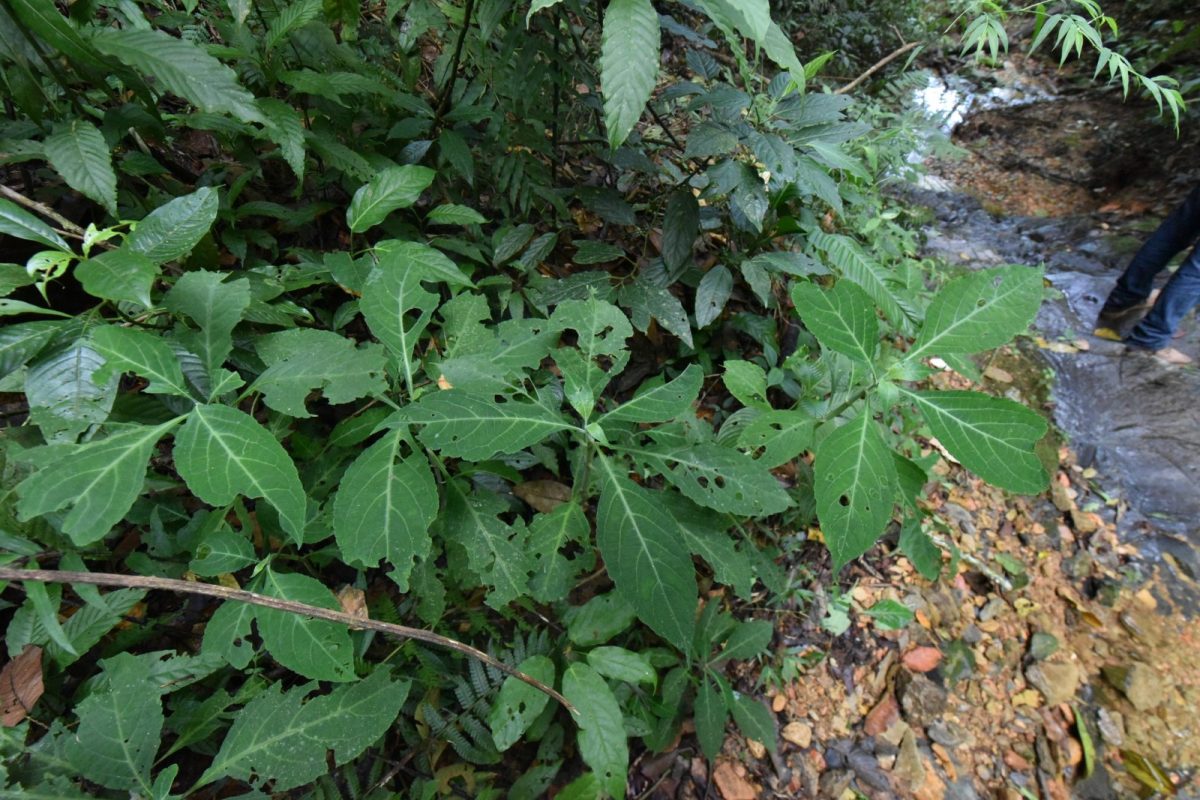
In brief
- Salvia divinorum is a plant in the mint family, endemic to the Sierra Mazateca of Oaxaca, Mexico, used for centuries by Mazatec healers.
- Its active compound, salvinorin A, is a diterpene that acts on the kappa-opioid receptor, a mechanism distinct from that of LSD or psilocybin.
- Its effects are very intense and brief; scientific research is exploring its pharmacological potential while ritual use continues in its native homeland.
Few psychoactive plants are as singular as Salvia divinorum. Closely related to common garden sages, it harbors unusual chemistry and a long ceremonial history among the Mazatec people. This educational article explores what it is, how it works, and what science currently knows about it, helping readers form their own well-informed perspective.
A Plant from the Sierra Mazateca
Salvia divinorum belongs to the Lamiaceae family, the same botanical family as rosemary, mint, and basil. It is a perennial herb with large leaves and hollow, somewhat square stems that grows in the cloud forests of the Sierra Mazateca in the Mexican state of Oaxaca. It rarely produces viable seeds, propagating primarily through cuttings—a trait that has long intrigued botanists regarding its evolutionary origins. The Mazatec know it as “hojas de la Pastora” (leaves of the Shepherdess) or “ska María Pastora,” traditionally utilizing it for visionary purposes and to alleviate ailments such as digestive discomfort, headaches, and rheumatism.
From the Shepherdess Leaf to Modern Science
Western interest in the plant began in the mid-20th century. American ethnomycologist R. Gordon Wasson and Swiss chemist Albert Hofmann traveled through the Mazatec region in the 1960s, documenting its ceremonial use alongside figures such as the renowned curandera María Sabina. From collected specimens, botanists Carl Epling and Carlos Játiva formally described and named the species in 1962. Decades later, analytical chemistry isolated and identified the active compound responsible for its effects, salvinorin A, shedding light on why this sage acts so differently from other entheogenic plants.
Salvinorin A: An Unconventional Molecule
Salvinorin A is what makes Salvia divinorum unique. Unlike most naturally occurring psychedelics and hallucinogens, it is not an alkaloid: it contains no nitrogen atoms in its molecular structure, existing instead as an exceptionally potent diterpene. According to a pharmacological review by Brito-da-Costa et al. (2021), it acts as a potent and selective agonist at the kappa-opioid receptor (KOR), leaving the serotonin 5-HT2A receptor—central to classical psychedelics like LSD and psilocybin—entirely unaffected. This distinct pharmacology explains its highly idiosyncratic subjective profile. The compound crosses the blood-brain barrier rapidly and is eliminated quickly, with an elimination half-life of approximately 50 minutes in humans.
Effects: Intense and Fleeting
Duration and intensity depend heavily on the route of administration. When smoked or vaporized, onset can occur within thirty seconds, peaking within two to five minutes and largely resolving in five to ten minutes. When chewed as a traditional quid, onset is slower—ten to fifteen minutes—and the overall experience lasts around an hour. Users report profound sensory distortions, abrupt shifts in mood and thought patterns, and intense dissociative or out-of-body experiences. Confusion, dizziness, sedation, rapid heart rate, and occasionally fear, paranoia, or nausea can also occur. During the peak phase, individuals often lose awareness of their external surroundings, a core characteristic of the experience that is vital to understand beforehand.
What Does Research Show?
The selective receptor profile of salvinorin A has made the plant a subject of significant scientific interest. Researchers are investigating the kappa-opioid system as a potential target for non-addictive analgesics, addiction therapies, and treatments for mood disorders, while reviews highlight an absence of documented physical dependence and no confirmed fatal overdoses to date. It is important to note that this evidence remains preliminary and largely preclinical: long-term toxicity has not been thoroughly studied, and it has not yet led to any approved therapeutic medication. The field remains an active area of investigation with many open questions.
Care and Harm Reduction
Salvia divinorum is not inherently harmless simply because it is natural, and anyone considering its use benefits from thorough information. In Spain, for example, it is not a controlled substance: the administrative order that restricted its sale (Order SCO/190/2004) was struck down by the courts in 2005, while other countries regulate it differently. Given its intensity and dissociative nature, set (one’s mindset and intentions) and setting (the environment) make all the difference: a calm, secure space free from fall hazards, accompanied by a sober sitter who watches over without intruding, prevents most difficult situations. Combining it with alcohol or other substances increases risks, while those taking antidepressants or psychiatric medications, facing emotional distress, or who are underage have strong reasons to exercise caution. If an experience becomes overwhelming, it typically subsides naturally within minutes; for concerning physical or psychological distress, seeking medical care is the responsible course of action—calling emergency services (such as 112 in Spain or 911 in the US). For any questions about substance use, local harm reduction organizations and healthcare services provide confidential, non-judgmental guidance.
Fuentes
- Brito-da-Costa AM, Dias-da-Silva D, Gomes NGM, et al. Pharmacokinetics and Pharmacodynamics of Salvinorin A and Salvia divinorum: Clinical and Forensic Aspects. Pharmaceuticals (Basel), 2021.
- Coffeen U, Pellicer F. Salvia divinorum: from recreational hallucinogenic use to analgesic and anti-inflammatory action. Journal of Pain Research, 2019.
- Salvinorin A and Salvia divinorum: Toxicology, Pharmacological Profile, and Therapeutic Potential. PMC, 2025.
Educational content written from a harm reduction perspective and with respect for individual freedom. It is not a substitute for advice from a healthcare professional and is not intended to encourage or condemn any drug use.


