

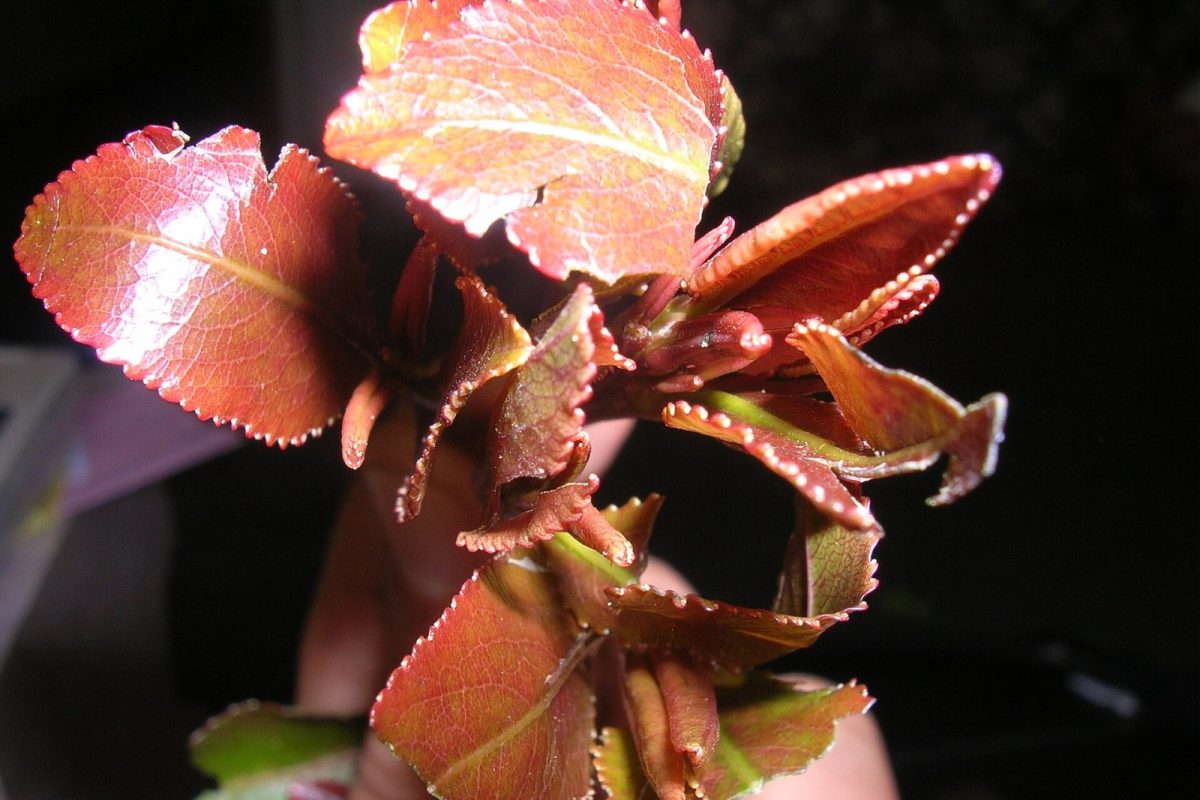
An Amphetamine That Grows on a Shrub
Few plants sum up the blurry border between the botanical and the chemical as well as khat. It is a perennial shrub, Catha edulis, probably native to the Ethiopian highlands—although some place its cradle in Yemen—whose leaves and tender stems contain cathinone, an alkaloid that shares the molecular configuration of amphetamine. Hence the popular label it has carried for decades: that of being one of the most potent plant-derived stimulants known.
Its use is ancient. An Arabic manuscript from 1333 already described infusions made from the buds and tender leaves of the plant, and various sources suggest that chewing it in the region predated the use of coffee. Depending on the country and area, it goes by different names—kat, qat, quat, tschat, chai—which gives an idea of how deeply embedded it is in social life across the Horn of Africa and the southern Arabian Peninsula.
What Is Inside the Leaf
The chemistry of khat has a peculiarity that makes it unstable and therefore perishable. The star alkaloid is cathinone, found mainly in the fresh leaf. Smaller amounts of cathine (d-norpseudoephedrine), ephedrine, and traces of other compounds from the same group add to it. The problem, from the point of view of whoever grows or transports it, is that as the leaf dries, cathinone degrades and turns into cathine, which has a milder effect. That short shelf life explains much of the logistics surrounding the plant: the leaf must be consumed within a few days of harvest, or kept cold to slow the conversion.
Concentrations are low and variable. Various analyses collected in the literature on psychoactive plants put the total alkaloid content at around a few tenths of a percent of the leaf’s weight, with notable differences depending on origin, the age of the plant, and the time of harvest. It is best to hold on to the qualitative idea—it is a real stimulant, not folklore—rather than to specific figures, which change from sample to sample.
The Effects People Who Use It Describe
The effect profile is the classic one of an amphetamine-type stimulant, but cushioned by the route of administration. People who use it describe an initial phase of mild euphoria, talkativeness, optimism, a sense of mental clarity, and suppression of sleep, fatigue, and appetite. That high is followed, over the hours, by a comedown phase: conversation flags, dejection sets in, and sometimes drowsiness. The chronicler Marc Bernabéu summed it up as a “mild” effect, with a first period of exaltation followed by another in which “arguments subside considerably, turning into thoughts and reflections.”
The key is slowness. Unlike a concentrated, fast-absorbing stimulant, khat has traditionally been taken by chewing leaves for hours, which spreads the intake of the alkaloid over time and softens the peak. That does not make it harmless: it means the same molecule arrives more gradually and for longer.
The Risks of an Everyday Habit
Khat is sometimes presented as a “benign” stimulant, and that needs qualifying. Acute use can cause mouth irritation from prolonged chewing, nausea, stomach upset, and transient cardiovascular changes. As a sympathomimetic agent, it raises heart rate and blood pressure, so anyone with cardiovascular disease has a clear reason to stay away.
Daily use sustained over years is another story. Heart disorders, low mood after the stimulation, and, in heavy use, episodes of toxic psychosis similar to those described with amphetamines are associated with it. Occupational medicine and public health in countries where it is widespread—Yemen, Somalia, Djibouti—have also documented social and economic impacts from devoting a good part of the day and the family budget to its use.
One point deserves a critical reading: for decades it has been repeated that khat “does not cause physical dependence,” relying on a World Health Organization report from the 1960s. Later research describes a pattern of dependence that is rather psychological and behavioral, with tolerance and difficulty quitting among regular users. That it does not produce a withdrawal syndrome as dramatic as that of opioids does not mean it is not habit-forming.
A Fragmented and, at Times, Paradoxical Legal Status
The legal status of khat is a good example of how the prohibition of a substance collides with the reality of the plant that contains it. Cathinone appears on the most restrictive schedule of the 1971 Vienna Convention, which makes it illegal in practice worldwide. But because it is only present in the fresh leaf, the result is a map full of contradictions: in some Gulf countries the fresh leaf is banned while the dried one, already degraded to cathine, is sold in supermarkets for infusions.
The leaves are illegal in much of the West—the United States, Canada, several European countries—and in numerous Middle Eastern states where, even so, their use is enormously widespread. Only in a handful of countries such as Yemen, Somalia, and Djibouti is trade fully legal and part of the everyday landscape. In the European Union there have been occasional seizures tied to shipments in transit to markets where it is banned. In Spain the situation is technical: cathinone is prohibited under the Vienna Convention and cathine is subject to pharmaceutical control, while the living plant as such is not prohibited.
Canarian Kat and Andalusian Kat: Iberian Relatives
Although the image of khat is African, the genus Catha and its relatives have representatives in the flora of Iberia and Macaronesia. On the coast between Murcia and Málaga, and especially on Granada’s Costa Tropical, grows the espino cambrón (classified at one time as Catha europaea and today generally placed in the genus Maytenus, as Maytenus senegalensis), a shrub of rocky, sunny slopes near the sea to which some sources attributed properties similar to those of Catha edulis.
In the Canary Islands’ laurel forest there is the peralillo (Maytenus canariensis), to which island ethnobotany assigned medicinal uses and an appetite-suppressing, antifatigue effect that shepherds took advantage of in the field. These parallels should be taken with caution: botanical kinship and some shared folk uses do not mean the chemical profile and potency are equivalent to those of African khat, something older popularization tended to take for granted far too lightly.
A Critical Reading
A good part of what circulates about khat comes from ethnobotanical and popular literature of the late twentieth century, valuable as cultural testimony but uneven in rigor. Three ideas are worth revisiting. The first is the superlative: calling it “the most potent plant stimulant in the world” is more slogan than fact, because its real potency depends on low and highly variable concentrations. The second is the comparison with substitution treatments: presenting khat as a “natural” and “cleaner” alternative to black-market stimulants is a rhetorical analogy, not a validated health strategy. The third is harmlessness: the absence of a striking withdrawal syndrome has often been read as an absence of problems, when the evidence points to psychological dependence and to cardiovascular and psychiatric harm in heavy use.
From a harm reduction standpoint, the sober message is that of any stimulant: people with cardiovascular or mental health problems are the most exposed; mixing stimulants with other substances multiplies the load on the heart; and a pattern of daily use, however mild each session may seem, is precisely the one that concentrates long-term harm. This page is meant to be educational and historical, not a promotion or a guide to use.


