

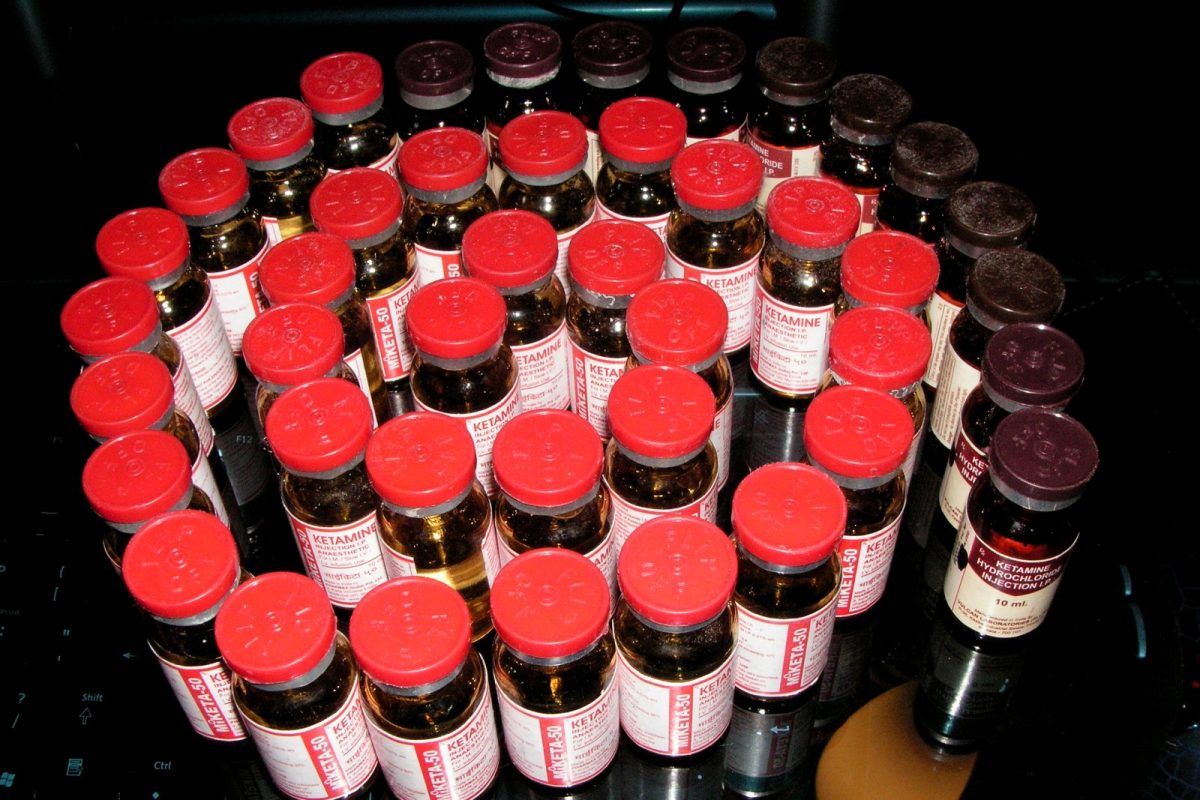
In brief
- Ketamine is a dissociative anesthetic that acts by blocking the glutamate NMDA receptor; it has been used in medicine since the 1970s and is on the WHO Model List of Essential Medicines.
- Its derivative, esketamine (Spravato), is approved by the FDA and EMA for treatment-resistant depression and has opened a highly active line of mental health research.
- Like any psychoactive substance, it has effects and risks worth knowing: among the best-documented are cystitis associated with chronic use and respiratory depression when combined with other depressants.
Ketamine attracts interest on two fronts: as a veteran anesthetic and as one of the most discussed additions to modern psychiatry. This article explains, calmly and without sensationalism, what it actually is, how it works, and what it is used for, so that everyone can form their own opinion based on reliable information.
What is ketamine
Synthesized in 1962 and related to phencyclidine (PCP), ketamine was introduced into clinical practice around 1970. It is classified as a dissociative anesthetic because, unlike other anesthetics, it produces a state of disconnection between perception and the environment rather than deep conventional sedation. Its safety profile—largely maintaining airway reflexes and respiratory drive—made it a valuable resource in field hospitals, emergency rooms, and low-resource settings, which explains why the World Health Organization includes it on its list of essential medicines. It is marketed as a racemic mixture of two mirror-image forms (the R and S enantiomers); the S-form, or esketamine, is the most potent.
How it acts: pharmacology
Its primary mechanism is the non-competitive blockade of the NMDA receptor, one of the receptors for glutamate, the brain’s main excitatory neurotransmitter. By slowing this signaling, it disrupts communication between brain regions and generates the characteristic dissociative and analgesic state. Ketamine also interacts with opioid receptors and other systems, which contributes to its pain-relieving effect. At low (sub-anesthetic) doses, research suggests that its antidepressant effect does not depend solely on NMDA blockade, but on a subsequent cascade—increased glutamate, activation of AMPA receptors, and growth factors—that may promote new synaptic connections. Intravenously, its action begins in less than a minute and lasts about 10–20 minutes; intramuscularly, it takes slightly longer. Its active metabolite, norketamine, prolongs the effects.
What it is used for
In medicine, it has three major areas of application. The first is anesthesia: it is used to induce and maintain general anesthesia, especially in pediatrics, emergency medicine, burn care, and pre-hospital settings, thanks to its cardiovascular stability and bronchodilator effect. The second is pain: at sub-anesthetic doses, it acts as an analgesic and “opioid-sparing” agent in the postoperative period, and it is used—off-label—for difficult chronic pain, such as complex regional pain syndrome or neuropathic pain, although evidence regarding its long-term benefit is still limited. The third, and most recent, is psychiatry: esketamine nasal spray (Spravato) was approved by the FDA in 2019 and by the EMA later that same year for treatment-resistant depression, in combination with oral antidepressants; in 2025, the FDA expanded its use as a monotherapy. Intravenous racemic ketamine is also used off-label for this purpose. These uses are carried out in a hospital setting with monitoring, as sedation and dissociation require a prepared environment to manage them.
Effects and risks
During its action, ketamine produces analgesia, a sensation of floating or separation from the body, perceptual alterations, and, at high doses, hallucinations or an intense state of disconnection known in slang as the “K-hole.” It can raise blood pressure and heart rate, increase intracranial and intraocular pressure, and cause nausea. At high doses or when combined with other substances, loss of consciousness and respiratory depression can occur. With repeated use, alterations in memory and mood have been described. Knowing these effects is not intended to discourage, but to allow for informed decisions.
Harm reduction
Anyone who decides to use ketamine outside of a medical setting can manage the context and reduce risks with a few simple criteria. In Spain, it is a controlled medication, a fact to keep in mind, especially given the uncertain quality of substances circulating outside the pharmacy. Among the effects most important to monitor with continued use is ketamine-induced cystitis: its metabolites can damage the bladder wall and cause pain, blood in the urine, urinary urgency and frequency, and, in advanced cases, bladder contraction and kidney failure; spacing out or stopping use usually halts the process. It can also lead to dependence, so spacing out sessions and moderating the dose helps maintain control. Combining it with alcohol, opioids, benzodiazepines, or other central nervous system depressants significantly increases the risk of respiratory arrest, so avoiding these mixtures is one of the most protective measures. Because of its anesthetic and immobilizing effect, managing the environment (the classic set and setting), being accompanied, not driving, and choosing a safe place reduces the danger of falls, accidents, or aspiration from vomiting. If urinary discomfort, memory changes, or mood shifts appear, or if you feel you are losing control over your use, seeking professional health support in time makes a difference. When ketamine is used to treat depression, doing so within a clinical framework allows for dose adjustment and support with the highest guarantees.
Sources
- StatPearls (NCBI Bookshelf). “Ketamine”. U.S. National Library of Medicine, 2023 update.
- “Pathophysiology, clinical presentation, and management of ketamine-induced cystitis”. PMC, U.S. National Library of Medicine, 2023.
- Johnson & Johnson. “SPRAVATO (esketamine) approved in the U.S. as the first and only monotherapy for treatment-resistant depression”. Press release, January 2025.
Educational content written from a harm reduction perspective and with respect for individual freedom. It is not a substitute for advice from a healthcare professional and is not intended to encourage or condemn any drug use.


